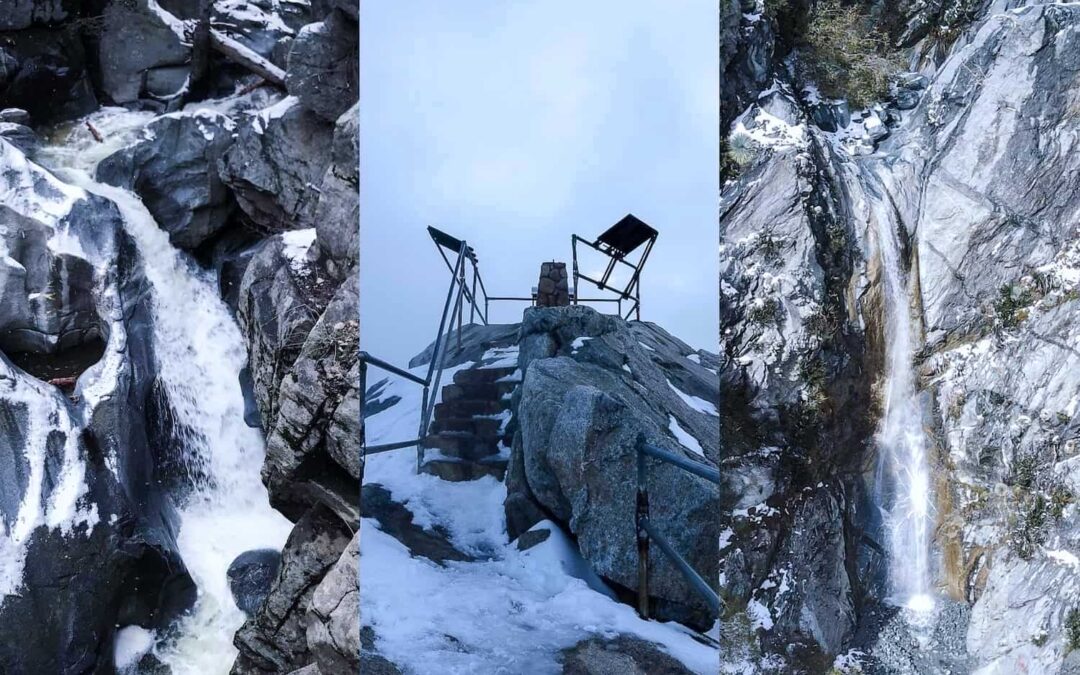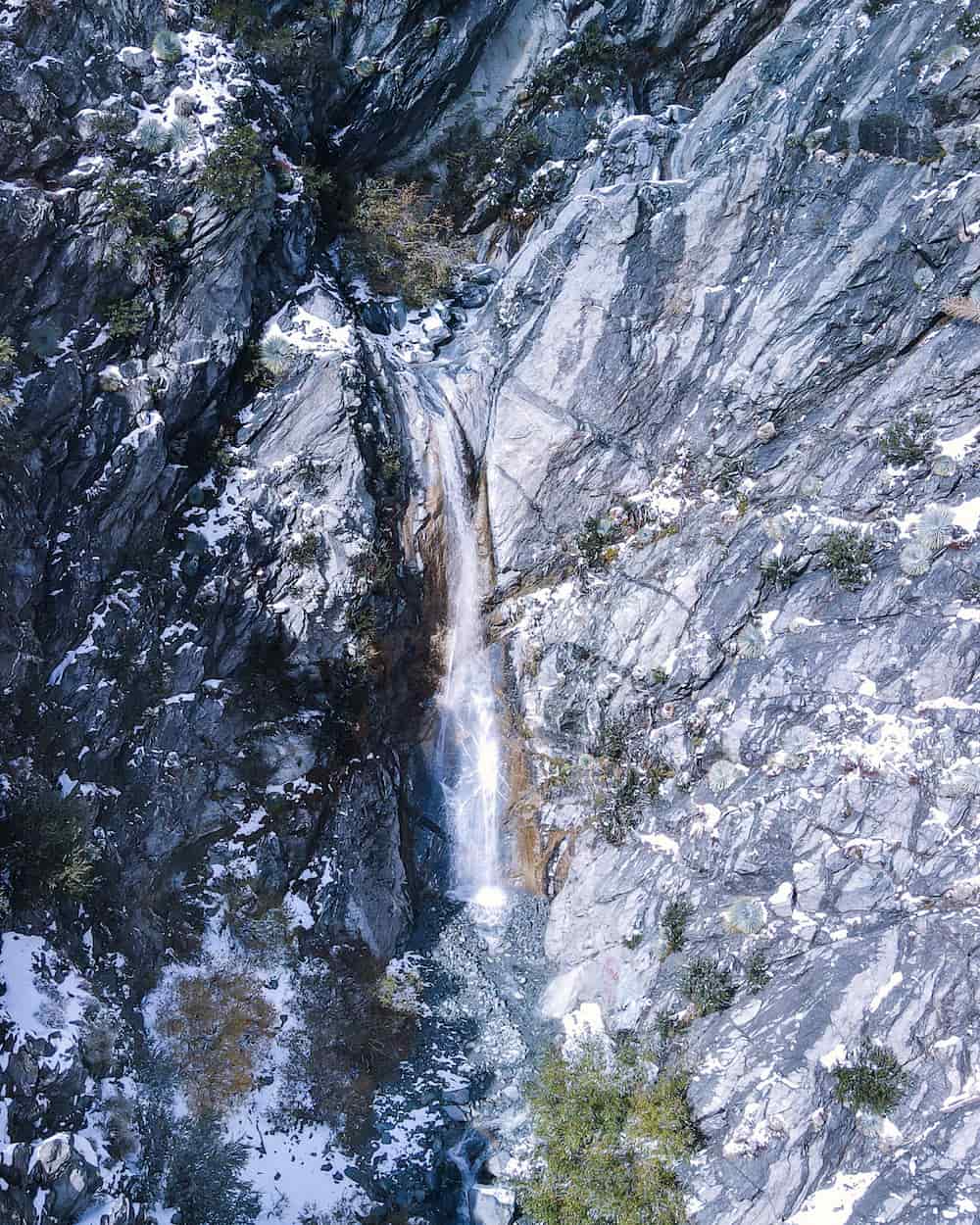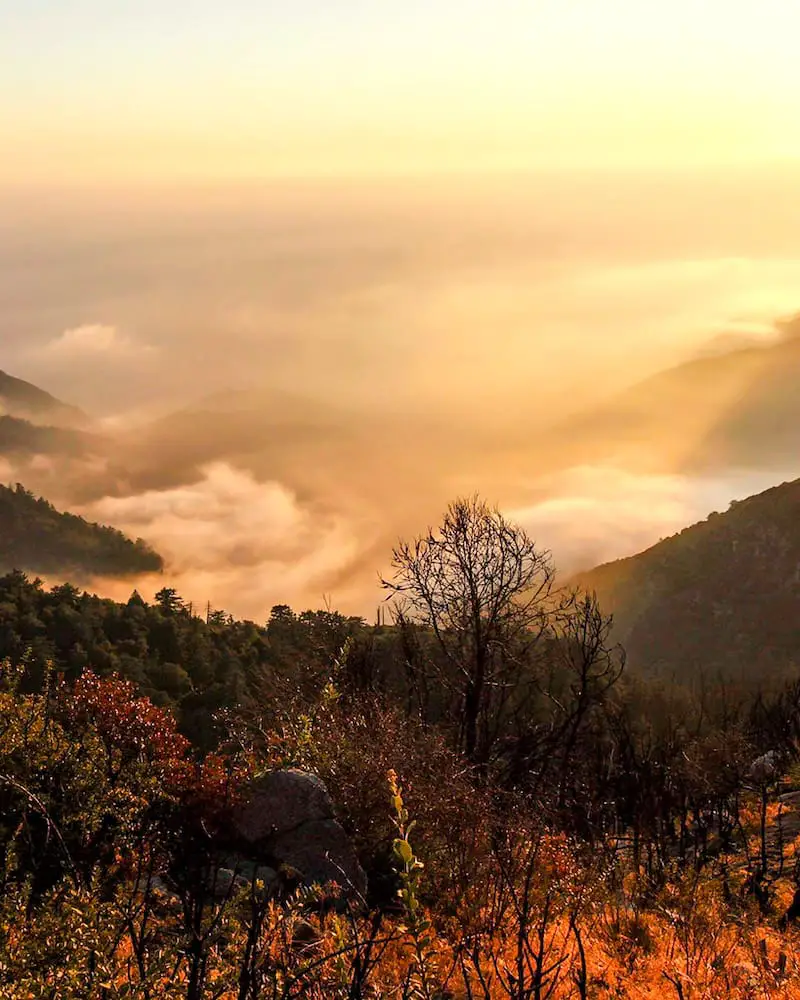
Santa Ynez Falls: Wading, Scrambling & Off-Trail Thrills (Closed)

Santa Ynez Falls: Wading, Scrambling & Off-Trail Thrills (Closed)

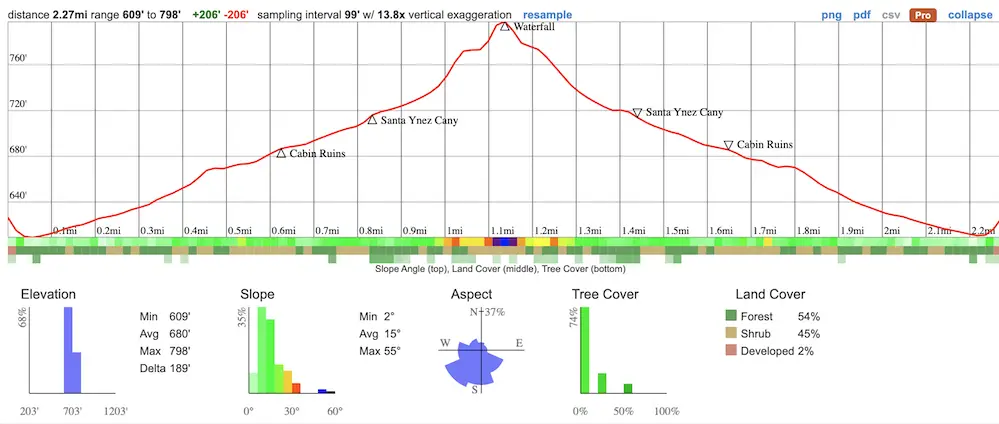
  • Total Miles: 2.27
  • Time: 1 Hr
  • Difficulty: Moderate
  • Best Season: Spring
  • Elevation Gain: 206 ft
  • Max Elevation: 798 ft
  • Type of Trail: Out & Back
  • Parking: Street Parking
  • Dogs: Not Allowed
  • Restrooms: Not Available
  • Trail Popularity: High
  • Pics Taken On: Feb 8, 2024

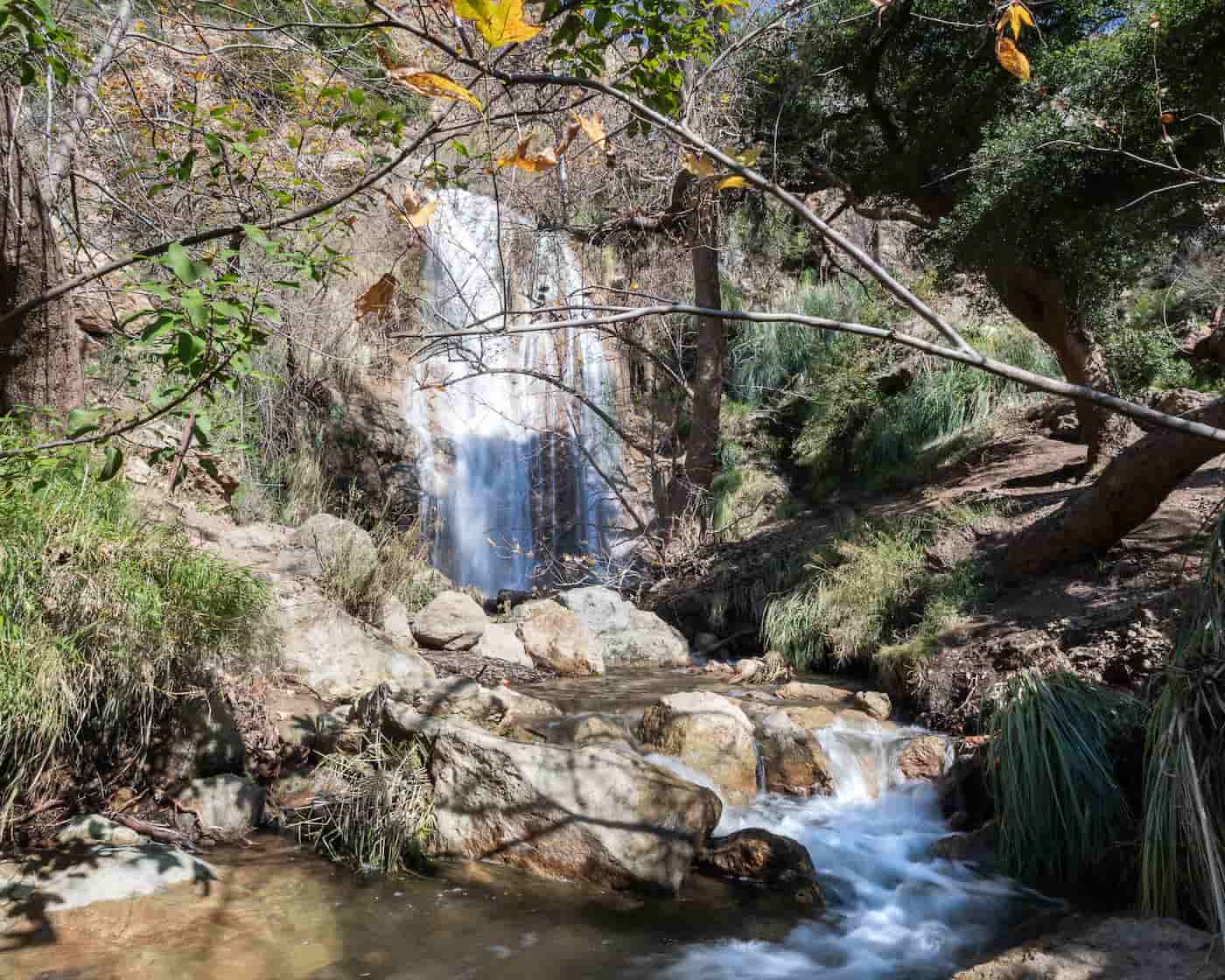
Santa Ynez Falls has become one of my favorite hikes in the Santa Monica Mountains. I love that I had to boulder scramble, wade through the creek, and rock climb over a small waterfall while enjoying the lush scenery and mild climate.

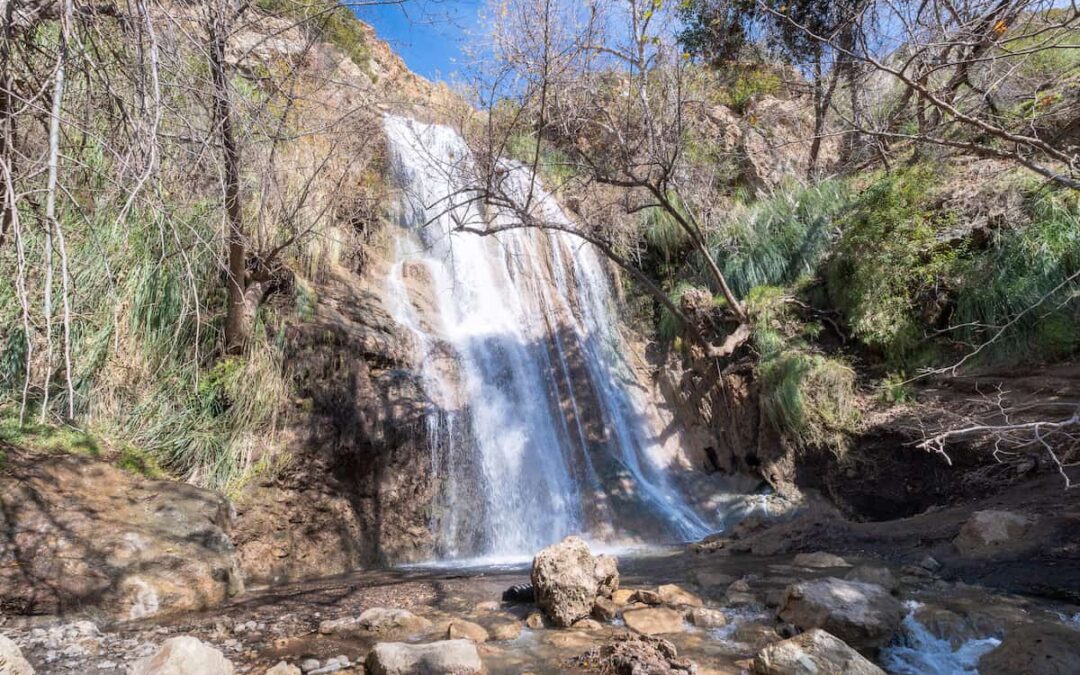
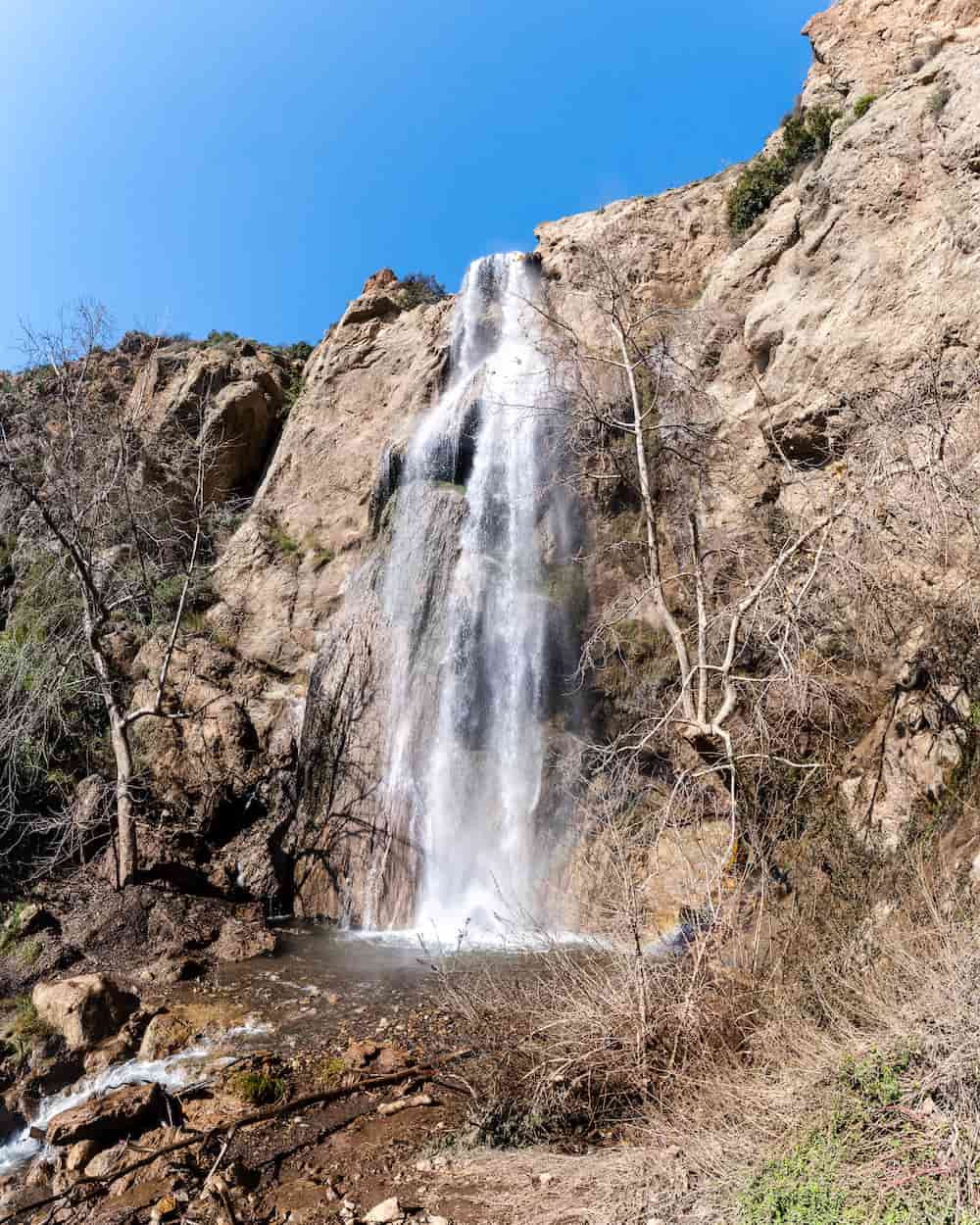
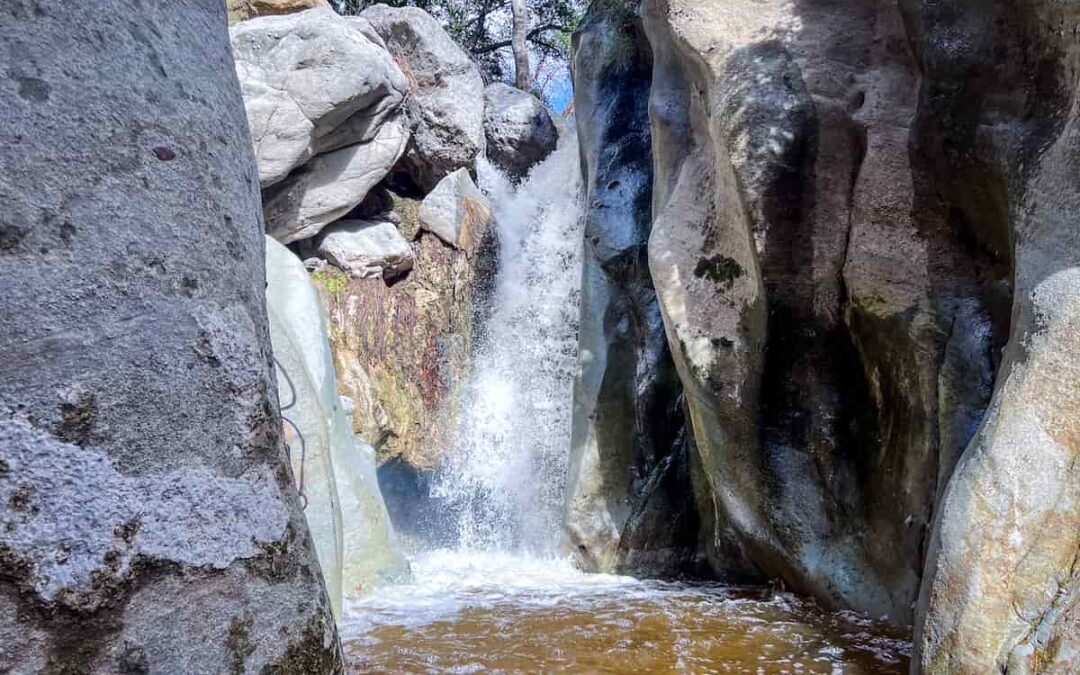
Santa Ynez Falls is a beautiful 18-foot cascade located in Pacific Palisades that, for the most part, has been kept free from graffiti. The trail runs parallel to a creek for the entirety of the hike and features beautiful sandstone cliffs, a small cave, and cabin ruins. Lastly, and most importantly, this hike contains many trail splits and creeks. Therefore, I highly recommend using an app with a built-in GPS tracker like All Trails and printing a physical copy of the map (found below) to facilitate navigation and avoid getting lost. Dogs are not allowed as the trail runs through Topanga State Park.

Check out this complete list of California waterfalls. In it, you’ll find everything from SoCal’s largest waterfall to the most jaw-dropping.

Santa Ynez Falls Trail Map
powered by Advanced iFrame

Santa Ynez Falls Elevation Profile

Download Printable PDF Map

Parking And Directions

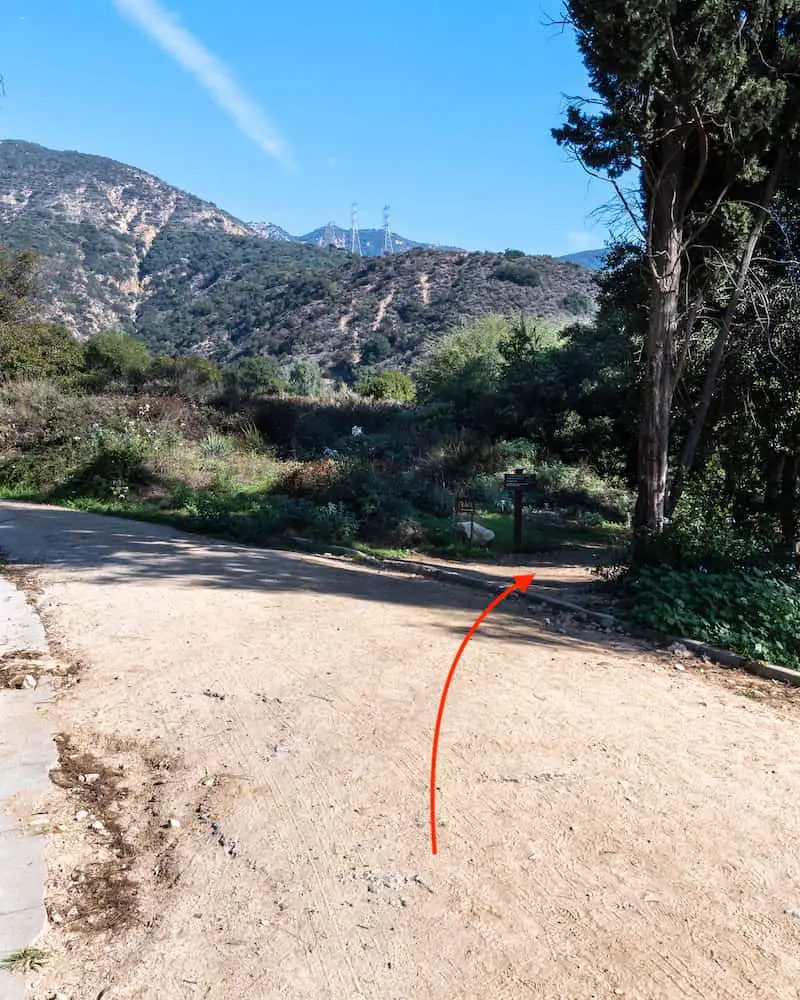
The trailhead is located at the intersection of Camino De Yatasto and Vereda De La Montura. Click the link here to be redirected to the trailhead via Google Maps.

Helpful Info

Weather Forecast

  • Use and set a navigational hiking app before venturing into the canyon
  • Wear pants and long sleeves to avoid the abundant poison oak and ticks

Hiking To Santa Ynez Falls

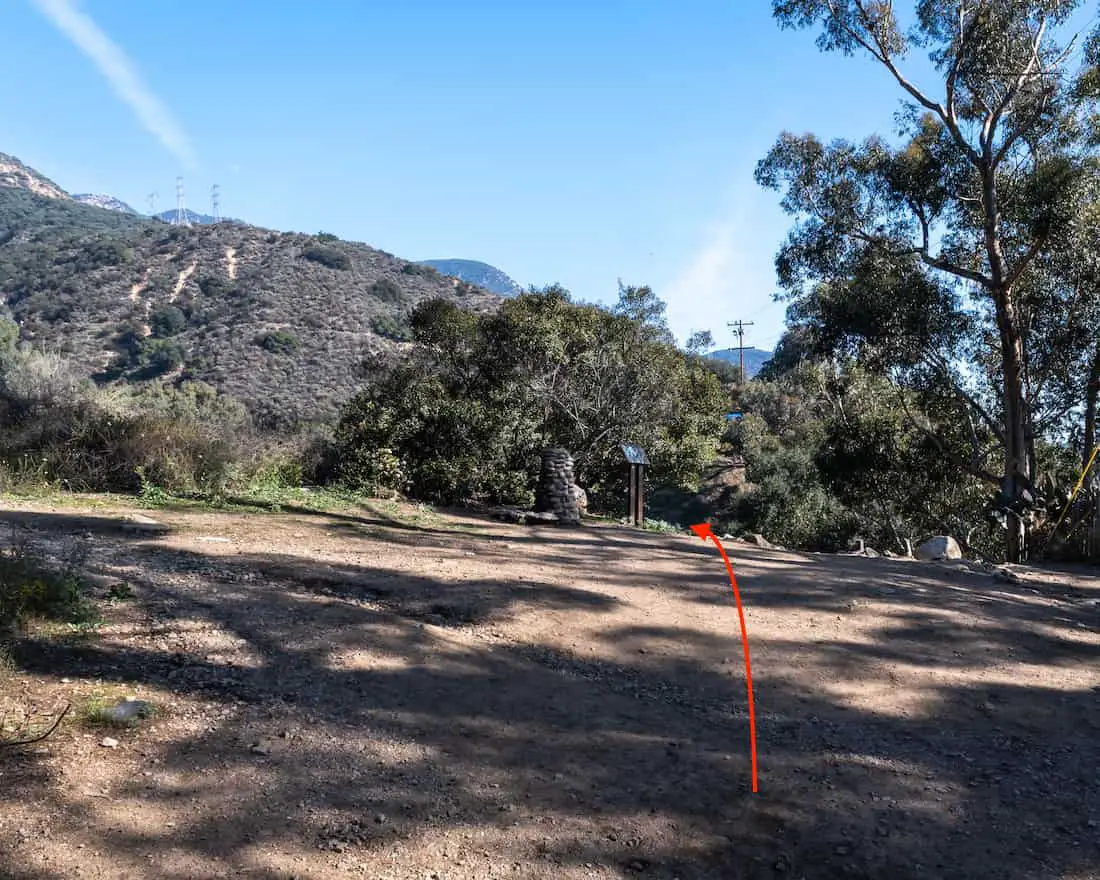
The hike began once I walked past the black gate and down the wooden steps to Santa Ynez Canyon Trail.

To the left of the steps was a storm drainage, and judging by the amount of water, I assumed the falls would have plenty of water.

I used the app All Trails to navigate through the canyon. However, the trail was no longer the same as shown on the app due to the recent rains. Please keep that in mind during your visit.
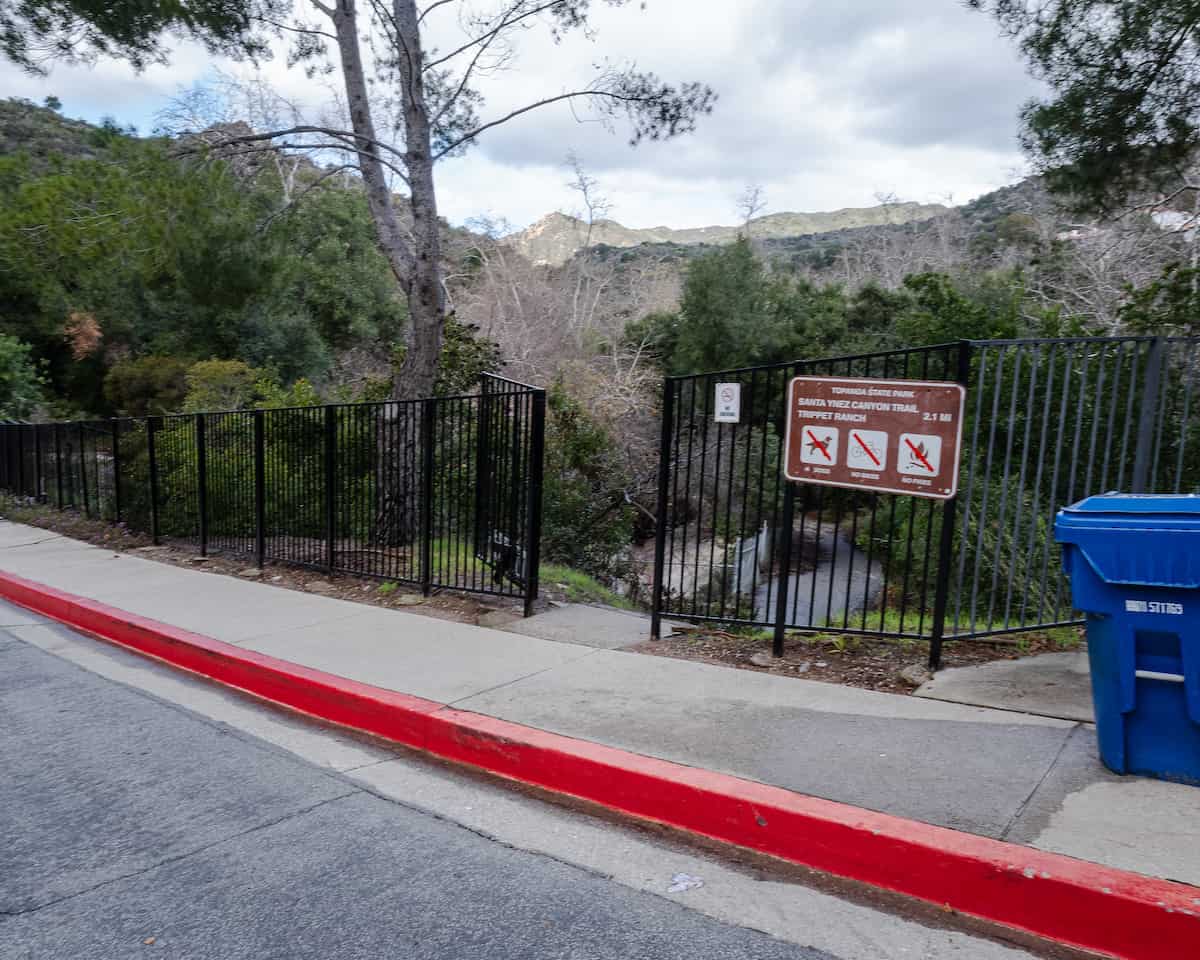
Trailhead

I crossed a concrete flood control that emptied into the storm drainage. It was so slippery I almost ate it so be careful when you cross. Do NOT head up the flood control.

Be very mindful of your surroundings. Although it was winter, the riparian woodland was extremely lush, making it easier to lose the trail.
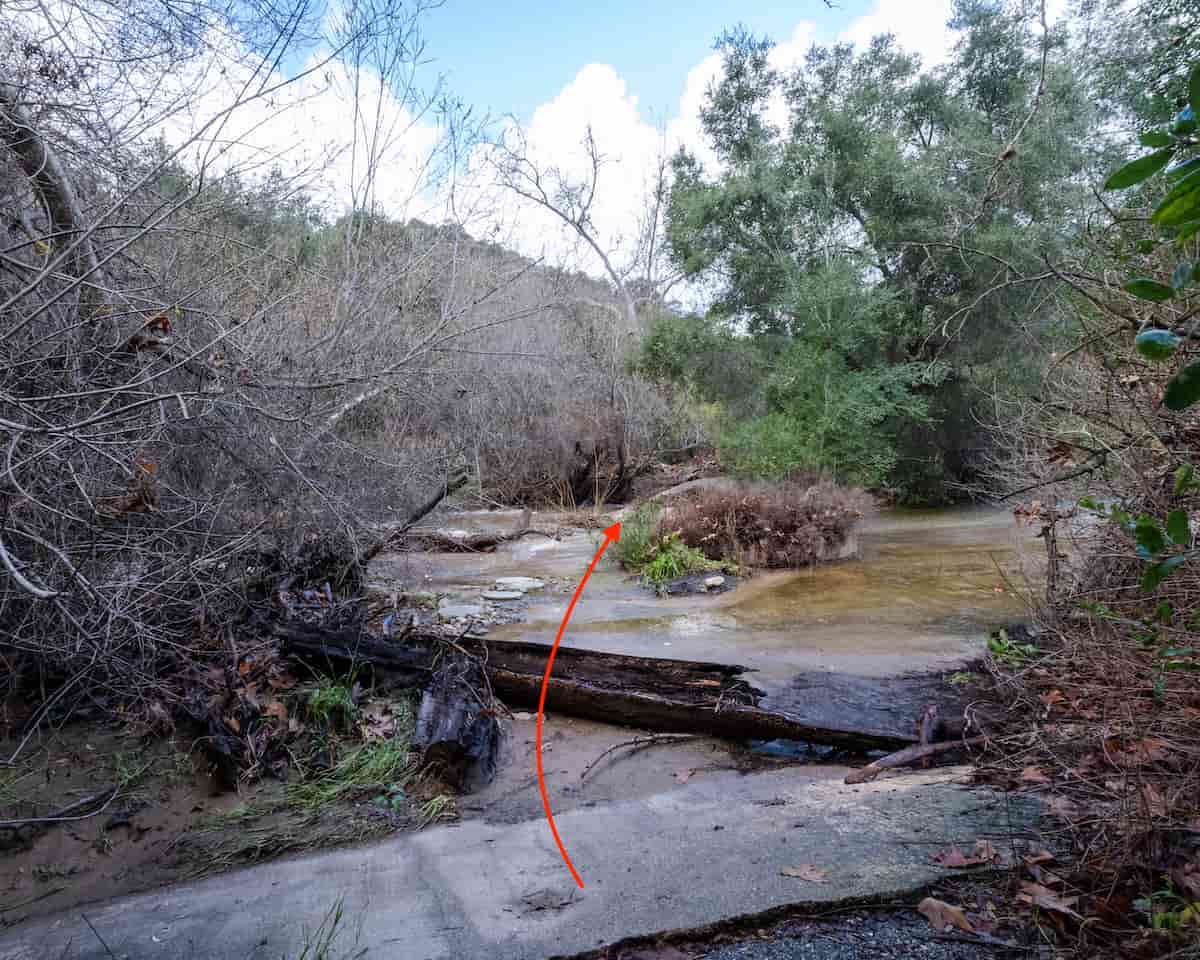
I continued upstream via the creek bank as the trail seemed to disappear.
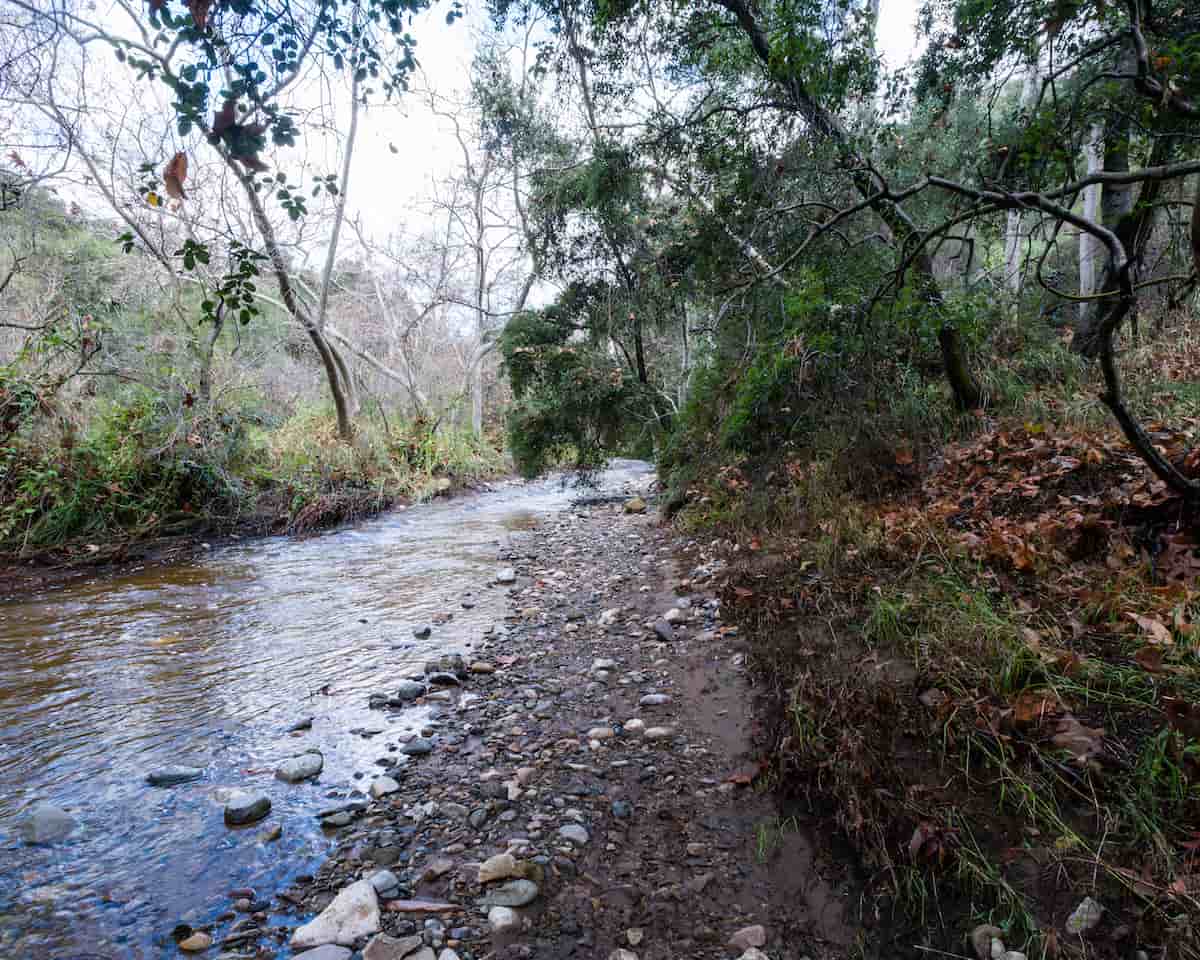
Shortly afterward, I arrived at the rock shelter. This neat-looking structure has been naturally formed from the surrounding sandstone cliffs. You can’t miss it. It’s located to the right of the trail via a 20 ft trail detour.

It reminds me of a larger sandstone cave that is quietly tucked away in the Santa Monica Mountains. I highly recommend exploring it.
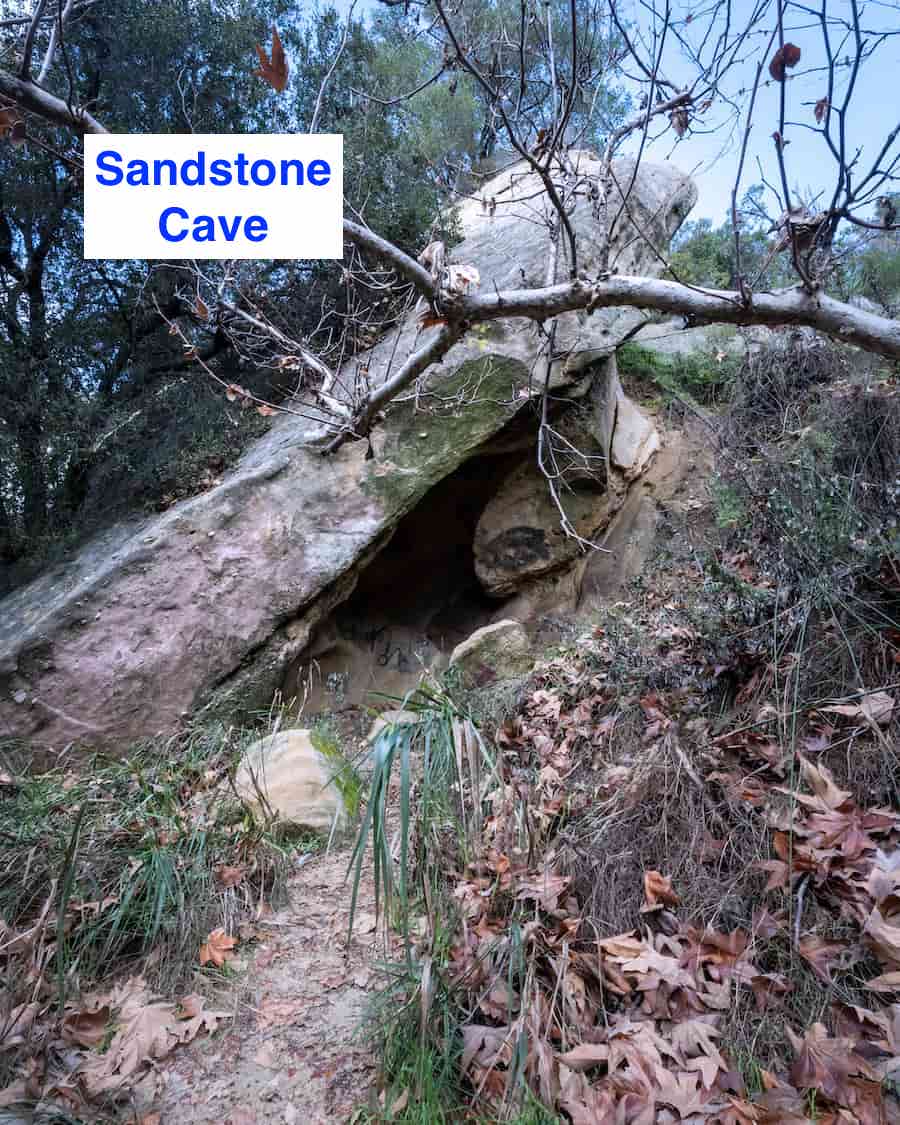
Sandstone Cave

There was so much water that part of the trail had become a flowing creek. Don’t expect this much water during the summer.
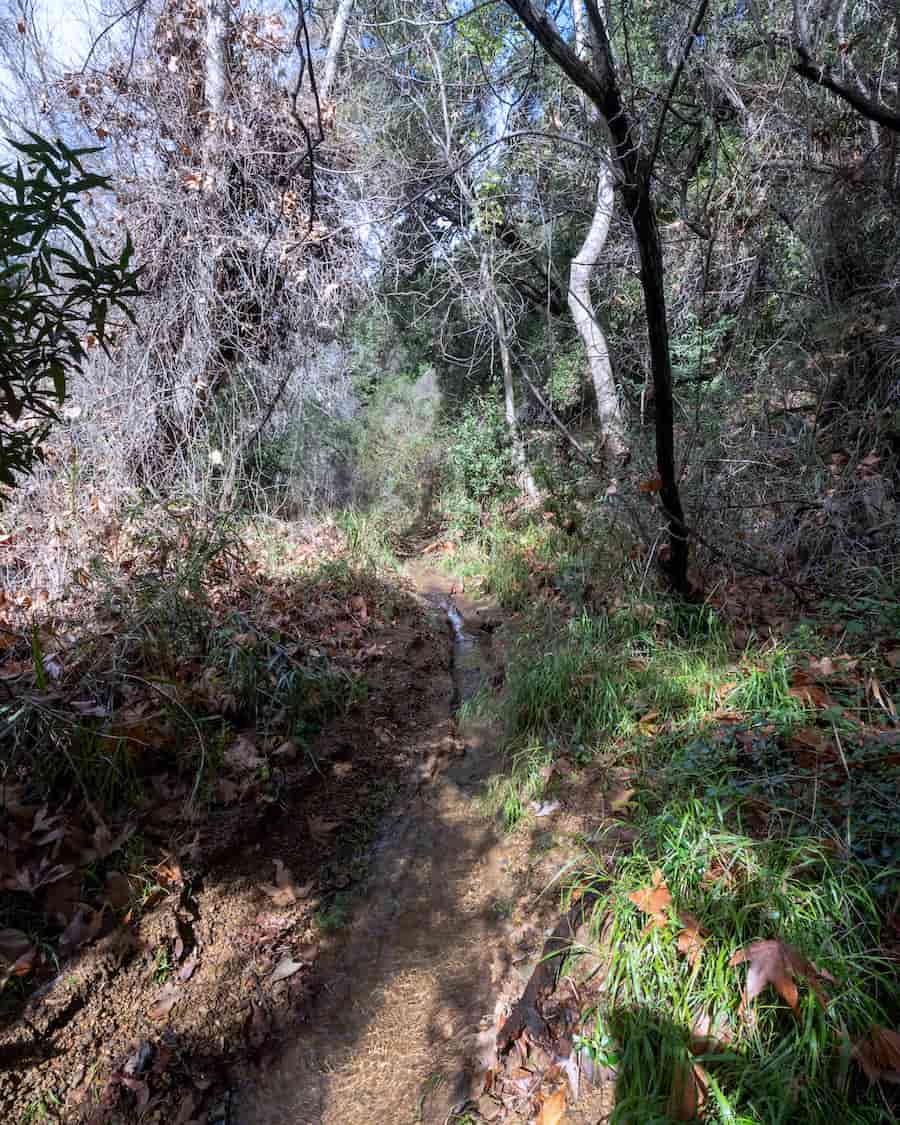
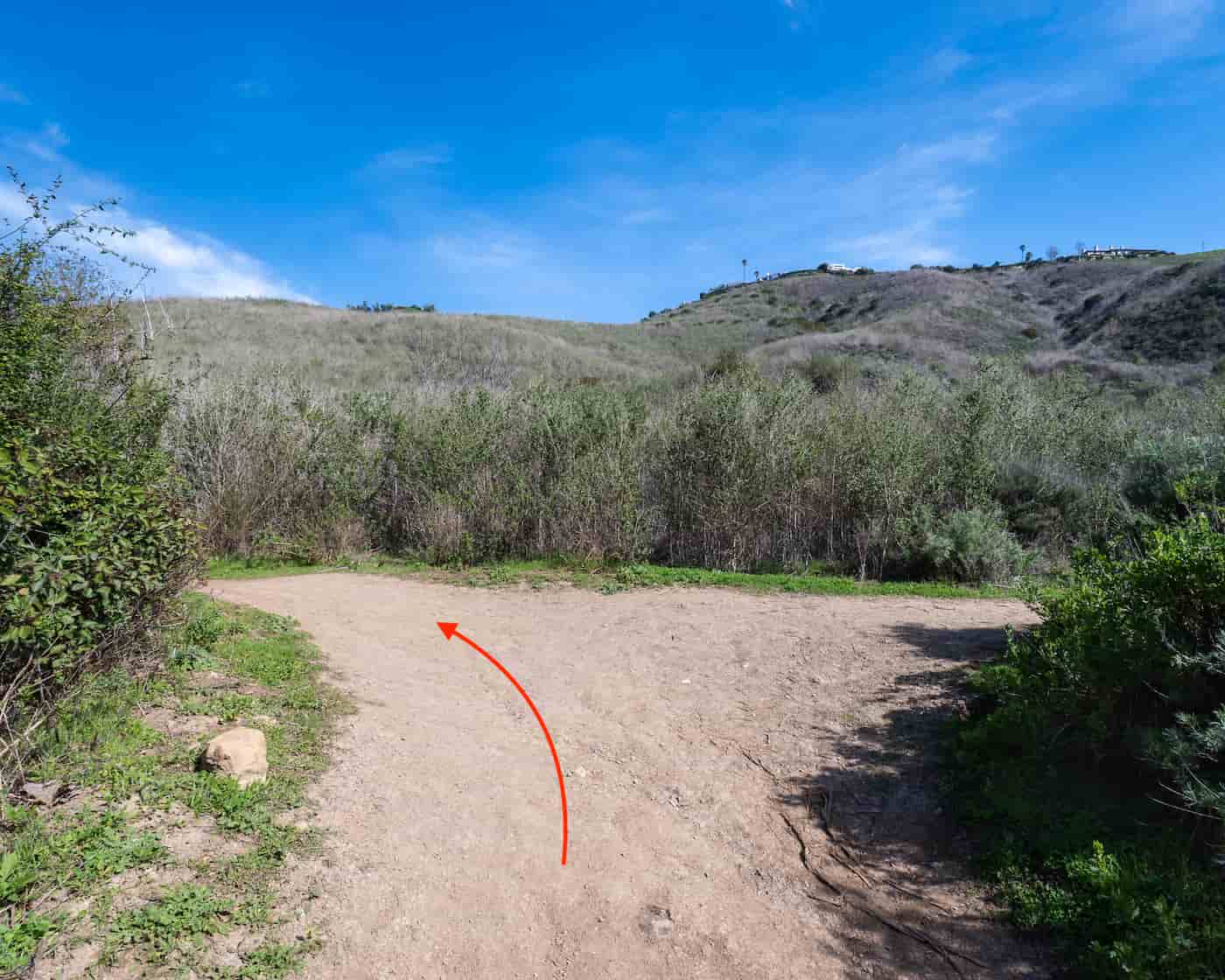
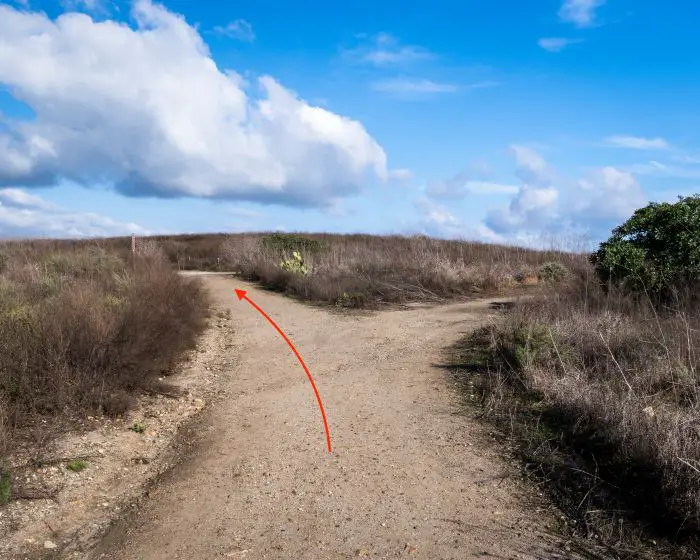
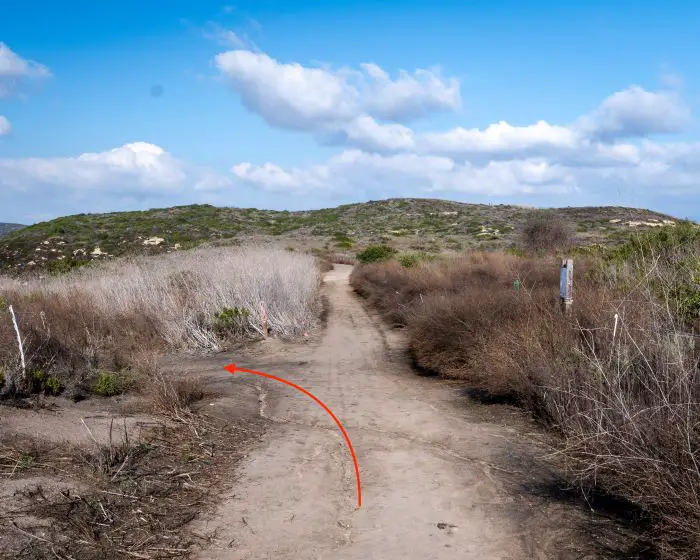
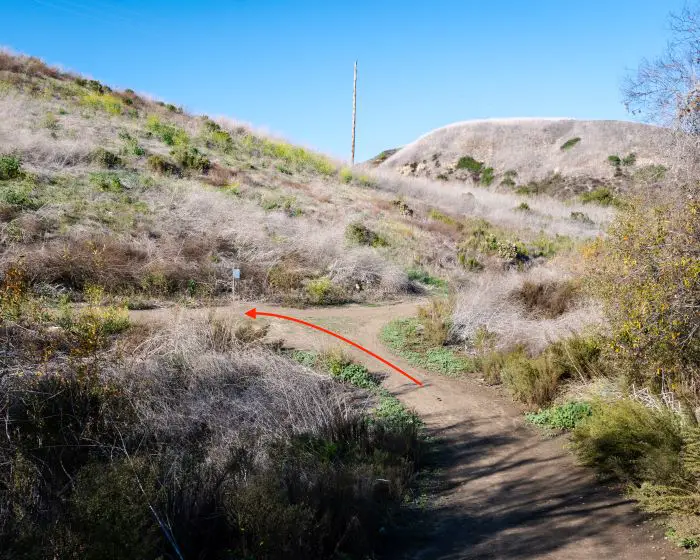
I made a left at the first fork to remain on the trail. The fork is located in one of many little glens and is marked by a sign.

Fun fact: A large sandstone rock with a mortar is in this area. Mortars are holes carved into bedrock by Native Americans, in this case, the Chumash people, and used for grinding different types of food. This mortar was likely used to grind acorns.
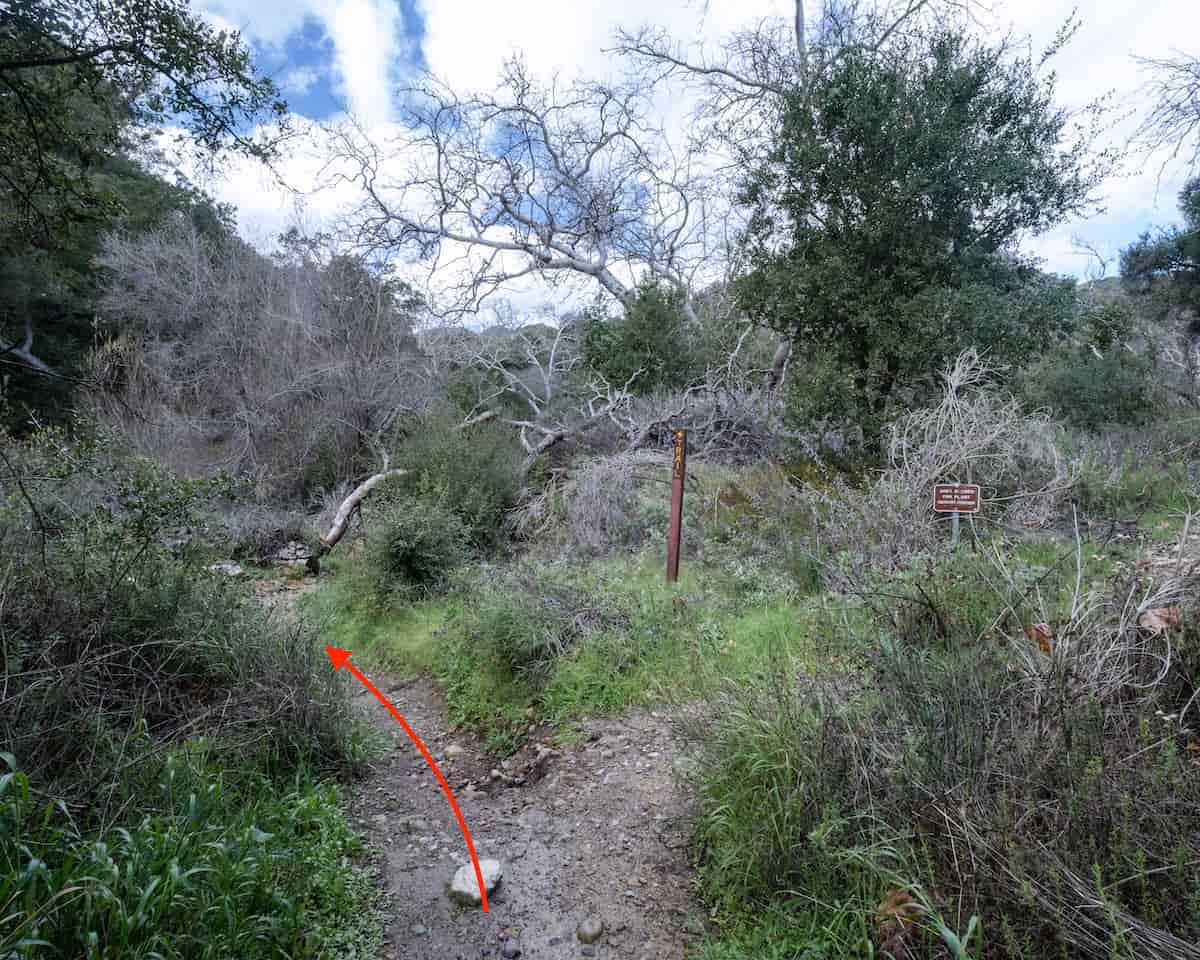
Okay, here’s where it gets tricky so pay close attention.

The All Trails app tells you to cross the creek. If you take this route, you’ll quickly come to another fork. This is where the Santa Ynez Canyon Trail meets the Santa Ynez Falls Trail. You’ll want to take the latter to get to the falls. Two creek crossings follow the fork in the trail. The goal is to head upstream into the North Branch of Santa Ynez Canyon.

Do not continue up the Santa Ynez Canyon Trail as it leads to Trippet Ranch.

As you can see from the image below. I didn’t take the All Trails route. I continued up the creek bank instead.
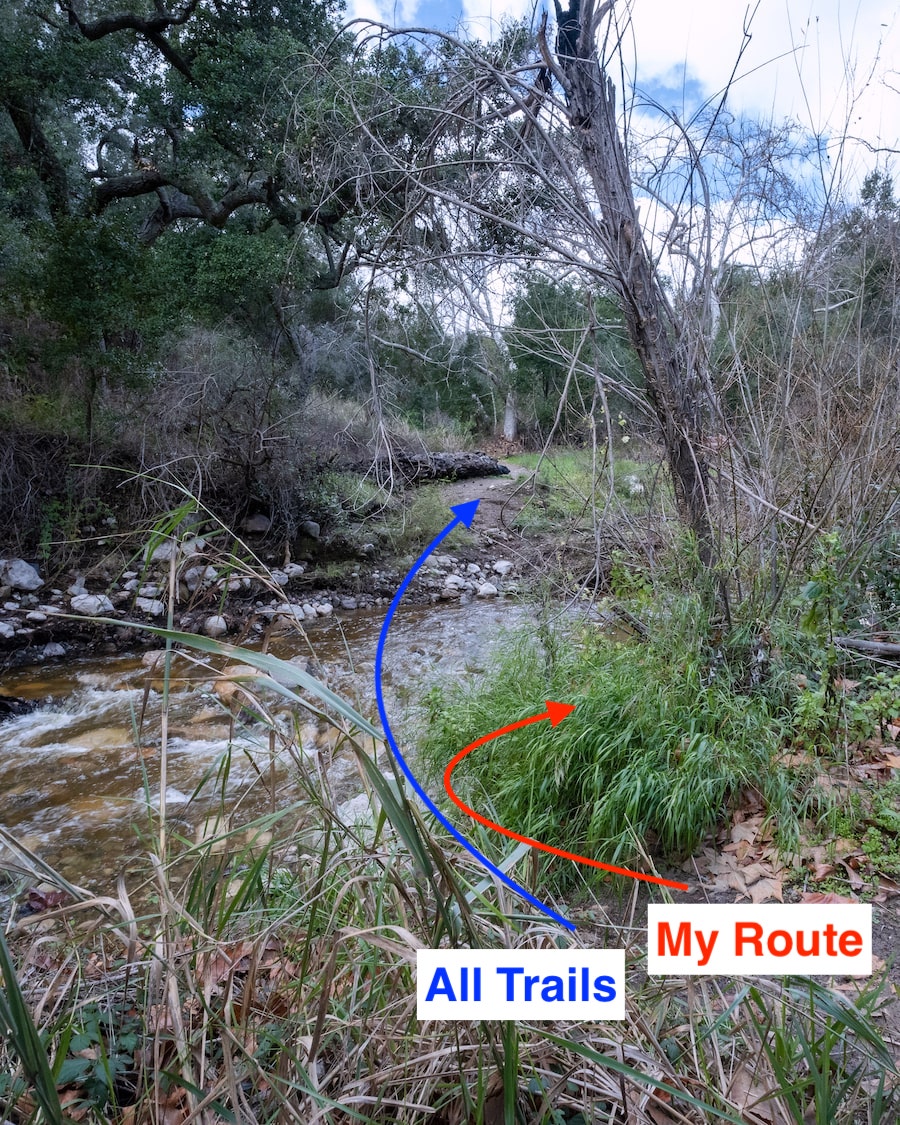
Doing so led me to the confluence of a seasonal creek that flows out of Quarry Canyon, named after an old limestone quarry, and the primary creek. Do not head into Quarry Canyon, located to the right of Santa Ynez’s North branch. See map for details.
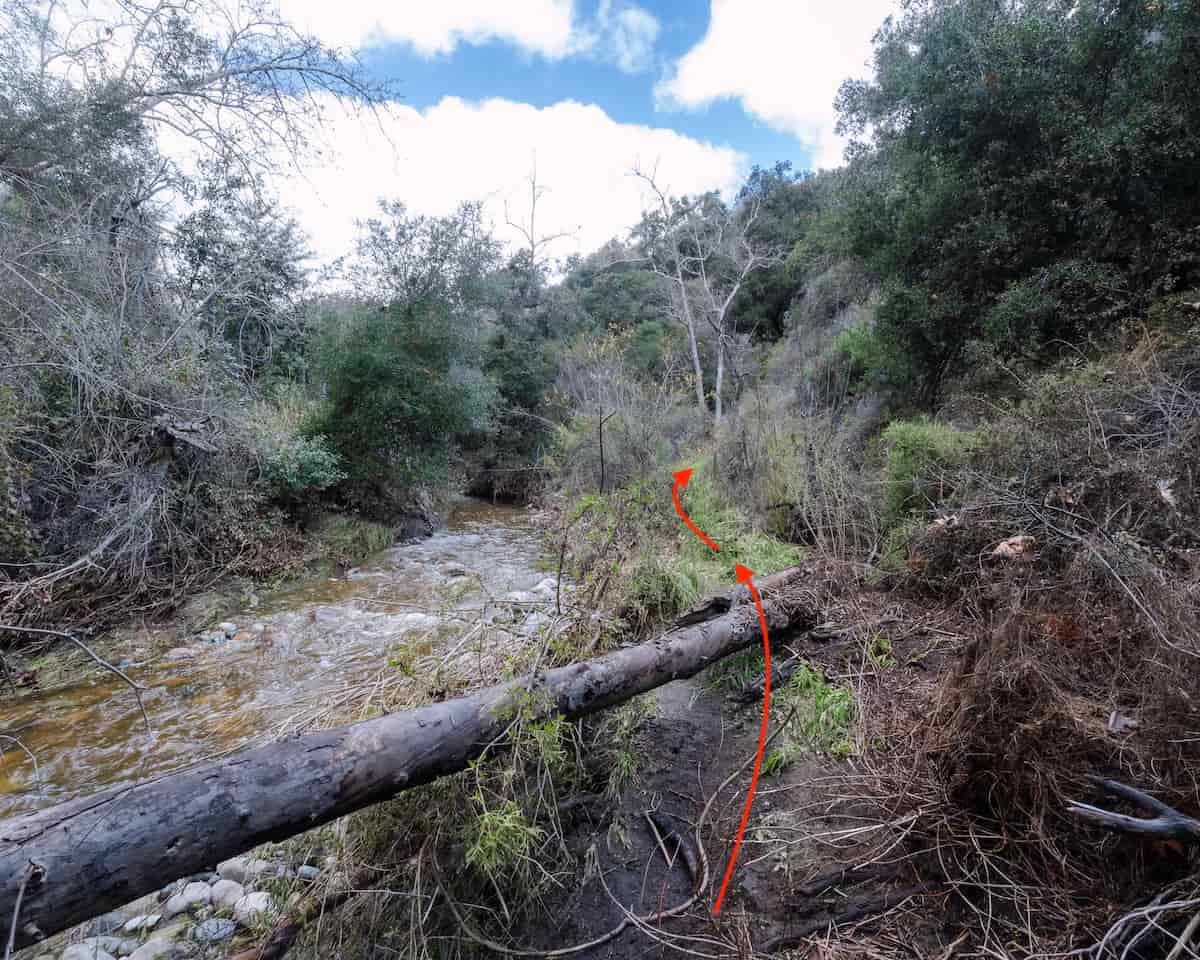
This route slightly deviates from the creek by climbing up the adjacent hills then descending back down to the creek two times. So as long as you keep an eye on the creek, you’ll be okay.
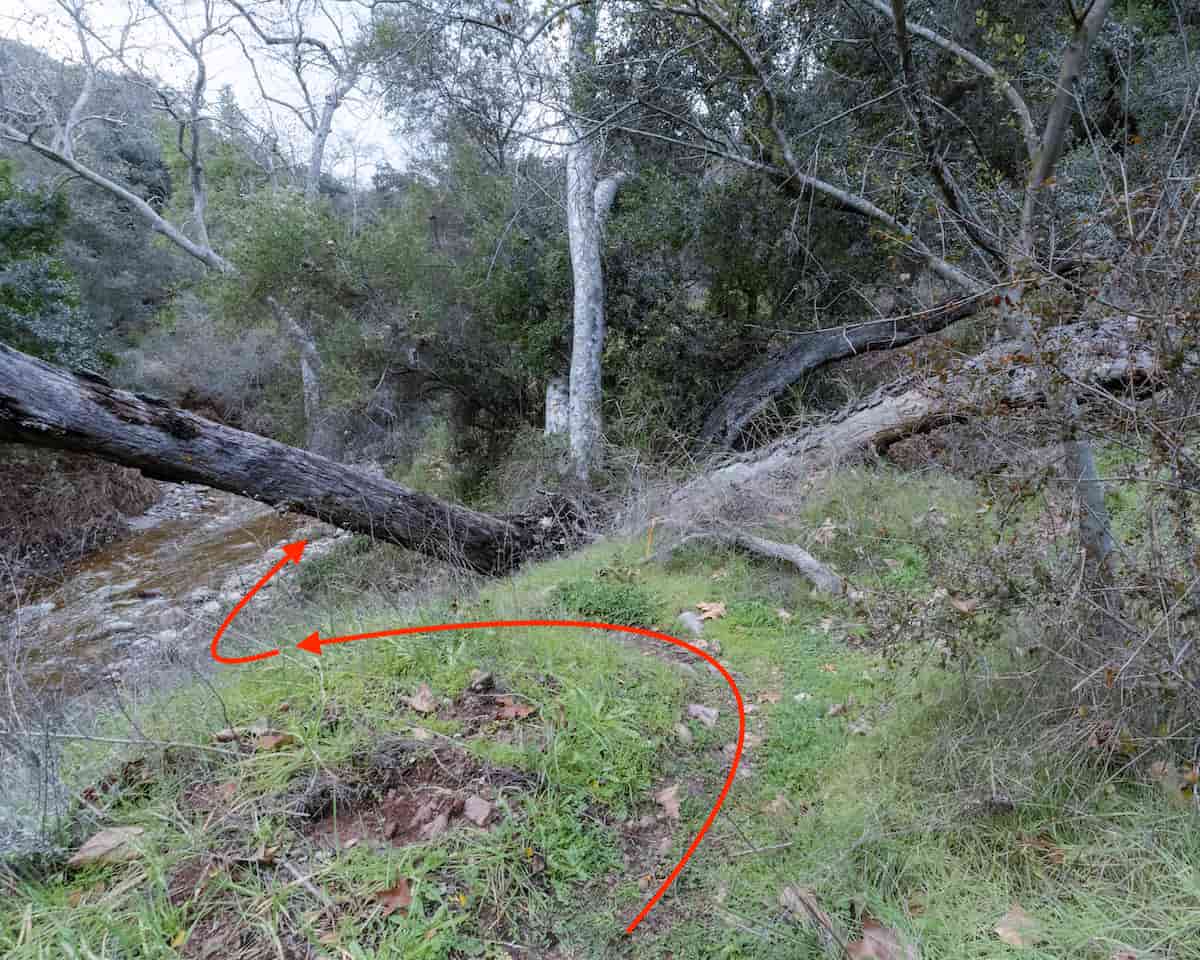
The route I took and the All Trails route merge in the area shown below. I climbed up the hill one more time.

I could spot the stone ruins from the top of the hill, which let me know I was at the mouth of Santa Ynez’s north branch.
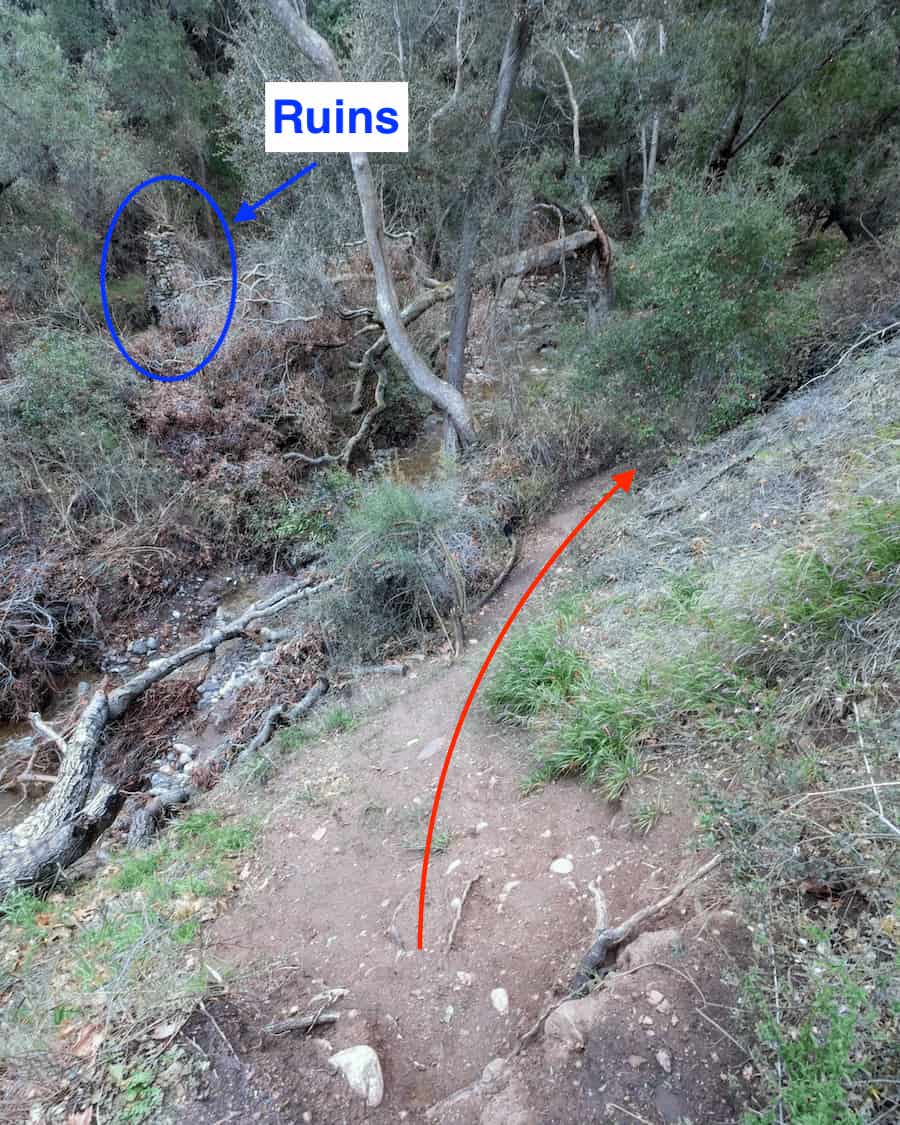
After descending to the creek, I was officially on the Santa Ynez Falls Trail. However, I wanted to explore the ruins before continuing onto the falls.

A stone chimney is located across the creek and after the second creek confluence. A second chimney once stood about 30 feet away from the one shown below, but I only remember seeing one. It must have collapsed or maybe I just missed it.

If you want to check out some crazy ruins, plan a visit to an abandoned zoo in Griffith Park. The ruins are still very intact and look unlike any other ruins I’ve seen. Perhaps zoos aren’t your thing. In that case, you may enjoy forgotten Nazi ruins which are also in this mountain range.
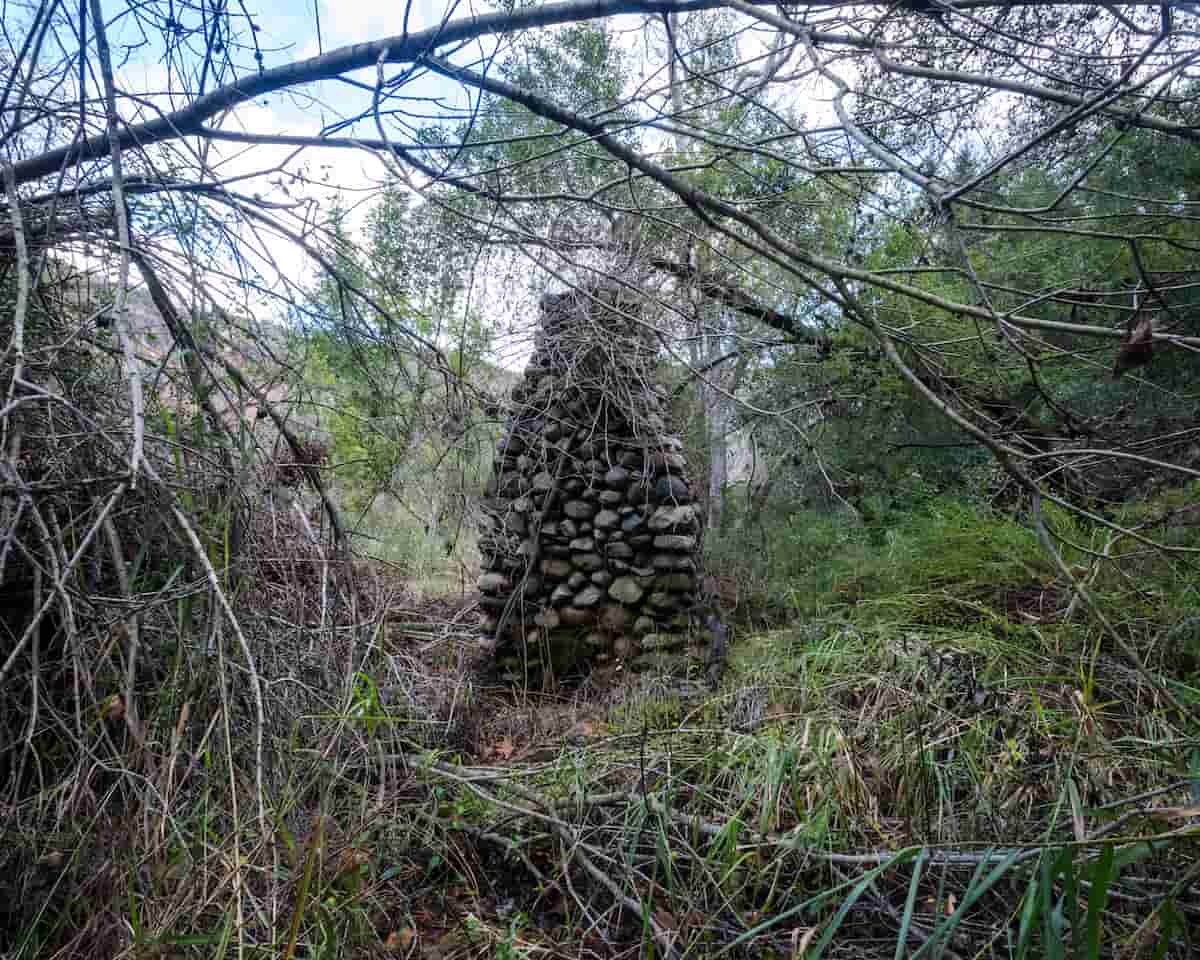
Ruins

After exploring the ruins, I hopped back on the trail, which remained shaded until the section where I began wading through the creek.

There was so much water that day that an extremely rare waterfall was tricking across the creek.
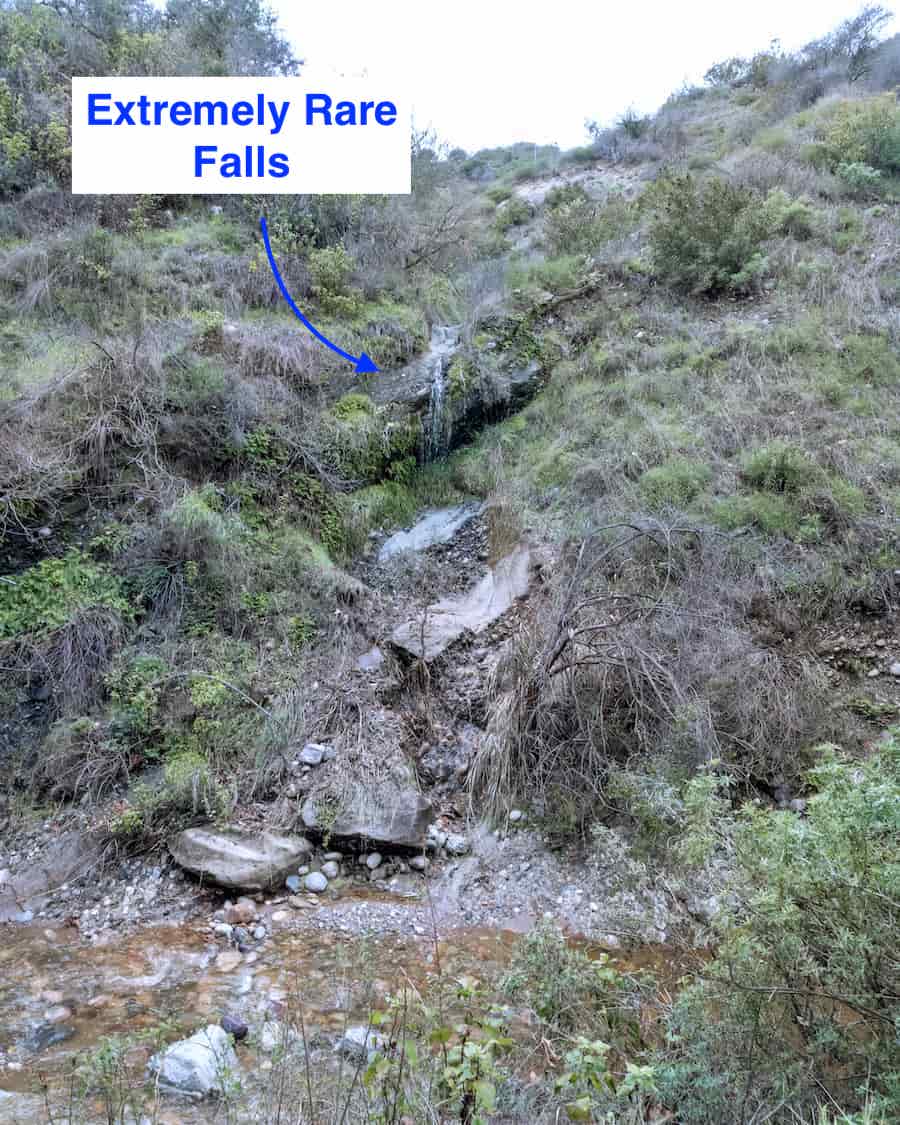
Seasonal Waterfall

Since there were multiple trails on both sides of the creek, I chose whichever trail was easiest to walk on, and that once again happened to be the trail on the right.
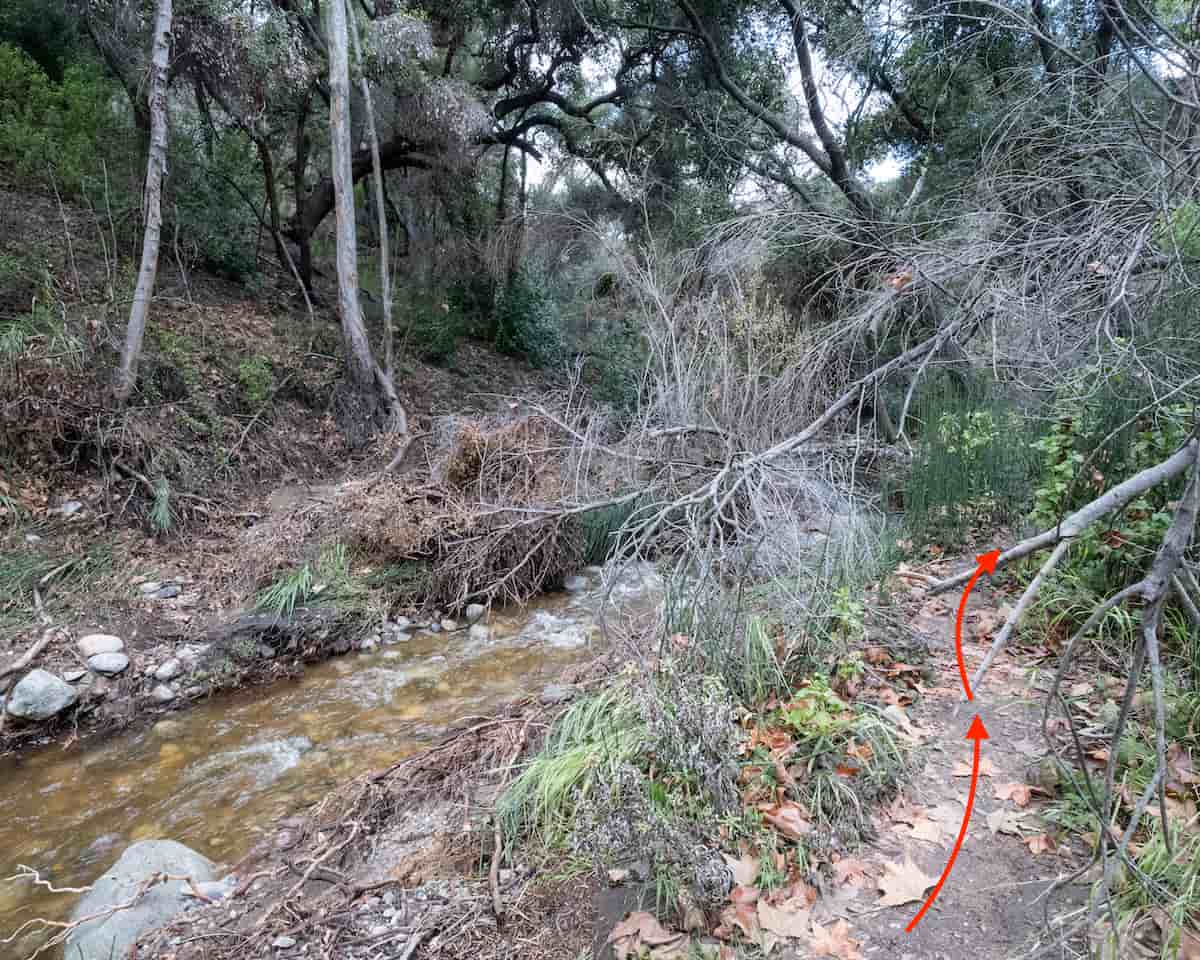
After the first creek crossing on the Santa Ynez Falls Trail, the trail began ascending the left side of the canyon.

However, the ascending didn’t last very long as the trail descended to the creek level for the last time. I crossed the creek once more to remain on the more useable trail.

Here’s where the real fun began. From this point onward, I had to wade through the creek until arriving at the falls.
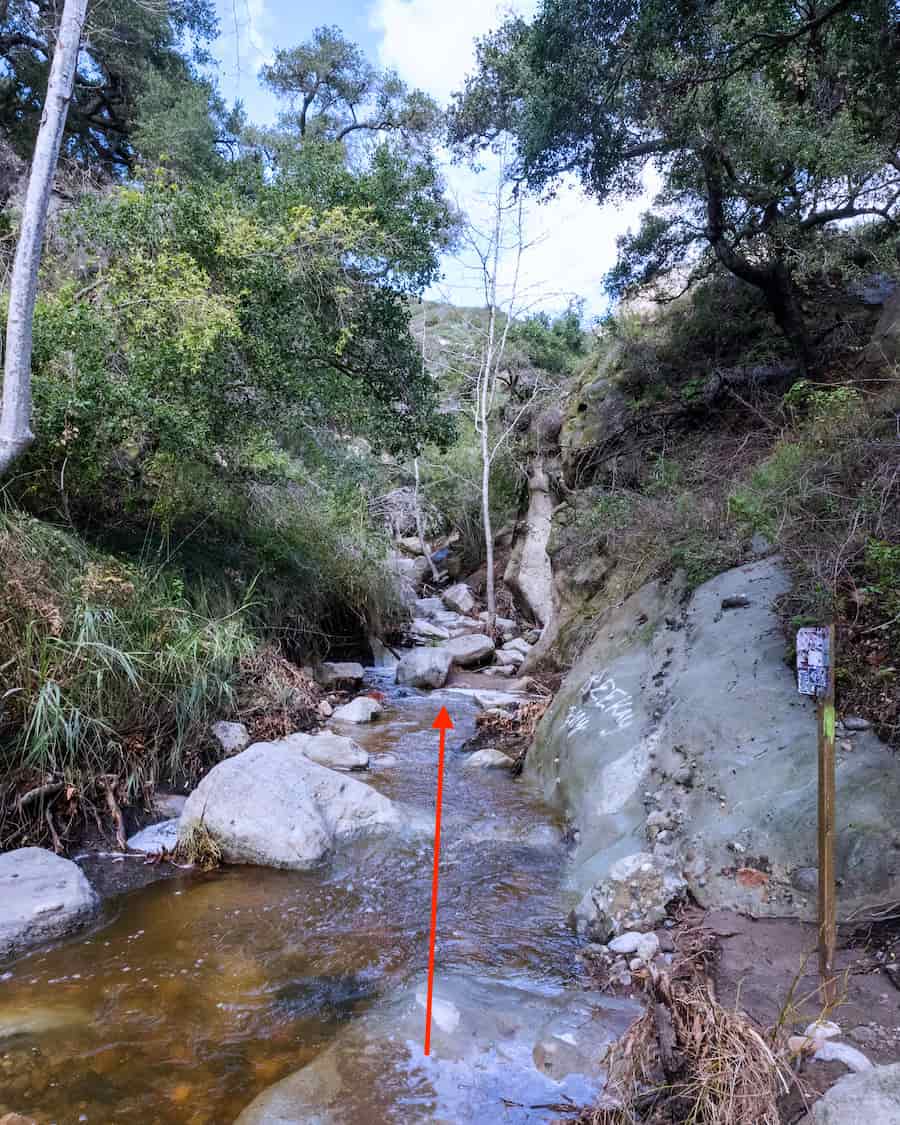
I arrived at a small waterfall with a roughly 3-3.5 foot pool. I had two choices. I could climb directly over the falls or head up the right side of the canyon as shown by route 2.

Since everything was wet and slippery and Route 2 was about 15 feet above the creek, I decided to wade through the pool and climb directly over the 8-foot waterfall instead of risking a fall.

Route 2, however, is typically the primary path as conditions are usually much drier.

Once above the small falls, which luckily was the most difficult of all obstacles, I continued trekking upstream via the right side of the fork.

The gorge narrowed, and the stream gradually grew louder within minutes of additional boulder scrambling.
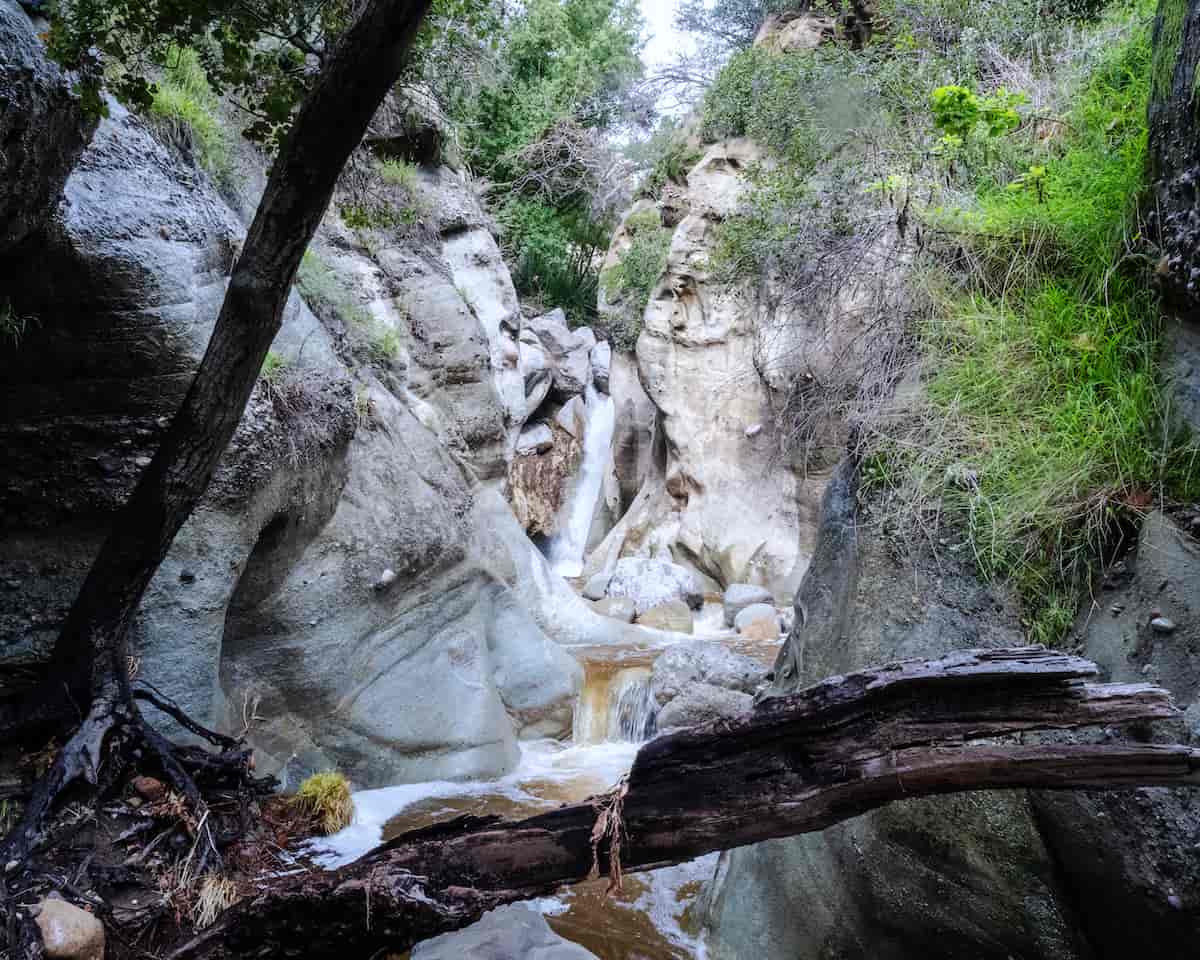
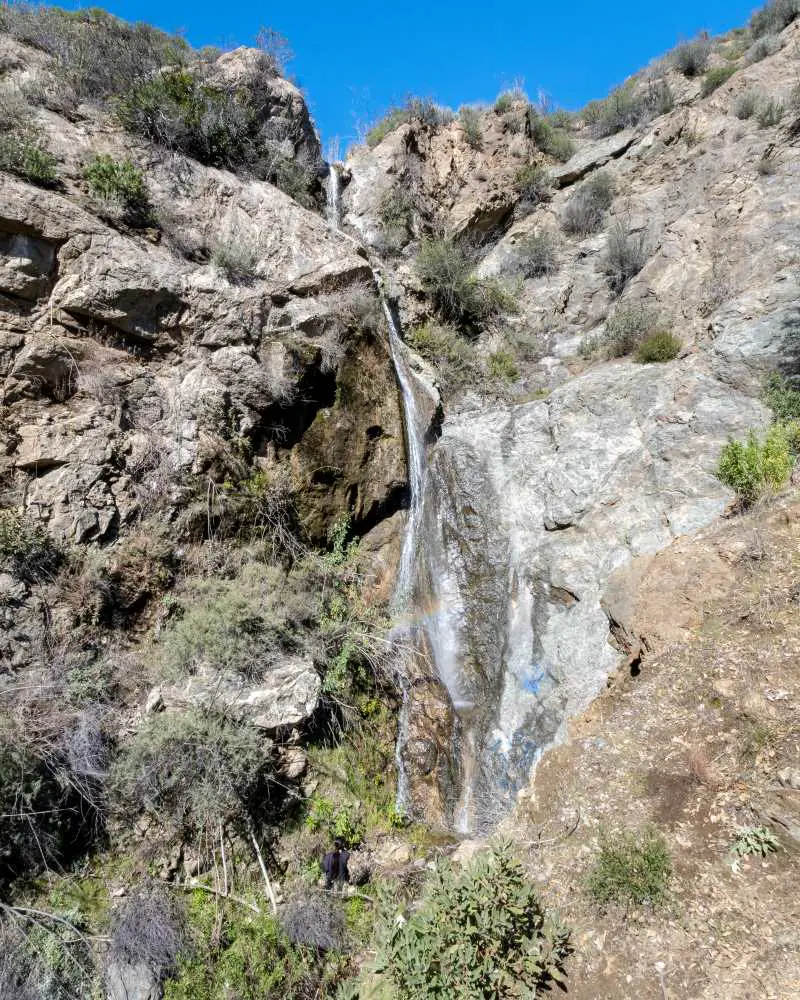
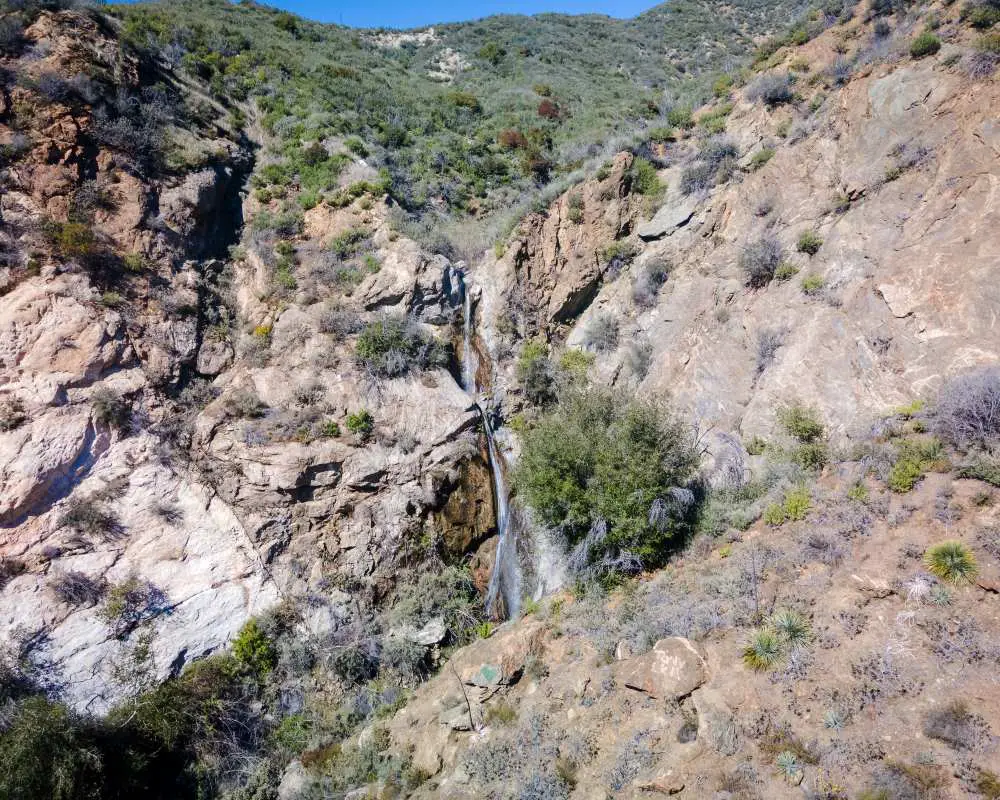
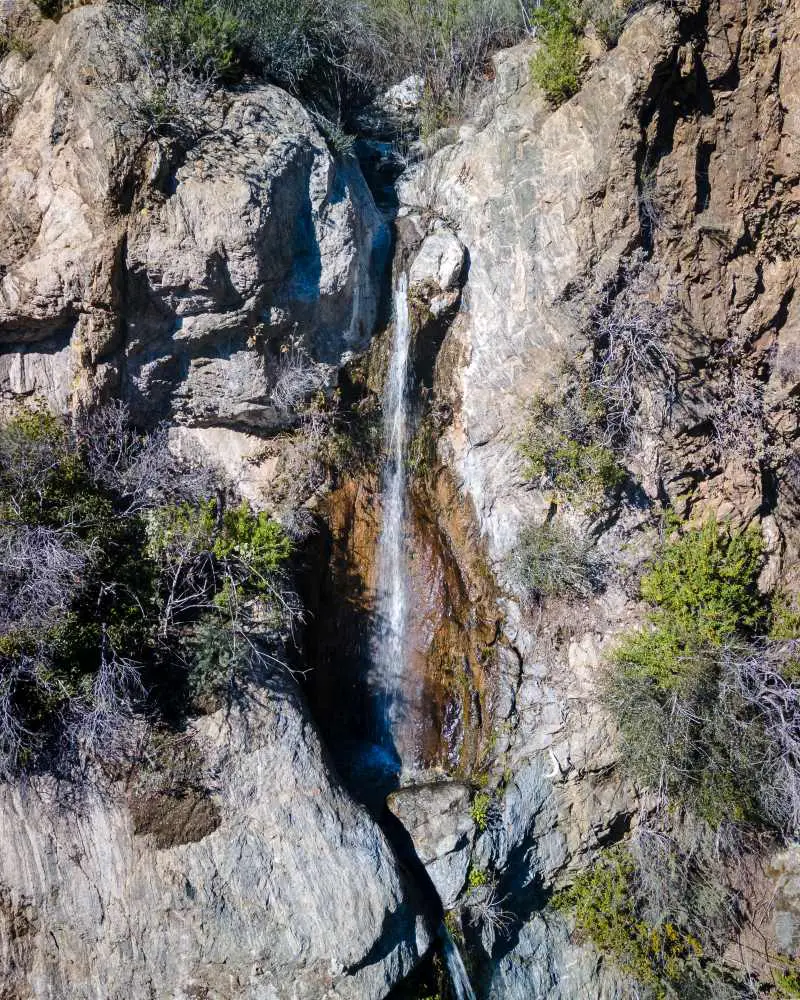
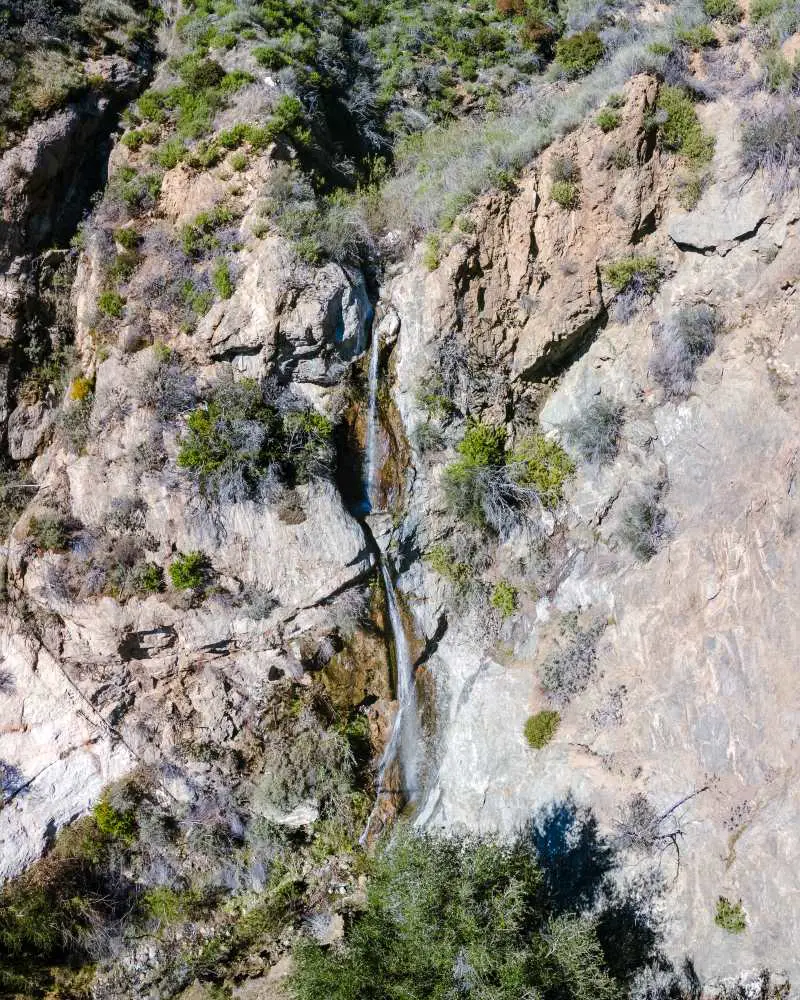
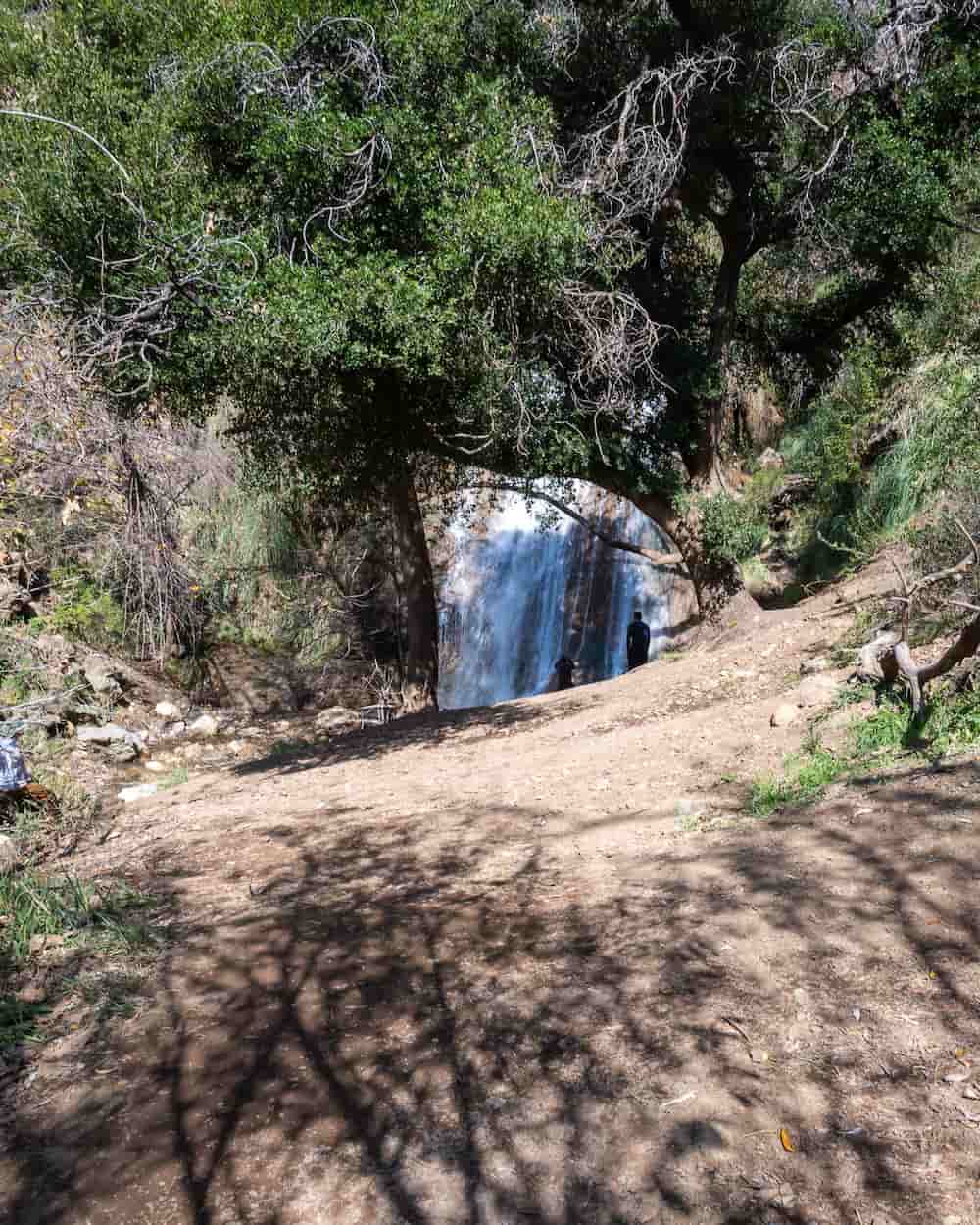
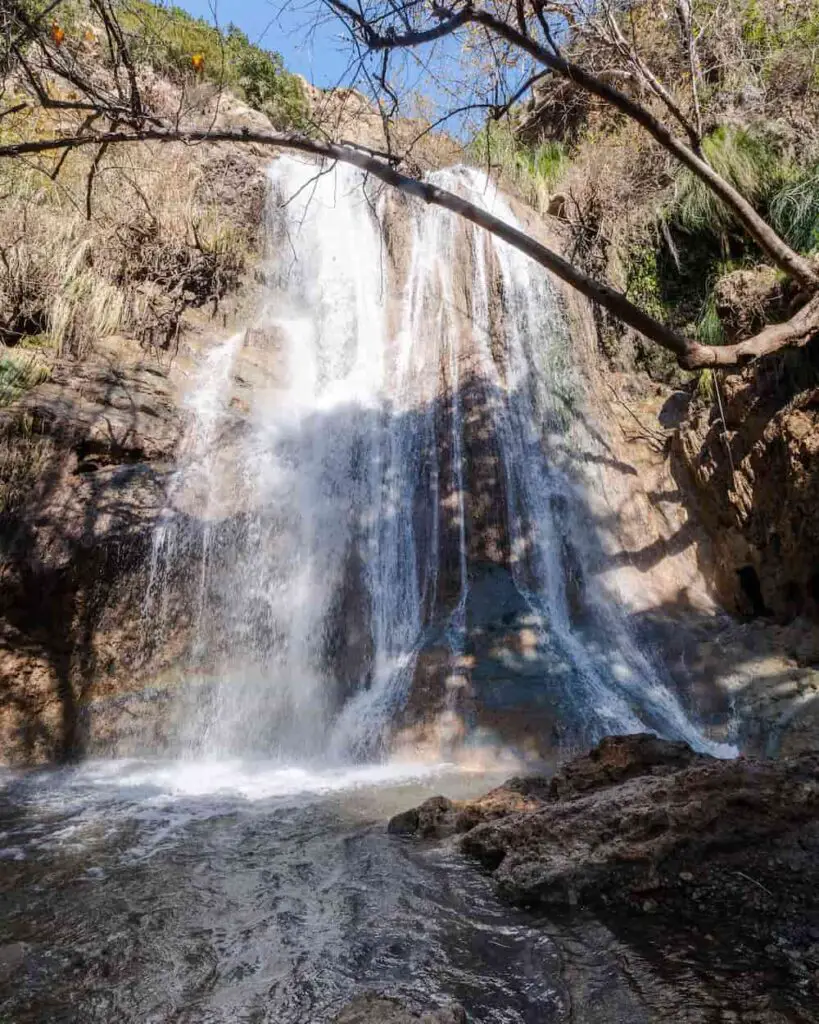
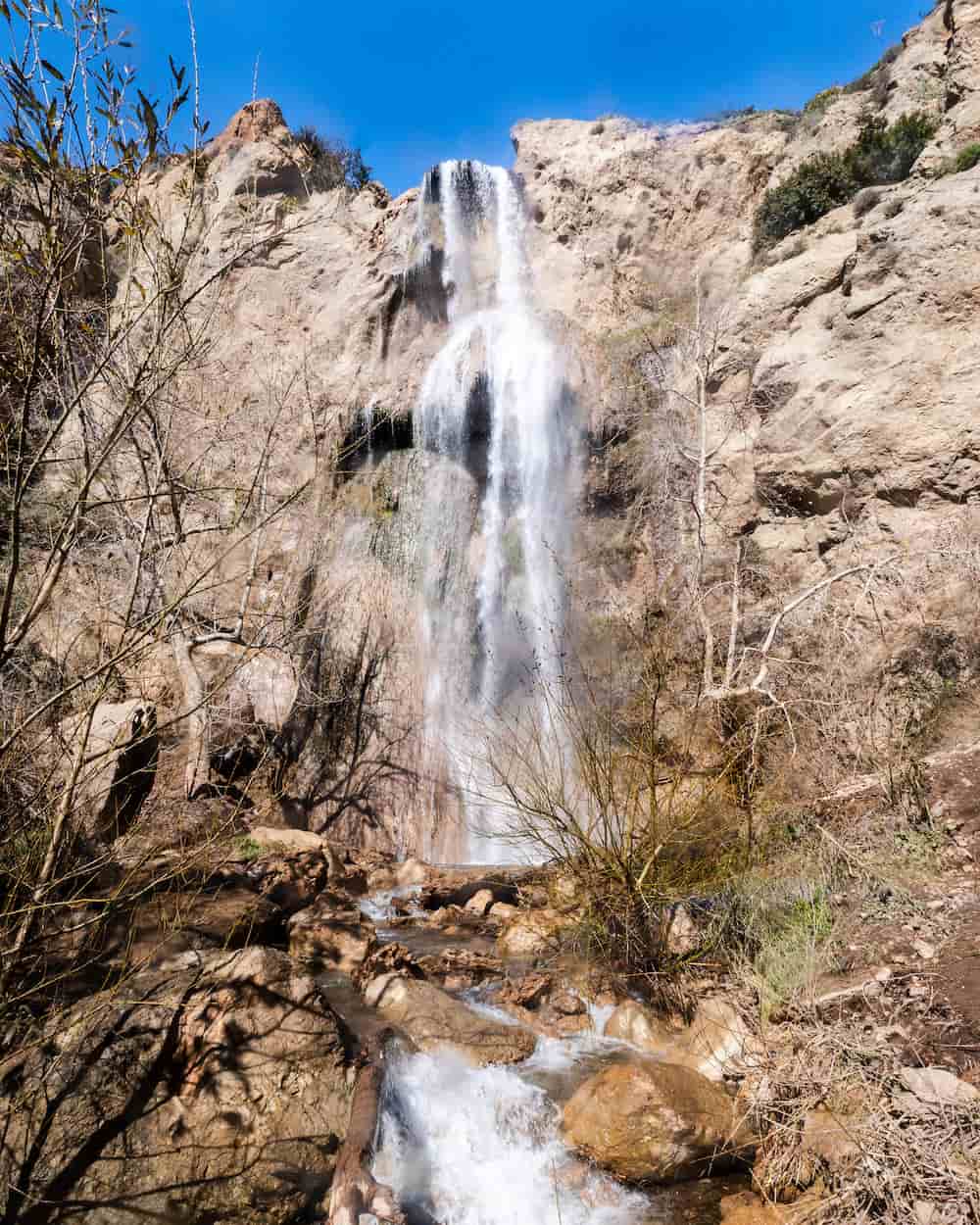
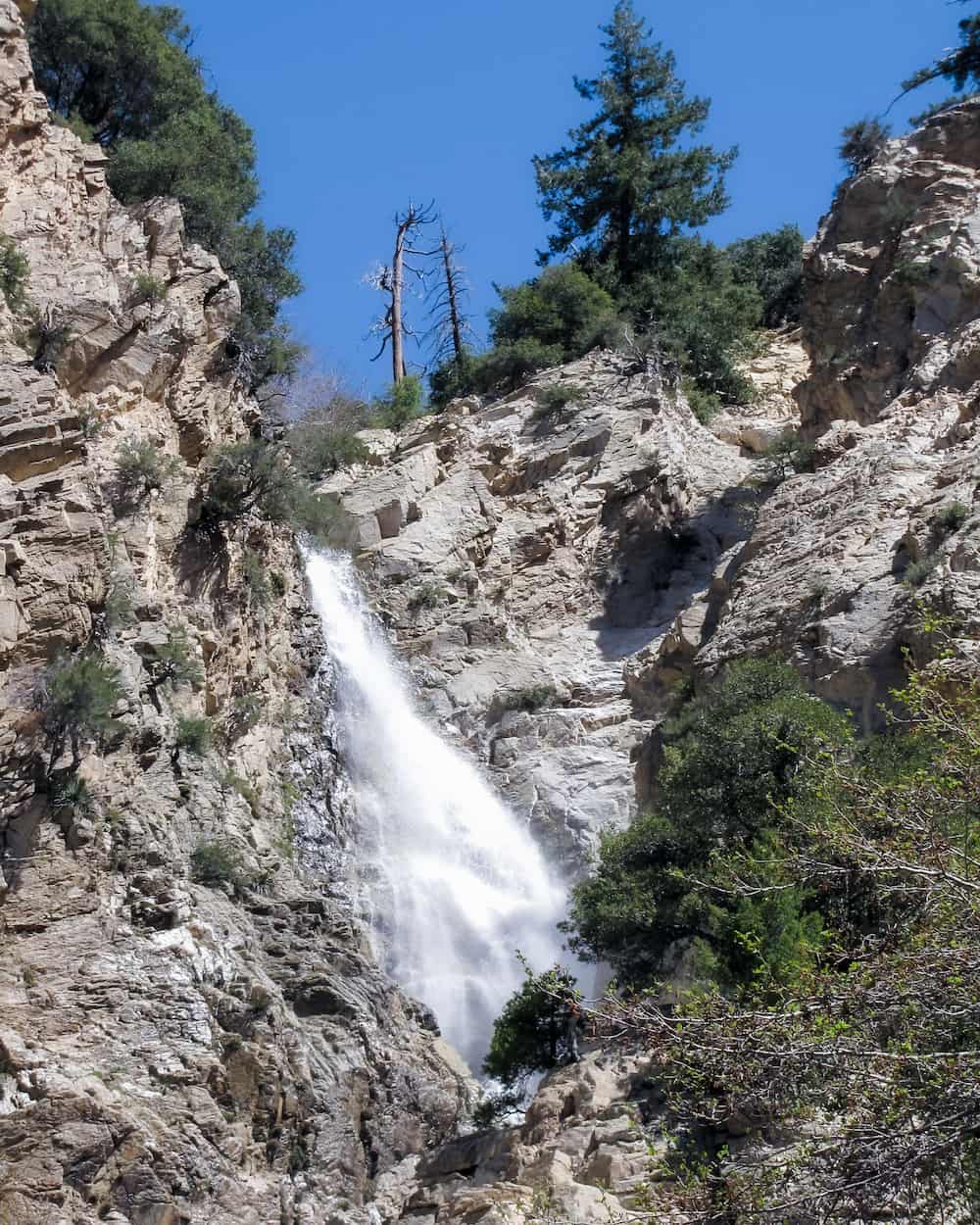
Just like that, I was standing before the 18-foot cascade. The creek gushed off the sandstone cliff with a roar and plummeted to a shallow pool below.

Most of the canyon floor was flooded, forcing me to cling to the walls to give my feet a break from the cold water.
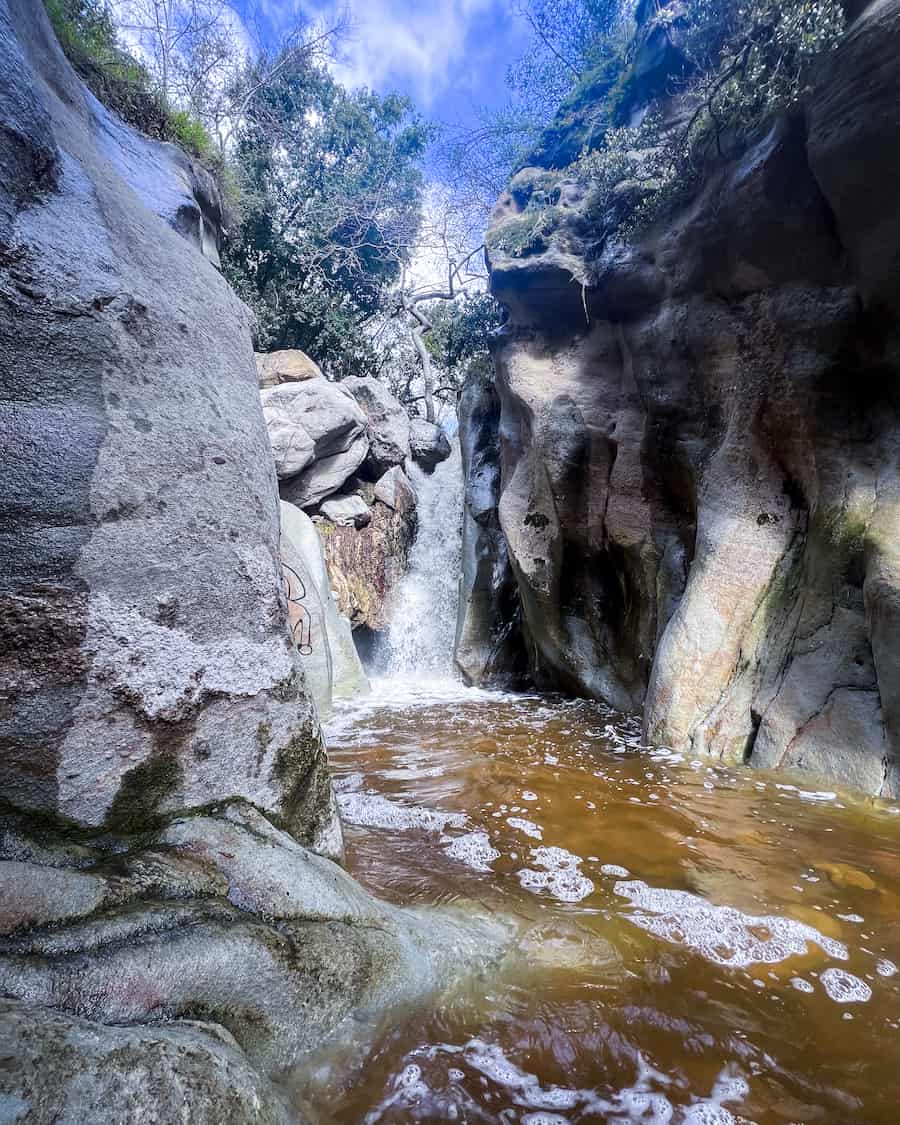
The Maidenhair Ferns which adorn the falls with a vibrant green had become dull for the winter.

Only one piece of graffiti could be seen at the falls.

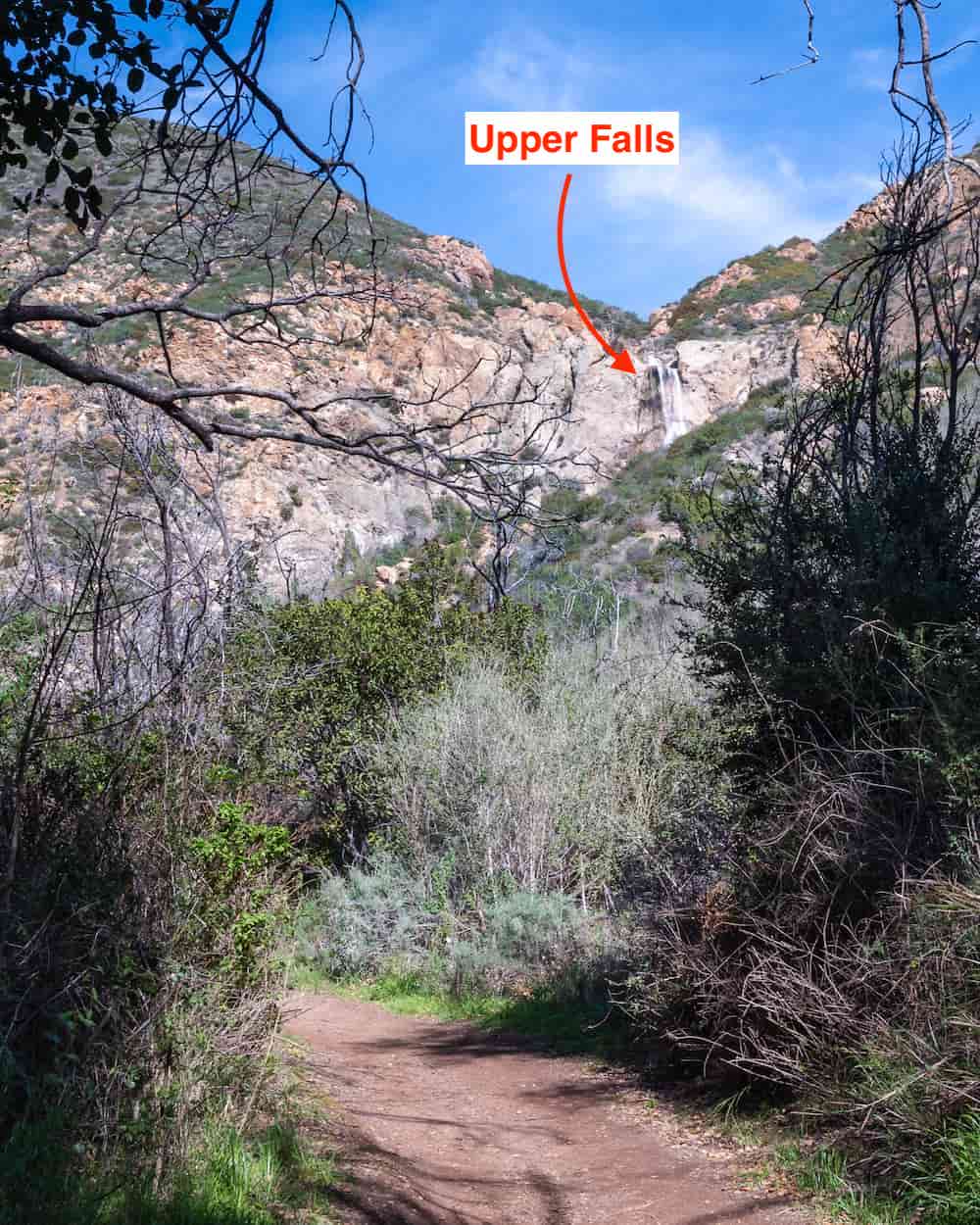
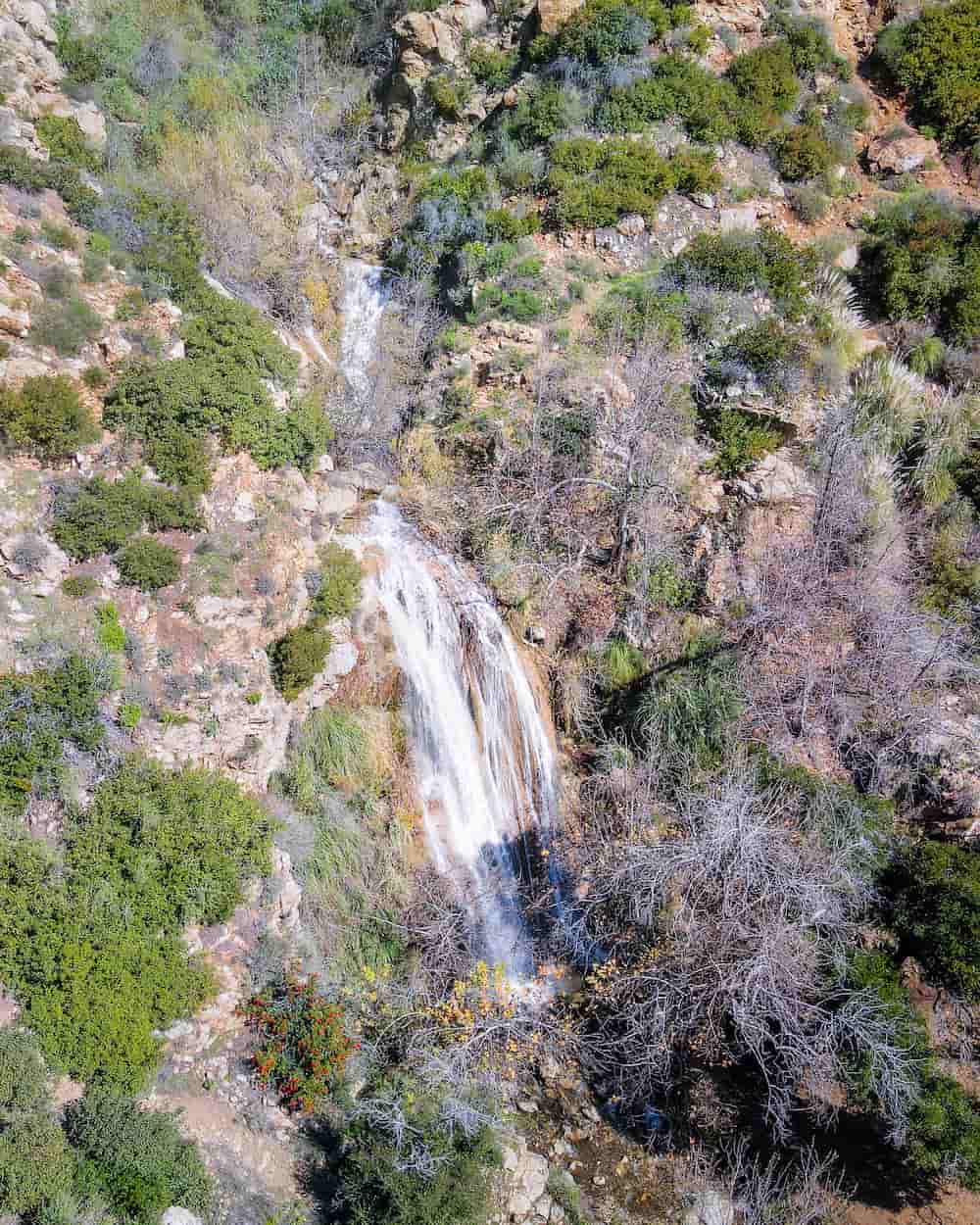
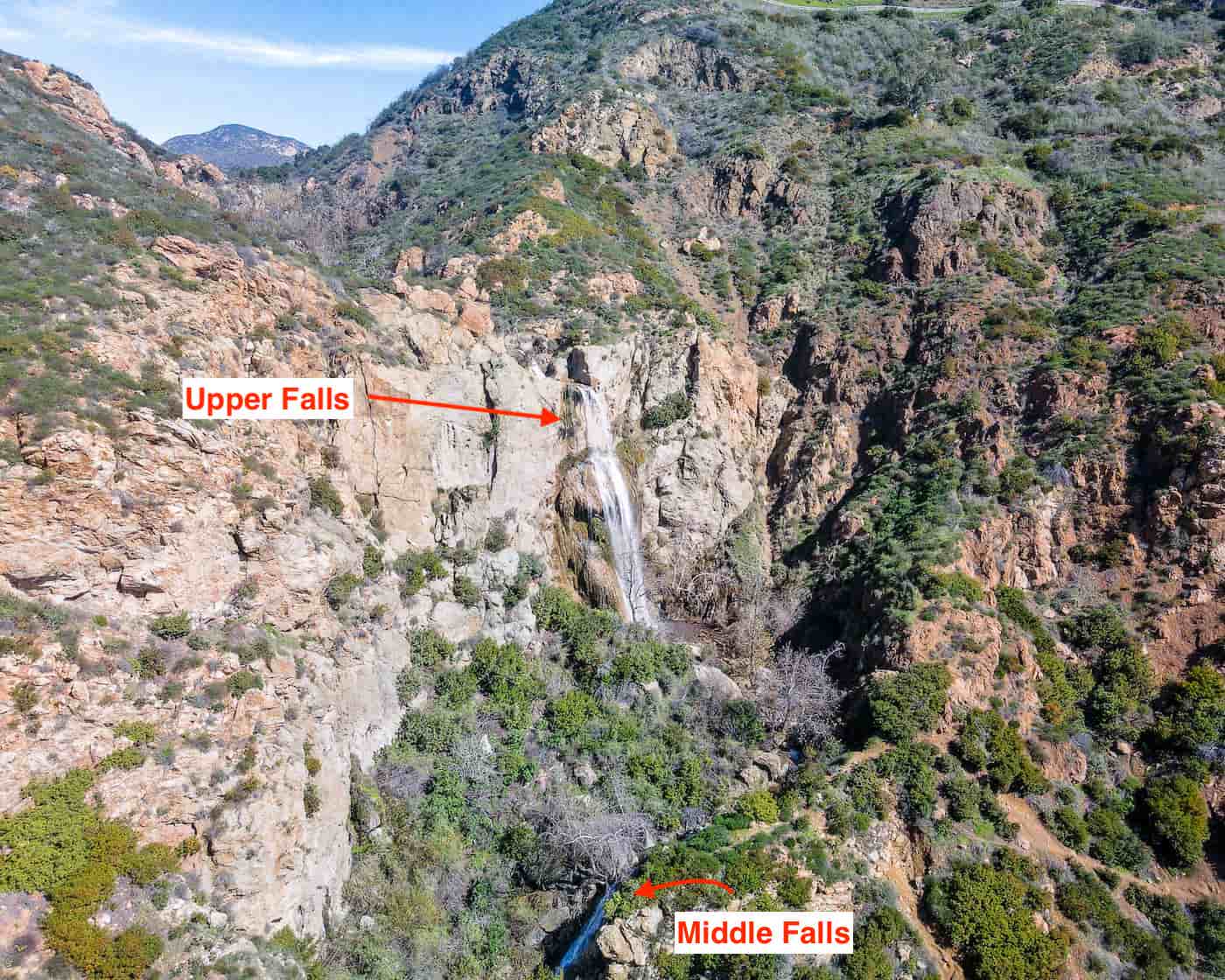
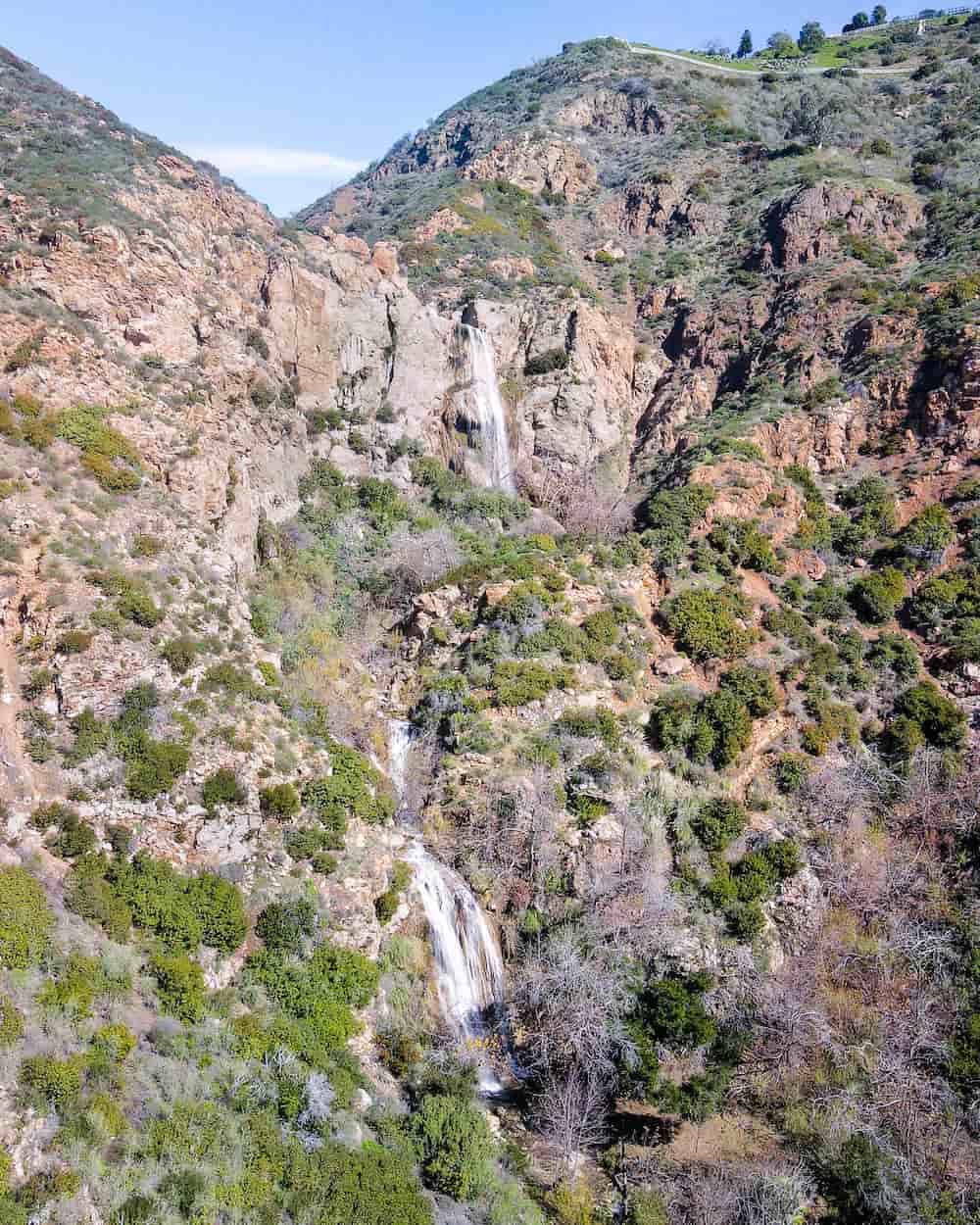
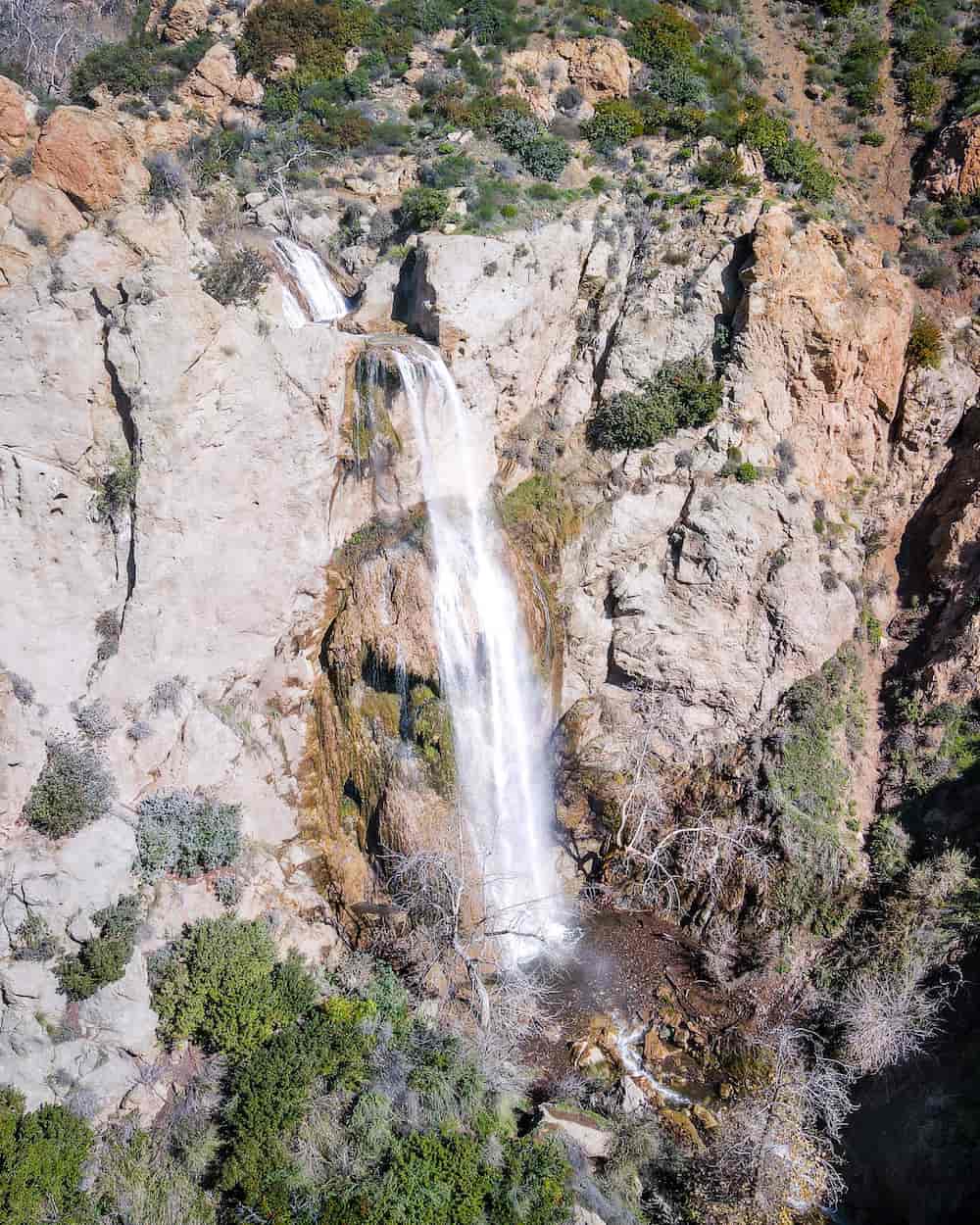
The creek continues to meander up the canyon, leading to a smaller falls known as Upper Santa Ynez Falls, and then much further up to its source, Eagle Springs.
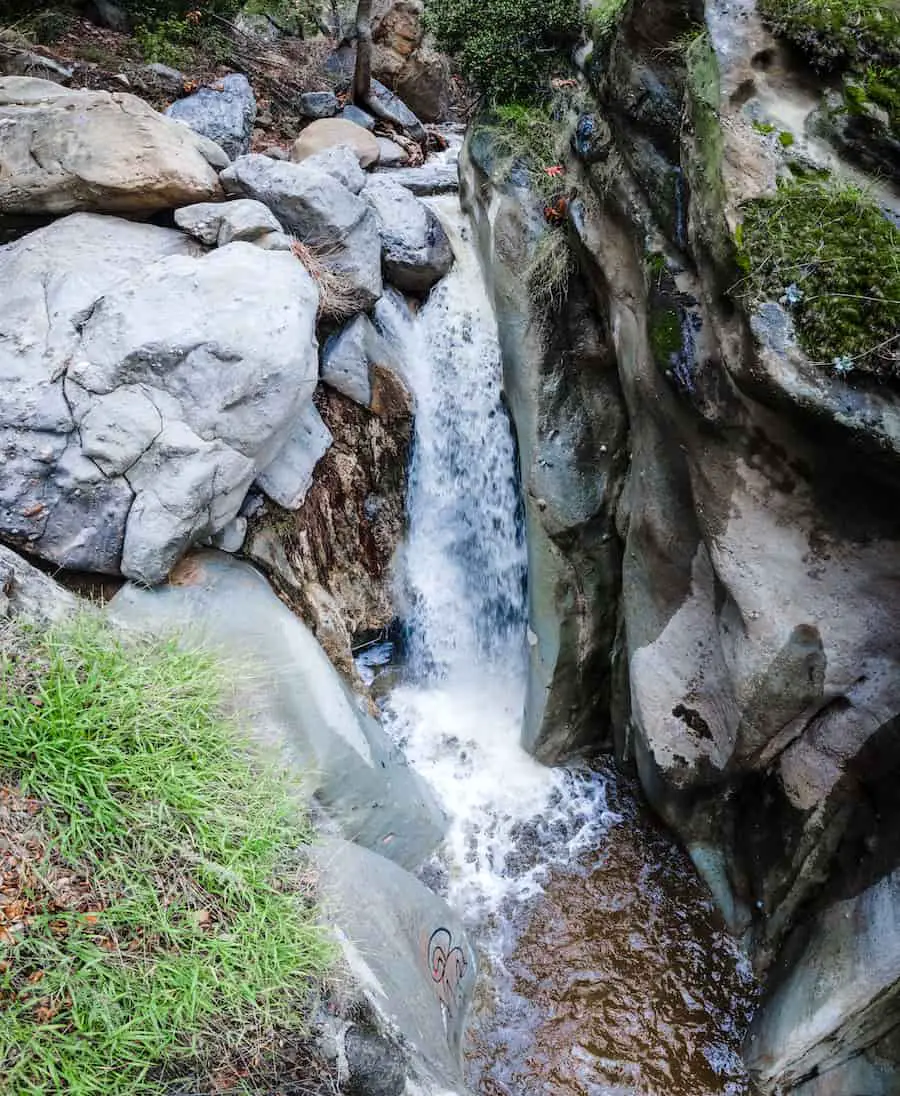
For me, however, this marked the end of my adventure.

Is getting wet and boulder scrambling not your thing? Then you should probably swap Santa Ynez Falls for this hike to a concrete ledge, which is also located in the Santa Monica Mountains. Do not be fooled, the panoramic views from this ledge are insane and breathtaking and are by far the best in the range.

Plants

  • Oak Cathedrals
  • Poison Oak
  • Lupine
  • Alders
  • Sycamore
  • Maidenhair Ferns
  • California Bay
  • Coast Live Oak
  • Purple Nightshade
  • Humboldt Lilies

Animals

  • Pacific tree frogs about 1.5 inches long
  • Mule deer
  • Coyotes
  • Bobcats
  • Mountain lions (cougars)
  • California Scrub Jays
  • California Newts
  • Western Rattlesnakes
  • Southern Alligator Lizards

FAQs

Can You Swim At Santa Ynez Falls?

Unfortunately, the pools are not deep enough to swim.

Does Santa Ynez Falls Flow Year-Round?

Santa Ynez only flows during the spring, assuming we receive decent rainfall.

Is Parking Free For The Santa Ynez Falls Hike?

Since parking consists entirely of street parking, it is completely free.
Earthquake Falls: Little Tujunga’s Roadside Secret

Earthquake Falls: Little Tujunga’s Roadside Secret

  • Total Miles: 0
  • Best Season: After Heavy Rainstorms
  • Max Elevation: 2200 ft
  • Parking Lot: Turnouts Fit ≈ 15 cars
  • Dogs: Allowed On A Leash
  • Restrooms: Not Available
  • Pics Taken On: Feb 11, 2024

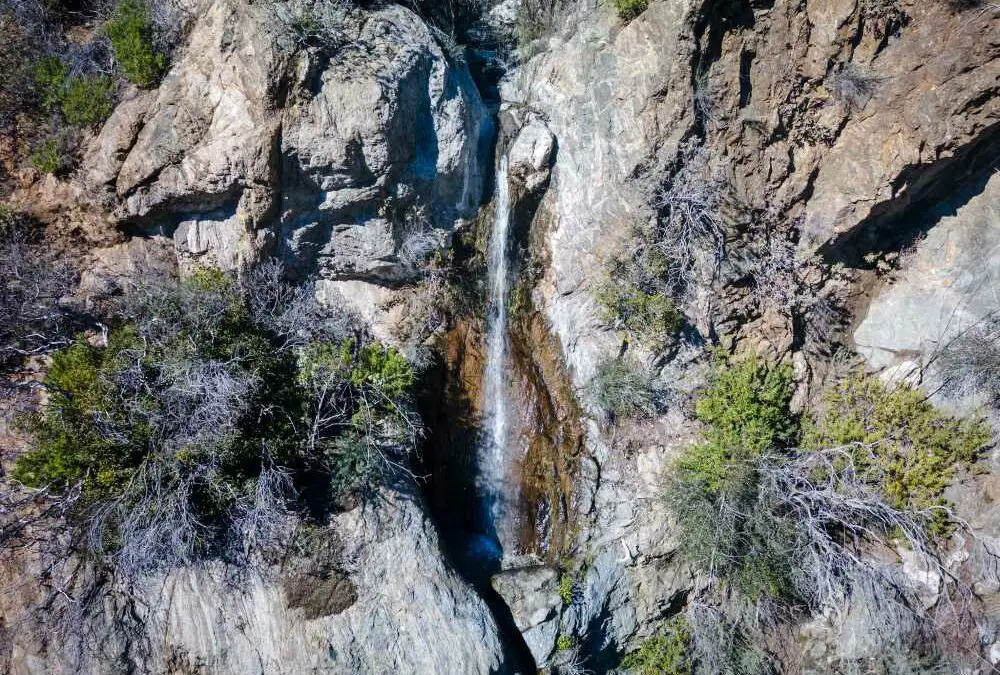
Earthquake Falls is a roughly 70-foot roadside waterfall located in Santa Clarita’s Little Tujunga Canyon near the Bear Divide, which comes back to life only after a decent amount of rain. I’m not exaggerating when I say the waterfall flows for only 2-3 days following a storm, and most years we don’t get sufficient rainfall to revive the cascade.

Hence, it’s a rare treat for outdoorsmen and women. Lastly, since hiking is not required, driving through the western portion of the Angeles National Forest to get to the falls can be a fun experience for the entire family.

I have one favor to ask. Please do not tag or name this place on social media, as it’s usually the precursor to tons of trash and graffiti. Thank you, enjoy, and remember to get to the bottom of the post for more amazing places.

Parking & Directions

To be redirected to Earthquake Falls via Google Maps click the link here.

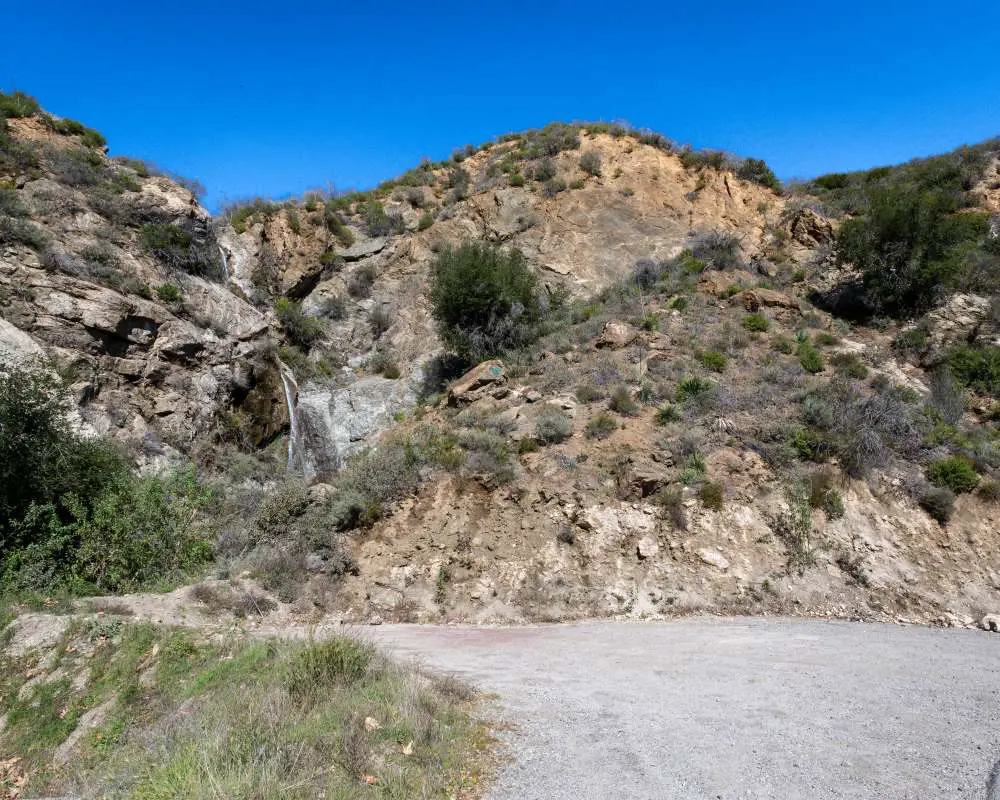
The “parking lot” consists of 3 dirt turnouts, as pictured below. There’s the primary turnout, a smaller one adjacent to it where my truck is parked and a third across the street.

Earthquake Falls

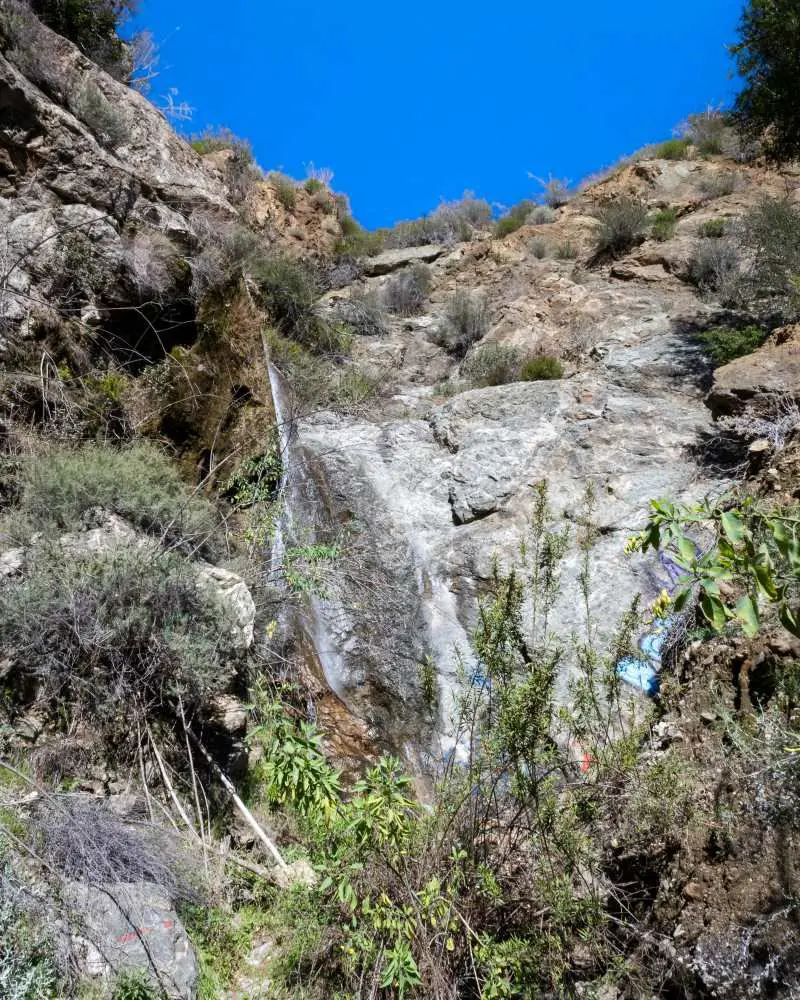
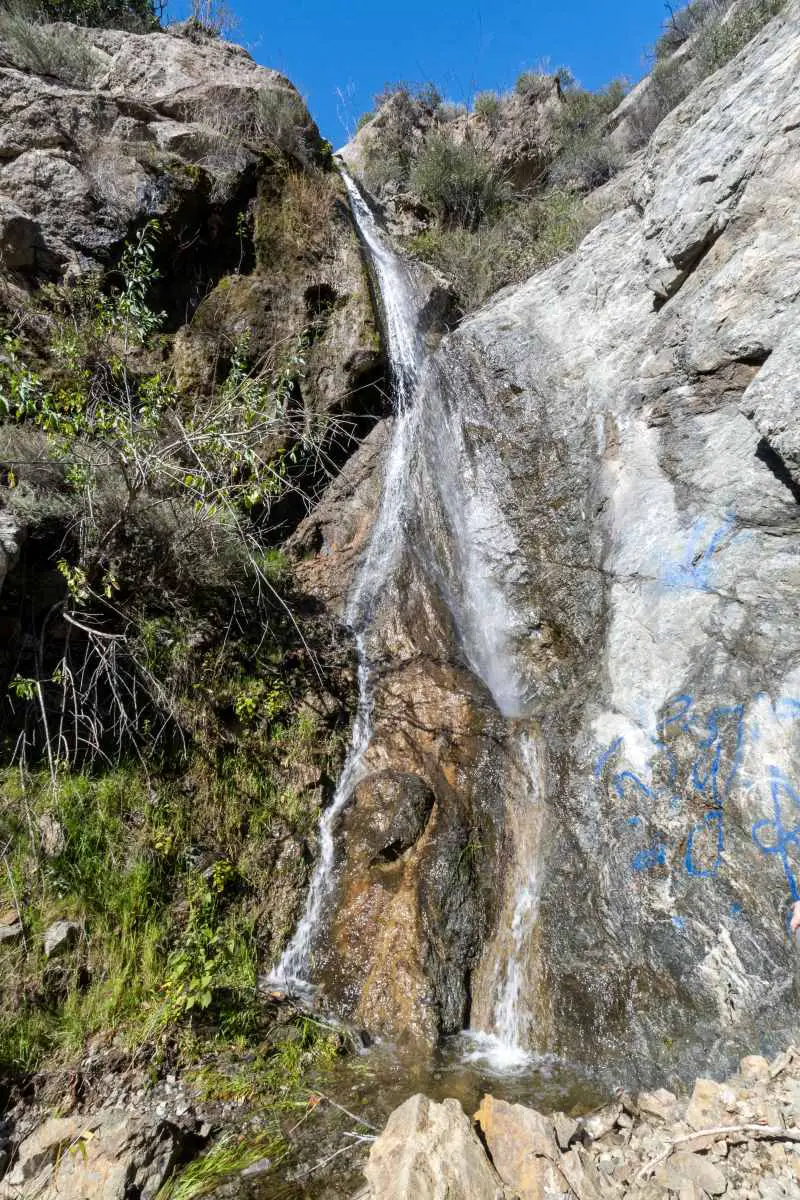
The waterfall can be seen flowing from Little Tujunga Canyon Rd. It has two tiers, the bottom measuring roughly 55 feet and the top about 15. The waterfall traverses the road through an underwater drainage and descends to the canyon floor where it merges with Pacoima Canyon Creek, eventually ending up in the Pacoima Reservoir.

Believe it or not, I’ve yet to see the waterfall roaring. However, a friend who visited the falls while it was raining (about 4 days before my visit) shared a video with me, and in it, I could see a bit more water than in the image below.

Earthquake Falls Parking Dirt Turnout

Although I didn’t have to hike to get to the base of the falls, trekking through an overgrown 20-foot-long path is inevitable.

If you decide to do the same, keep an eye out for the infamous poison oak, a red and green shrub with three leaves that is notorious for growing near water and inducing painful rashes when coming in contact with your skin.

The origin of the waterfall’s name is derived from the location, namely the San Gabriel Faultline, which belongs to the group of San Andreas fault lines. Why Earthquake specifically is up for speculation.

Unfortunately, taggers have already found the falls.

In addition to exploring the base of the falls, I made my way up the cliff directly in front of the cascade to get a better look from the higher ground.

According to SoCal Region, the San Gabriel Fault is visible from the boundary between the light and dark rocks. Look closely, and you can see a line in the rocks running almost vertically between the two.

Both the Pacoima and Big Tujunga Canyons follow the trace of this fault.

Earthquake Falls

Here’s a closeup shot of the top tier.

Unfortunately, I couldn’t find a name for the creek where the falls is located. I guess we’ll call it Earthquake Creek.

Earthquake Falls Top Tier

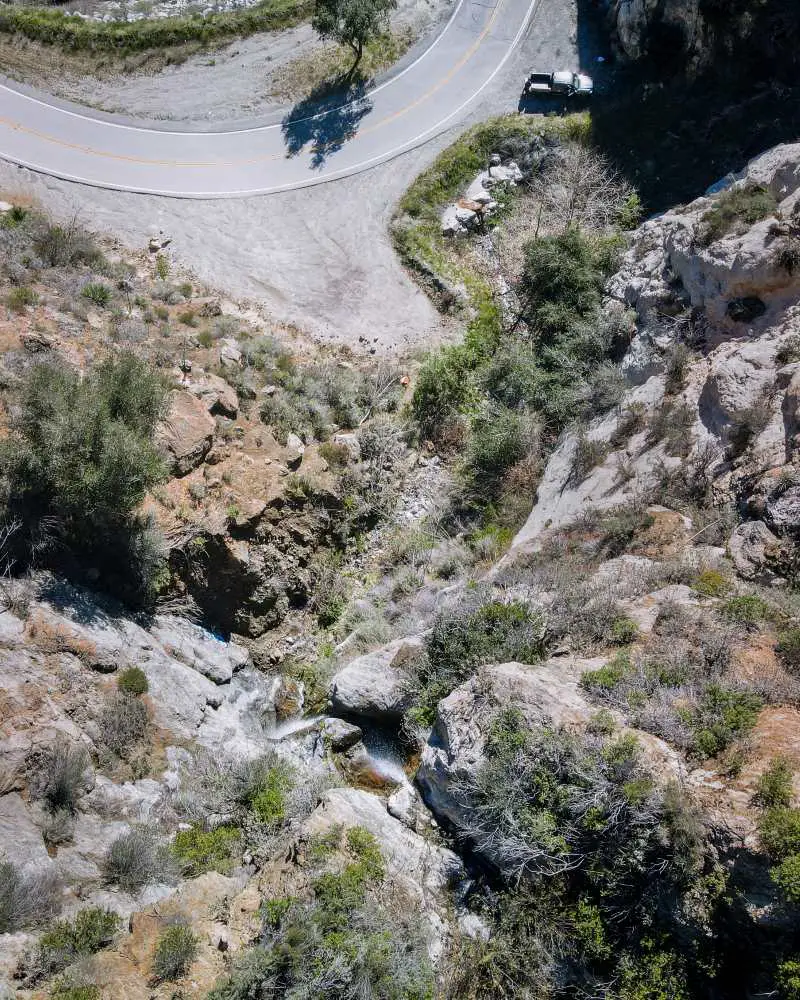
I flew the drone almost directly on top of the falls to get a good look at the surrounding area.

I’m amazed that such a large waterfall can flow in the dry chaparral region of Little Tujunga. 

Did you know Little and especially Big Tujunga Canyons are littered with secret spots? I’ve had the privilege of exploring many of these places, which become available to you by creating an account and making one easy payment of free 99.

That’s right, it’s on the house. My only request is to kindly remember not to tag exact locations and avoid using names on social media. Have fun and be safe out there!

Escondido Falls: Malibu’s Best Hike

Escondido Falls: Malibu’s Best Hike

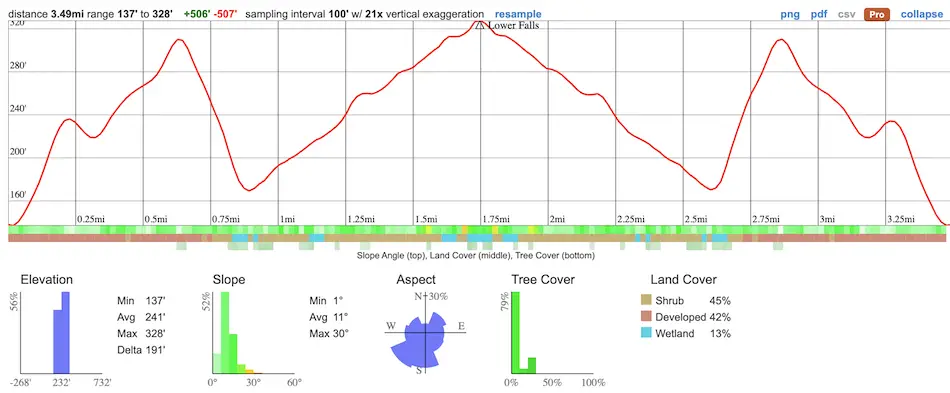
  • Total Miles: 3.49
  • Time: 1.5 Hrs
  • Difficulty: Easy
  • Best Season: Spring
  • Elevation Gain: 507 ft
  • Max Elevation: 328 ft
  • Type of Trail: Out & Back
  • Parking: Lot Fits ≈ 15 cars
  • Dogs: Allowed On A Leash
  • Restrooms: 1 Porta Potty At The Parking Lot
  • Trail Popularity: Extremely High
  • Pics Taken On: Feb 13, 2024

I’ve known Escondido Falls is one of the most popular waterfalls in LA County, and the Santa Monica Mountains, but I had no idea why. That is until I paid a visit.

Escondido Falls is three waterfalls, not one. The lower falls is roughly 50 feet high, and the middle falls is about 20 feet high, but the upper falls is undoubtedly the primary attraction. Escondido Creek plunges off a150 150-foot cliff, slamming into moss-covered protrusions in the cliff wall on the way down and forming various grottos, which collectively create one of the most captivating cascades in Southern California. It truly is a sight to see.
That being said, the official trail, which is family-friendly, ends at the lower falls. The “trail,” (if you can call it that) leading up to the middle and upper falls is closed to the public as it’s very steep, rocky, slippery, and therefore, dangerous.

Looking for the best waterfalls? Say less, click the following link to view a post I wrote on the best and my favorite waterfalls in Southern California. 

Escondido Falls Trail Map

powered by Advanced iFrame

Escondido Falls Elevation Profile

Download Printable PDF Map 

Parking And Directions

To be redirected to the Escondido Falls visitor parking lot via Google Maps, click here. Since parking is extremely limited, you may have to find a space on PCH.
A parking fee of $12, which can be purchased in person using cash or a debit card, must be displayed on all vehicles.

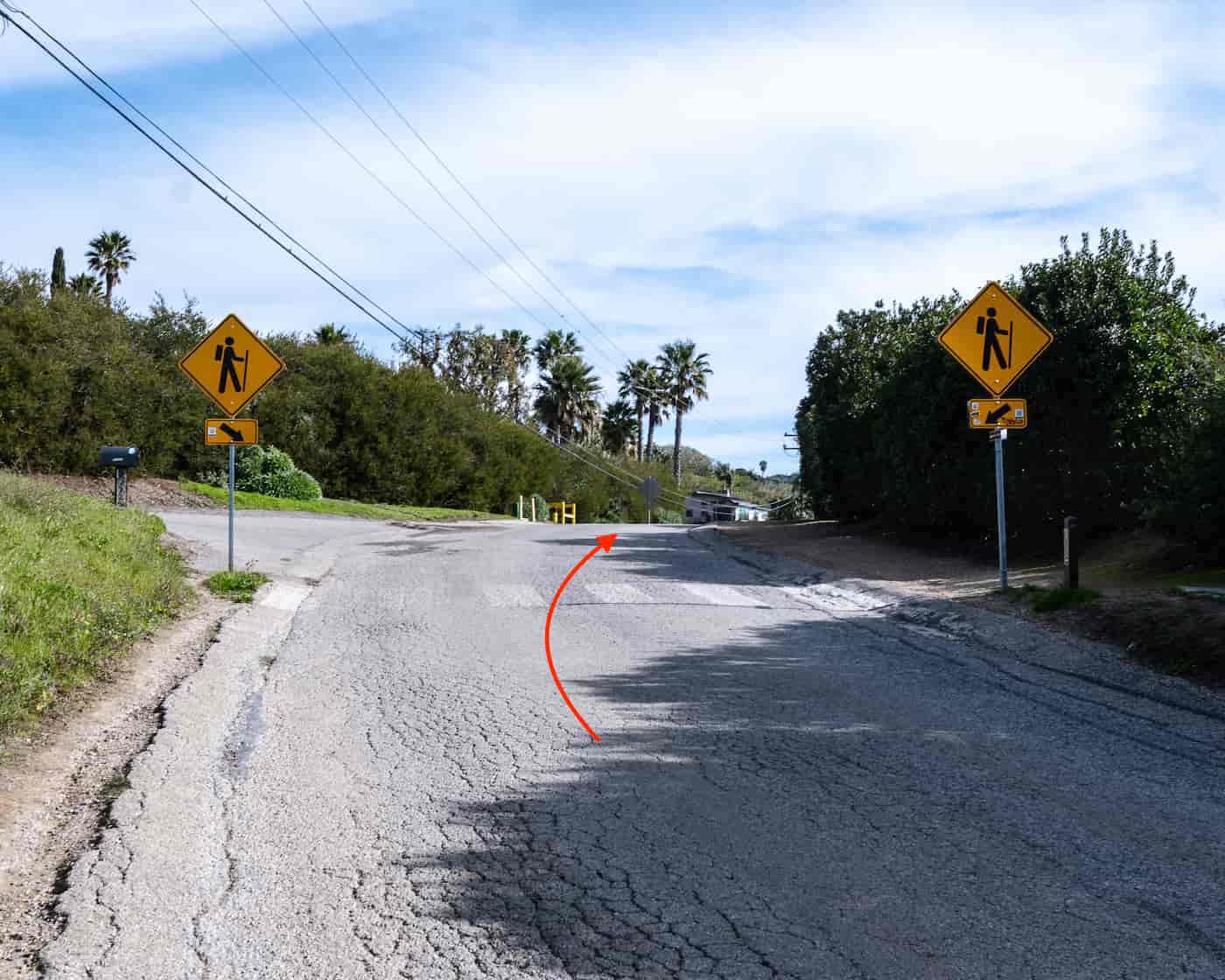
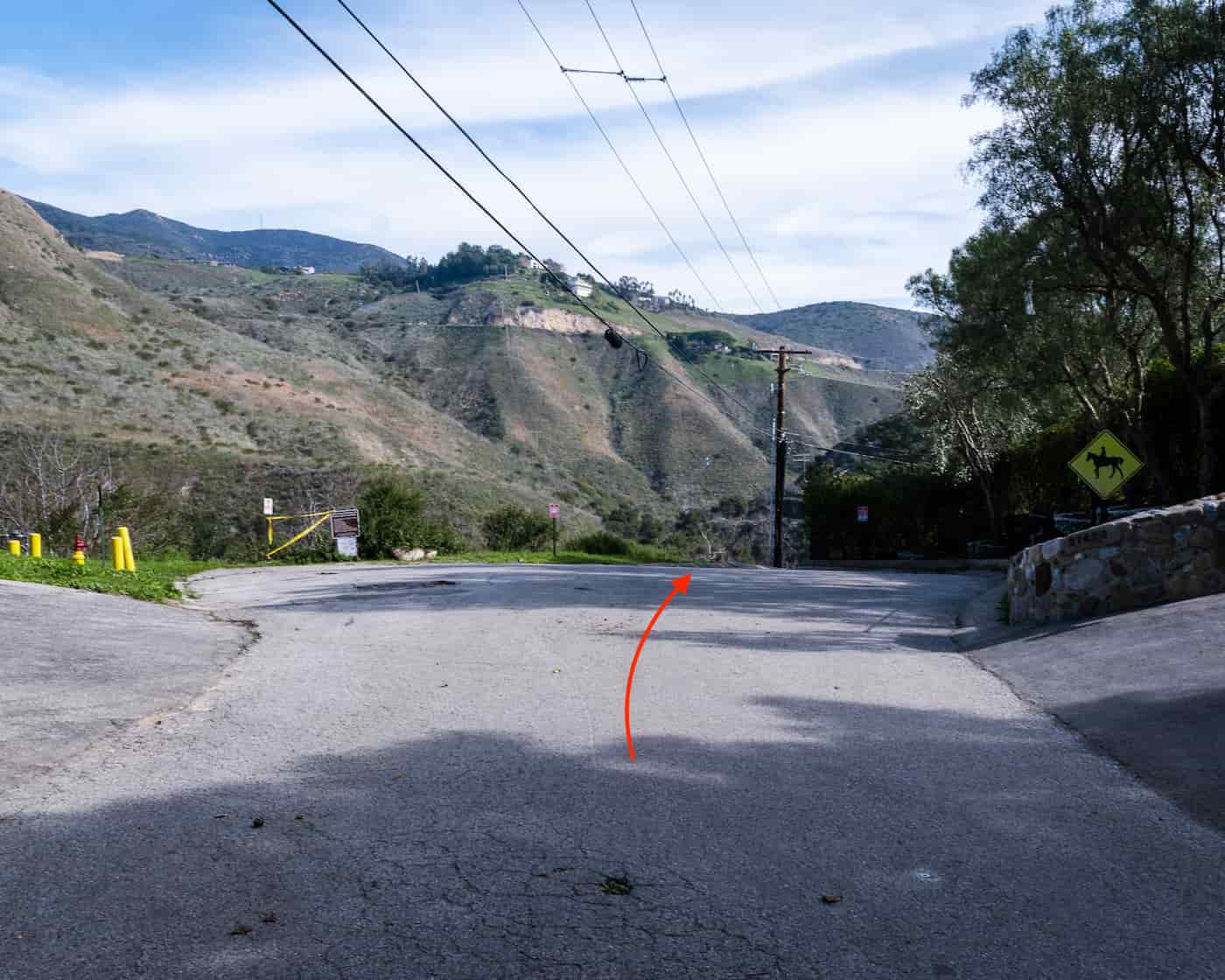
The official Escondido Falls trailhead is located about a half mile up Winding Way from the parking lot. However, parking is not allowed past the designated lot, and you risk being towed if you do. Hence, the hike technically begins at the parking lot (or PCH depending on where you park), as is shown in the map above.
Helpful Info

Escondido Falls Weather Forecast

Escondido Canyon Park Site Info

Escondido Park Hours: Sunrise To Sunset

Hiking Escondido Falls

I paid for the $12 parking permit and began my hike up Winding Way, a concrete road that makes up almost half of the entire hike and led me through various Malibu estates.
Eventually, the road begins to descend toward the canyon floor where the official trail, called the Albert Talbert Escondido Canyon Trail, begins.

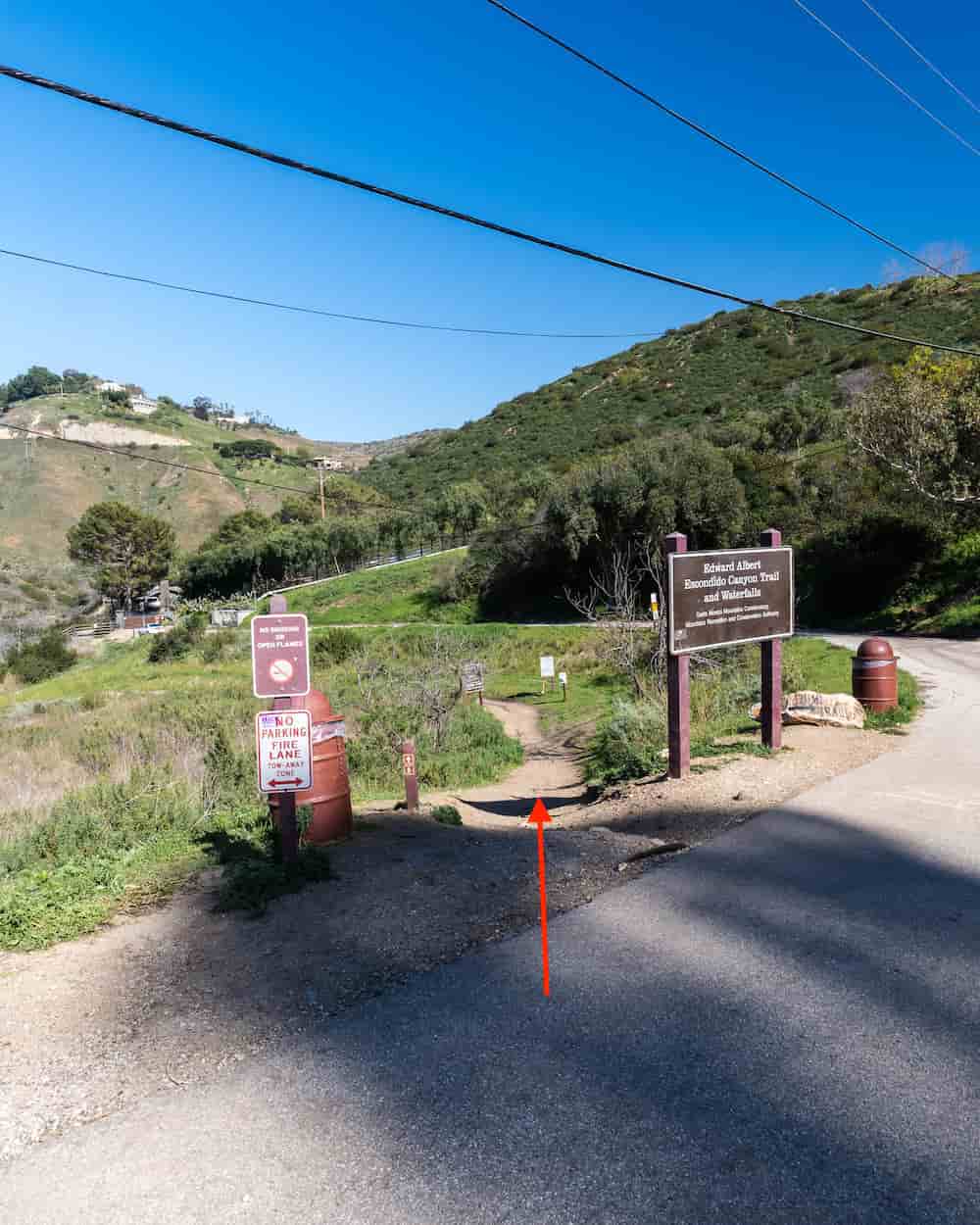
The trailhead is located at the edge of a mustard-filled meadow, and marked by multiple signs.

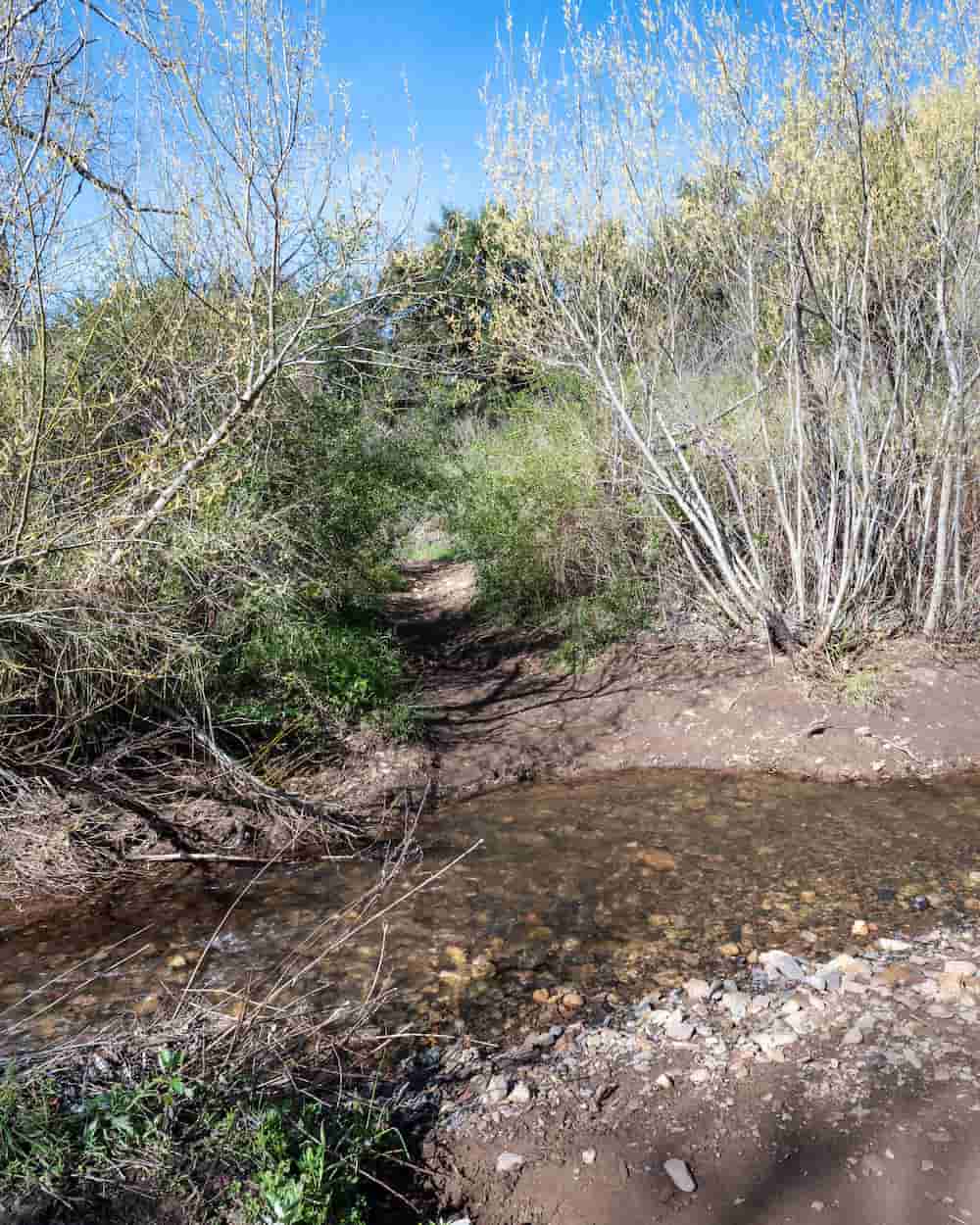
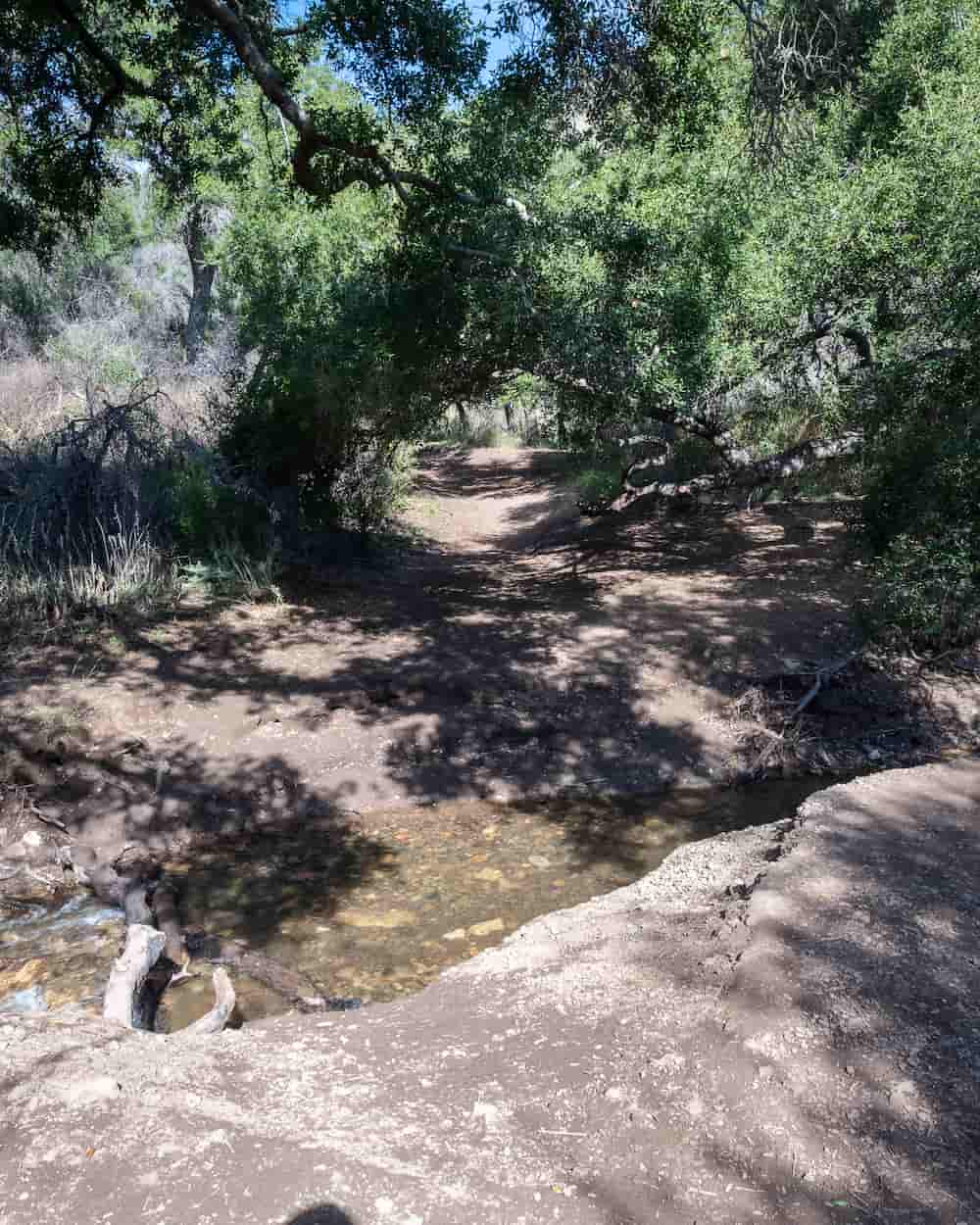
Shortly thereafter, I found myself amidst an oak and riparian woodland, crossing the thicket-covered Escondido Creek multiple times, and enjoying the scenery.

The frequent number of creek crossings reminded me of the popular trail to Eaton Canyon Falls, a 50 foot waterfall in Pasadena.

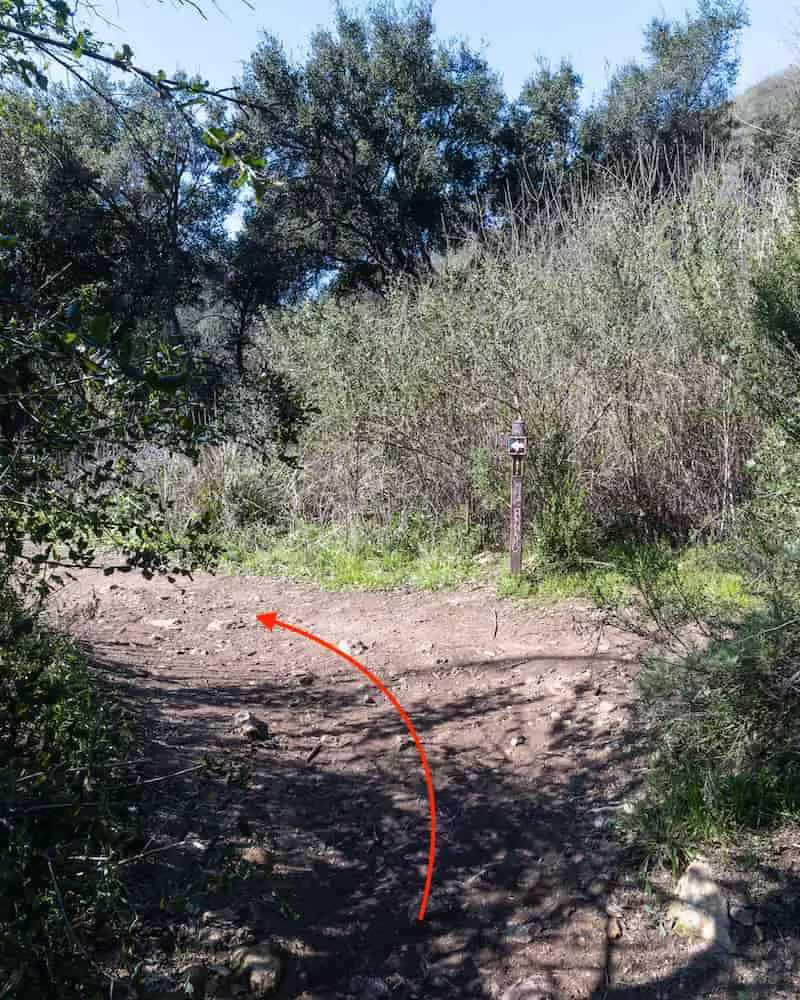
The first fork is marked by a sign. The trail continues to the left.

Although we had recently received a major rainstorm, labeled by the media as an atmospheric river, the creek was not flowing the way I thought it would.

I began to suspect the waterfalls may also not be very full.

I was very surprised to see virtually no visible damage from the 2018 November Woolsey Fire in the canyon. Everything from Alder, Black Sage, Toyon, and even the notorious poison oak and hemlock seemed to be teeming with life.

I made a left at the next fork.

My concerns regarding a dry waterfall were quickly relieved as I was able to see the upper falls roaring off the cliff before even reaching the lower falls.

A couple of minutes later, I arrived at the lower falls.

The 50-foot waterfall with calcium carbonate (limestone) walls was roaring. I liked how wide it was, unlike most waterfalls in LA County. It reminded me of Cooper Canyon but with a subtle sulfuric smell.

Believe it or not, the waterfall is dry throughout most of the year, which is why it’s crucial to get out there as quickly as possible following a good rainstorm.

It was mid-February, and the Western Sycamore trees clung on to their last few vibrant orange leaves. Although the fall’s surrounding area lacked the usual vibrant green ferns, it nevertheless preserved a scenic and wild look.

The 20-foot middle falls can be seen in the drone shot below. It was even fuller than the lower and upper falls.

Unfortunately, it can’t be seen when standing at the lower falls.

The canyon looked even more impressive from the skies.

The green coastal sage scrub boasted a deep green thanks to the recent rains and contrasted very nicely with the canyon walls.

Remember, the trail ends at the lower falls, but I have excellent news.

Escondido Park is headed by the Mountain Recreation and Conservation Authority (MCRA), which received $1.5 million in funding from California’s Wildlife Conservation Board (WCB) as of Feb 17, 2023 “to [help] acquire approximately 88 acres of land for the protection of threatened and endangered habitat and to provide for future wildlife-oriented, public-use opportunities located near Malibu in LA County.”

Part of the land includes the 150-foot upper falls, whose market value is $4.8 million. However, the landowner has generously offered it at $985k. Time will tell, but the future looks hopefully regarding an official trail to the upper falls.

The upper falls is breathtakingly beautiful. In my opinion, it’s without a doubt the best waterfall in LA County,

Its height and width remind me of Cedar Creek Falls in San Diego County, which has been dubbed the best waterfall in Southern California by yours truly.

Most of the greenery is gone for the winter. However, the cliffs sport a vibrant green moss during spring and early summer, giving the falls an even more stunning look.

I can see why the native Chumash people once inhabited the area. It’s paradise.

As you can see from the image below, a few parts of the canyon protrude outward, slightly bouncing the stream and forming little grottos.

I’ve seen some people climb on top of the first grotto and sit behind the falls.

Hold on! Don’t leave just yet. Check out a list of the best waterfalls in LA County which I know you’ll be sure to love.

FAQs

Is Escondido Falls Worth Hiking?

Escondido Falls is most definitely worth hiking. When the upper falls is flowing, it’s arguably the nicest waterfall in Southern California.

How High Is Escondido Falls?

The lower falls is roughly 40-50 feet, the middle falls is about 20 feet, and the upper falls is an impressive 150 feet high.

Can You Drink The Water From Escondido Falls?

It is unsafe to drink the water from Escondido Falls as bacteria may be present, resulting in sickness or death.

Is Escondido Falls Flowing?

Escondido Falls is flowing as of Feb 2024. However, conditions may quickly change.

Is Escondido Falls Dog Friendly?

Dogs are allowed at Escondido Canyon Park but must remain on a leash at all times.

Can You Swim At Escondido Falls?

The water at Escondido Falls is not deep enough to swim.

Is Parking Free At Escondido Falls?

Parking at Escondido Falls requires a $12 permit, which can be purchased in the parking lot.

How Do I Get To Upper Escondido Falls?

The 150-foot Upper Escondido Falls is officially closed to the public as it’s unsafe and considered private property.

This Gear For Winter/Snow Hikes Is Non-Negotiable

Although stunningly beautiful, venturing into the mountains after a snow storm can be extremely dangerous. Avalanches, getting lost, hypothermia, and frostbite all pose a real threat. Here in Southern California, multiple hikers go missing every year at Mt Baldy, a peak in the outskirts of LA County, and a place that’s rather mild when compared to other US (and certainly world-wide) mountains.

Therefore, it’s absolutely crucial that you be prepared with the following 7 items when hiking in the snow. Regarding the links in this post, they are Amazon affiliated. However, I personally own and use all of the products (minus the satellite communicator), which is why I feel confident recommending them.

In addition to the hiking gear for snow, here’s a quick checklist that you should go over before hopping on the trail, regardless of seasons.

  1. Printed or purchased map of the area
  2. Weather forecast checked the day of the hike
  3. Notified family or friends of your whereabouts and roughly what time they can expect you back
  4. Snow chains for your vehicle, as well as
  5. Year-round essentials: water, water filter, headlamp, first aid kit, snacks, fire starter/lighter, knife (comes with built-in fire starter), compass, whistle, and bear spray if applicable.

Lastly, never hike alone in the backcountry, especially in dangerous conditions, such as after a snow storm.

If you can’t find someone to accompany you, at the very least invest in a satellite communicator to be able to notify SAR teams should you get lost or injured. It’s pricy, but not worth more than your life.

Let’s get started.

1. Trekking Poles

Although not absolutely necessary, trekking poles can significantly help, especially on steep snow hikes. Remember, hiking in the snow is more tiring than on dry ground, and slippery.

Trekking poles help transfer some of the stress from your legs to your arms, as well as provide balance and support.

I use a very inexpensive yet reliable pair called TrailBuddy Trekking poles which I’ve owned for at least two years now. I really love the fact that they come with multiple adapters for different terrains. You can check those out on Amazon by clicking here.

2. Microspikes

microspikes

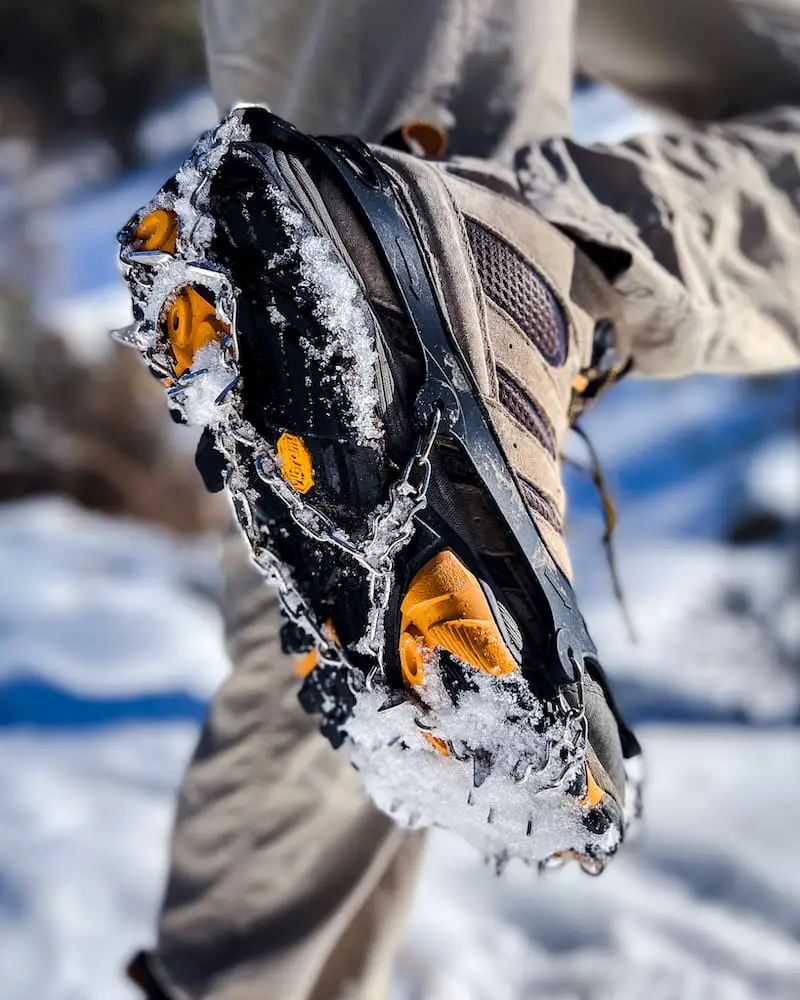
Microspikes and crampons are not to be confused, although the terms are constantly used interchangeably. Microspikes are essentially a stainless steel chain with spikes that can be wrapped around almost any shoe intended to provide more traction in icy conditions.

You could technically use them with running shoes and be good to go (minus the wet shoes).

Crampons have much larger spikes and are usually used for steep ice climbing and mountaineering, such as the Baldy Bowl in the winter. They provide much more traction than microspikes but can be overkill for hiking.

Microspikes are a NON-NEGOTIABLE while hiking in the snow. Even if you don’t use them, it’s better to have them on you, as they’re not very heavy.

A lesson I learned the hard way at the Big Horn Mine while trying to cross a section of the trail which had been completely covered with ice, slanted at an angle, and was adjacent to a 300 foot drop.

Without microspikes, hiking boots do not provide sufficient traction in icy conditions. Trust me, invest in a pair. I use these microspikes right here. The prouct page says Crampons in the title but they’re actually microspikes.

3. Polarized Sunglasses

A few years ago, a friend of a friend decided to go snowboarding without goggles or sunglasses, resulting in snow blindness, also known as photokeratitis. This painful eye condition occurs when UV light damages the retina. Think about it like a sunburn in your eyes.

Fortunately, the condition is temporary and easily prevented. An inexpensive pair of sunglasses found at your local liquor store can protect you from the UV light. Just make sure they’re polarized. You can view sunglasses on Amazon here.

4. Windbreaker

Hiking in the snow is cold, but hiking in the snow with windy conditions can be life threatening; if you don’t have a windbreaker that is.

I don’t recommend bulky jackets for snow hikes, as you’re likely to overheat. Instead, I suggest investing in a really good light or midweight windbreaker and layering up.

Do not make the mistake of NOT layering up. Unless you’re not human, you will undoubtedly get hot while ascending the trails, and removing layers will help to you to control body heat.

Since rain jackets and windbreakers are very similar, I can use my Columbia Pouration jacket as a windbreaker. It’s lightweight, warmer than a windbreaker, breathes very well, provides protection should it begin to rain, and saves me money because it can be used for both wind and rain.

My go-to snow hike attire includes a long sleeve thermal underneath a flannel and my Columbia jacket over both. You can find my rain jacket on Amazon by clicking right here.

Mind you, the attire I suggest is for snow hikes, and is not suitable for extreme conditions such as full blown blizzards, high winds, and freezing temperatures. If you expect extreme conditions, you may need a parka and special pants.

5. Beanie, Ski Mask, Or Neck Gaiter

I once made the mistake of hiking the Pine Knot Trail at Big Bear in the late fall on a non-windy day without taking protection for my head and face. Although it was only forty degrees at 9:00 am, the cold made my ears sting for a couple of hours. Increasing my body temperature by ascending the trail didn’t help.

Additionally, I went snowboarding in Wrightwood during a snow storm without a neck gaiter to protect my face and was blown away at how badly and quickly (only a few seconds) the wind stung my face and hands. I have many stories about lessons which I’ve had to learn the hard way, don’t judge me.

Anyways, I had no choice but to buy my first gaiter that day.

If you’re hiking in the snow, do yourself a favor and either take a ski mask or a beanie combined with a neck gaiter. If the wind picks up mid-hike, you’ll be ready.

Check out different types of headwear by clicking here.

5. Gloves

It goes without saying, but just like your face, your hands also require protection. Don’t believe me? Read my personally story in the previous subheading if you haven’t already.

Click here to browse Amazon’s selection of hiking gloves.

6. Socks

You could probably get away with regular hiking socks, but snow socks will make your hike a lot more comfortable. In my opinion, Darn Tough are the best socks in the world. They’re super comfortable, extremely durable, made of merino wool (for moisture wicking), and provide protection via added padding.

I own a pair of their mid-weight socks (the weight describes the thickness), which I use in temperatures from 20 degrees to upper 80s. If you only want to buy one pair, I suggest going with mid-weight.

If you plan on buying multiple pairs, then you’re better off buying a pair of heavyweight for the snow and a lightweight for the hotter months.

You can view Darn Tough midweight socks here.

7. Pants

I’ve used my hiking pants in all conditions, but eventually I’ll buy a pair specifically for the snow. You can browse through them here. Do not wear thermals underneath your hiking pants. If you do you will regret it, as it they get extremely hot on the trail.

If you’re interested in a complete list of my gear, and not just for the snow, check out the following link. I share all my gear and electronics as well.

30 Fun Winter/Snow Hikes In Southern California: By County

30 Fun Winter/Snow Hikes In Southern California: By County

What’s up guys. Since we got a really good dump a few weeks ago, I compiled a list of many, but certainly not all, SoCal hikes which get snow almost every year. If you plan on getting out there, remember to always check the weather forecast before stepping on the trail as conditions may change, and download the CalTrans app called QuickMap to check road conditions and requirements (chains).

If you’re somewhat new to hiking in the snow, read this article I wrote on the essential items for winter/snow hikes. Additionally, I provided a checklist of year-round gear that people of all skill levels can benefit to look over, and as soon as I get a chance I’ll be converting it into a downloadable link for you guys to print.

Lastly, I’m aware that some of the following images do not have snow, which is due to the fact that I have’t hiked all those places during winter. However, I’m positive regarding the chances of certain places getting snow, as I keep a close eye on all of our mountain ranges year-round. With that being said, let’s start the hikes!

Los Angeles County

1. San Antonio Falls

Read Full Post: San Antonio Falls

Likely to get snow. 

San Antonio Falls is an enormous (and one of my favorite) waterfalls in the San Gabriel Mts. Located at the base of Mt Baldy, it’s no reason why it frequently receives a good amount of snow.

You would think a waterfall such as this one requires a long and difficult trek, but the contrary is true. The majority of the hike consists of a paved road and such a gradual elevation gain that even strollers can be used.

Only the very last section, which converts into a dirt trail leading down to the base of the falls, is a bit steep and slippery. Fortunately, a viewpoint overlooking the waterfall is located at the section where the dirt trail and paved road meet.

2. Mt Wilson

Mt Wilson

Less likely to get snow. 

Road access is blocked at Red Box as of 2/4/24. However, the peak can be hiked from the trailhead in Chantry Flats. Keep in mind the primary form of getting to Mt Wilson via First Water in the town of Sierra Madre is closed as well.

Included as one of the six pack of peaks, Mt Wilson is not for the faint of heart.

The peak can be accessed via a number of routes including the Mt Wilson Toll Road at the Eaton Wash, First Water via Mt Wilson Trail in the lovely foothill town of Sierra Madre, and my personal favorite, Chantry Flats, which happens to be the temporarily closed 14 mile route that takes hikers over the stunning 50 foot Sturtevant Falls and is the official route provided by the pack of peaks challenge.

All routes end at the Skyline Park where numerous observatories and a snack bar is located. The observatory is open to the public every spring and summer.

Since Mt Wilson is not as lofty as its counterpart, Mt Baldy, it only gets snow after a really good dump. For those who want to visit Mt Wilson only when it snows, the peak is visible from most places in the San Gabriel Valley. You can also drive up to the peak.

3. Mt Lowe (Closed)

Read Full Post: Mt Lowe Peak

Less likely to get snow. 

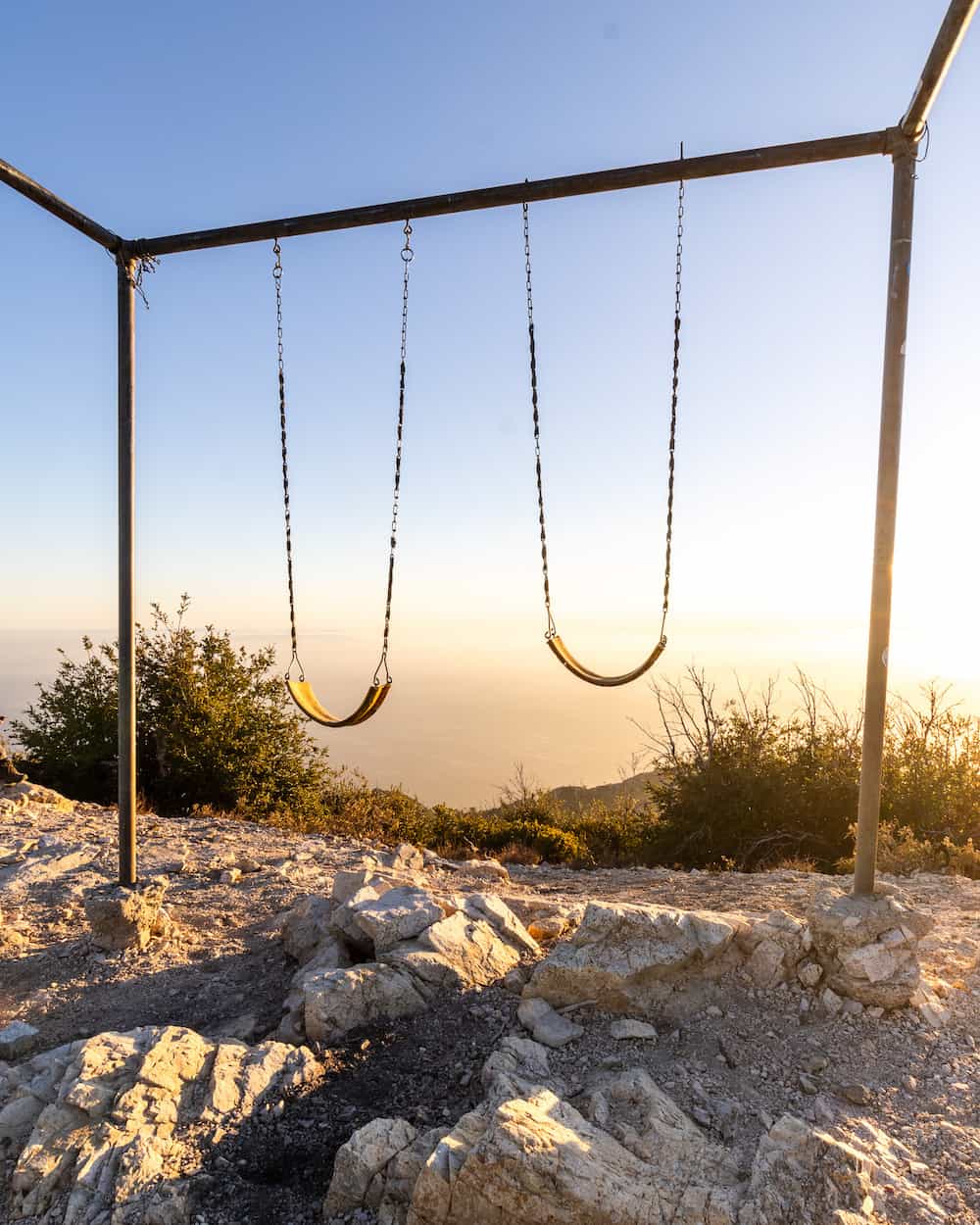
Named after one of the most ingenious men in California history, Professor Thaddeus Lowe, Mt Lowe Peak offers amazing panoramic views, including Catalina Island, and its larger counterparts, Mt Wilson (accessible via Chantry Flats) and San Gabriel Peak (Closed).

Placing swings on the frame, as shown in the image above, is not allowed, and may have been taken down.

Road access is blocked at Red Box as of 2/4/24, making the Eaton Saddle Trailhead inaccessible. Sadly the route via Sam Merril Trail at the Cobb Estate in Altadena is also closed. Conditions may have changed.

4. San Gabriel Peak (Closed)

Read Full Post: San Gabriel Peak

Less likely to get snow.

Short and easy, San Gabriel Peak is almost always my recommendation for new hikers who wish to begin their peak bagging journey. The views are amazing to say the least, and the elevation gain feasible for beginners. Microspikes are nonetheless highly encouraged.

Road access is blocked at Red Box as of 2/4/24, making the Eaton Saddle Trailhead inaccessible. However, the peak can be hiked via the Sam Merril Trail at the Cobb Estate in Altadena. Conditions may have changed.

5. Big Horn Mine

Read Full Post: Big Horn Mine

Likely to get snow. 

The road is closed at Vincent’s Gulch where this hike’s trailhead is located. Someone on All Trails left a review as of today, meaning the trailhead is open, as it usually is even when the road is closed.

The Big Horn Mine is one of my favorite hikes, as it leads to an abandoned gold mine near the headwaters of the San Gabriel River. Every winter the trail and enormous pine trees are blanketed with snow, transforming the area into a winter wonderland.

However, certain parts of the trail get really narrow. Should you slip, expect to slide down hundreds of feet. Crampons and trekking poles are highly suggested.

I’ll never forget how a fellow hiker allowed his daughter, who couldn’t have been more than 2 years old and hadn’t fully developed her balance, cross the extremely narrow section of the trail completely by herself without any of the gear suggested above. I literally feared for her life. Fortunately, she was safe.

6. Mt Baden Powell

Very likely to get snow. 

The road is closed at Vincent’s Gulch where this hike’s trailhead is located. However, the trailhead is usually still accessible, as is the parking lot.

This hike shares the same parking lot with the Big Horn Mine Trail. If you hike Mt Baden be sure to check out the Wally Wadron, a limber pine tree that is 1500 years old!

7. Mt Baldy

Very likely to get snow. 

Mt Baldy is the king of the San Gabriel Mts as it’s the highest peak in the range. Like Mt Wilson, it’s also one of the six pack of peaks, and therefore, a tough hike.

However, those who are up for a challenge will be rewarded with amazing views and a scenic forested trail. You can hike to San Antonio Falls via a small detour since the falls is along the way.

Hiking Mt Baldy after a snowstorm should only be attempted by advanced hikers with proper gear. People go missing at Mt Baldy almost every year during the winter. Play it safe.

8. Ice House Canyon

Very likely to get snow. 

Ice House Canyon is a very scenic hike in the Mt Baldy area that parallels the Icehouse Creek and ends at a saddle. Expect a dense forest of snow-covered pine trees, vibrant orange and yellow sycamore trees adorning the creek, and lofty mountains in all directions.

During the mid-19th century, Los Angelinos would transport ice from Ice House Canyon to the city to make ice cream, dubbing the canyon its name to this very day.

9. Islip Ridge Trail

Very likely to get snow. 

This was my first snow hike if I remember correctly. The trailhead is located near Crystal Lake campground, a scenic spot at the top of the North Fork of the San Gabriel Canyon that also gets snow.

The hike features amazing views from as far as the Pacific Ocean to the Mohave desert, and the ruins of a stone cabin and fire tower foundation.

This is a challenging hike, and snow only makes it harder, so make sure you’re fit enough to tackle this trail.

10. Cooper Canyon Falls

Very likely to get snow. 

Cooper Canyon Falls is, in my opinion, one of the nicest looking waterfalls in the San Gabriels. Unlike most cascades in the range, which consist of a narrow stream free falling off a cliff, Cooper Canyon Falls is a wide and powerful torrent.

It’s located in one of the most forested and scenic areas of the San Gabriels, making the trail just as pleasant as the waterfall itself.

Road is closed as of 2/4/24. Unlike Strawberry Peak, Cooper Canyon Falls’ trailhead is located very far from the closure. Most people won’t find hiking to the trail worthwhile. Conditions may have changed.

11. Strawberry Peak

Less likely to get snow. 

Although the road is closed at Red Box as of 2/4/24, the parking lot at Red Box is a very short walking distance from the trailhead and still worth the visit!

The trail to Strawberry Peak has very narrow sections and requires boulder scrambling in some parts. It should only be attempted by skilled hikers in snowy conditions.

12. Iron Mountain (Via Heaton Flats)

Likely to get snow. 

Due to the crazy elevation gain, Iron Mountain is known as one of the toughest hikes in the range, and should only be attempted by advanced hikers. Those who do, however, will be rewarded with amazing views and the feeling of having conquered something most people won’t even attempt.

San Bernardino County

13. Big Falls

Read Full Post: Big Falls Trail

Less likely to get snow. 

Big Falls is the tallest waterfall in SoCal, and every year it gets covered in snow. I highly suggest a visit for those who want a real winter wonderland treat. The hike is very short and easy.

14. Cougar Crest Trail

Cougar Crest Trail

Read Full Post: Cougar Crest Trail

Very likely to get snow. 

Arguably one of the toughest hikes in Big Bear Valley, Cougar Crest provides one of the best views in the area.

15. Pine Knot To Grand View Trail

Read Full Post: Pine Knot Trail

Very likely to get snow. 

Pine Knot Trail offers stunning views of San Gorgonio, the tallest peak in SoCal and the valley below. Although I haven’t attempted it in the snow, it’s one of my favorite Big Bear hikes because of the densely forested trail.

16. Heart Rock Trail

Heart Rock Trail

Read Full Post: Heart Rock Trail

Likely to get snow. 

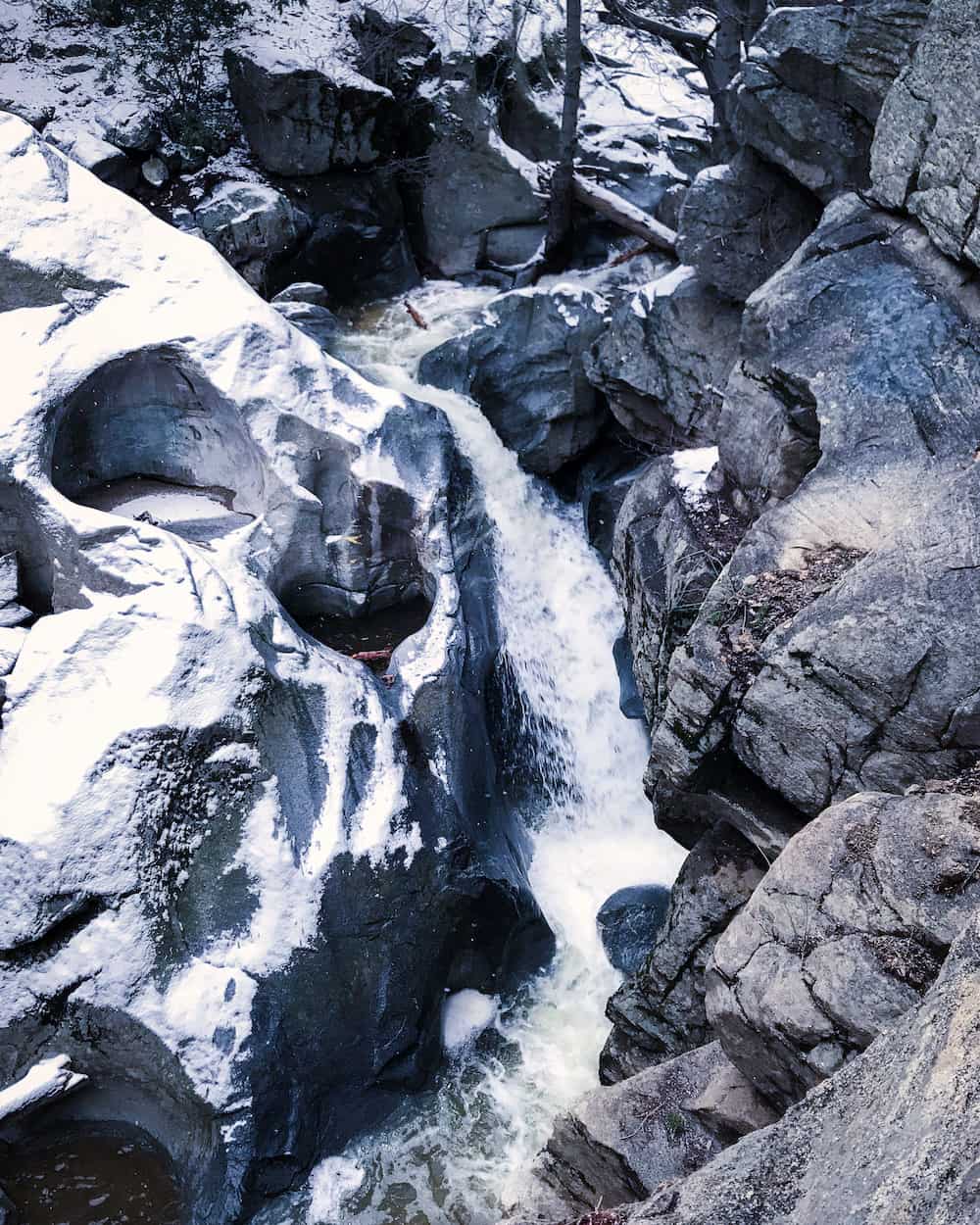
Located in the sleepy mountain town of Crestline, Heart Rock Trail is a magnet for couples, as it features a heart-shaped hole next to the falls. This trail is even more forested and scenic than Pine Knot. Numerous pine trees shade the majority of the hike as the trail follows Soldier Creek to the falls.

17. Castle Rock Peak

Read Full Post: Castle Rock Trail

Very likely to get snow. 

Castle Rock is a short, fun, and easy hike to a mount of boulders which faintly resemble a castle. The trail is scenic, like Pine Knot, with lots of pine trees and shade.

Many hikers like to climb to the top of the castle to enjoy a view of the lake.

18. Bertha Peak

Very likely to get snow. 

Bertha Peak is essentially the exact same hike as Cougar Crest, but with an additional stretch at the end that leads to the peak.

19. Sunset Peak

Read Full Post: Sunset Peak

Less likely to get snow. 

As the name suggests, Sunset Peak is a great spot to relax and admire the glistening rays of golden hour. The majority of the hike consists of a dirt road that meanders its way up the dark side of the mountain.

On a clear day you will be able to see all the way to Catalina Island.

20. Stoddard Peak

Read Full Post: Stoddard Peak 

Less likely to get snow. 

Stoddard Peak is located across the canyon from Sunset Peak, and is flanked by the enormous Mt Baldy to the north. To the south, you will be able to see as far as Catalina Island.

21. San Gorgonio

Very likely to get snow. 

At 11,503 feet, San Gorgonio, also known as Old Greyback, is the highest peak in Southern California. Every year, the peak boasts a crown of freshly layered snow, attracting hikers from all over the state.

It goes without saying, only advanced hikers should attempt to summit San Gorgonio in the snow.

The image above is the view from San Gorgonio Peak, an d the mountain in the background is San Jacinto.

22. Cucamonga Peak

Very likely to get snow. 

Known as one of the original six pack of peaks, Cucamonga is not for the faint of heart. Every winter, the mountain is blanketed with much needed snow, and should only be attempted by skilled hikers.

This peak is famous for its precipitous rock ledge which seems to be hovering thousands of feet above the valley when photographed from a certain angle.

The trail leads hikers through a stunning sub-alpine wilderness consisting of a mixed coniferous forest. Therefore, resembling a winter wonderland after a good dump.

23. Ontario Peak

Very likely to get snow. 

Ontario Peak is Cucamonga Peak’s smaller neighbor, and therefore, shares a very similar ecosystem. The official peak is located on a pile of large rocks with a pine tree rising from the mount.

The trailhead is located at Ice House Saddle, which technically means you have to hike to the trailhead, if that makes sense.

San Diego County

24. Stonewall Peak

Read Full Post: Stonewall Peak

Less likely to get snow. 

Cuyamaca Rancho State Park’s Stonewall Peak is one of my favorite hikes in SD county. The very last section of the peak required walking up a set of extremely icy (and slippery) stairs, with only a pipe railing between me and a near vertical fatal drop. Did I mention I didn’t own microspikes at that time?

The peak is very narrow, almost like a perfect 3D triangle, resulting in one of the most amazing panoramic views I’ve ever witnessed.

The views on the way back from Stonewall Peak were stunningly beautiful.

25. Cuyamaca Peak

Read Full Post: Cuyamaca Peak

Less likely to get snow. 

Located across the road from Stonewall Peak is Cuyamaca Peak, the second highest peak in the Cleveland National Forest. Cuyamaca Peak has been one of my favorite snow hikes. It features mortars in Azalea Glen, hundred pound icicles hanging from the antennas, and absolutely mind-blowing views of the Pacific Ocean.

I experienced my first mountain lion encounter about one mile into the hike, which explains why dogs weren’t allowed on the scenic trail. Since the south side of the mountain is very vertical, standing at the peak feels like you’re clinging onto the edge of the world.

26. Palomar Mountain Observatory

Less likely to get snow.

The forested Palomar Mountain Observatory trail is a beginner friendly four mile hike in the Cleveland National Forest that offers panoramic views. As the name suggests, the trail ends at an observatory, which, like the observatory on Mt Wilson, is open to the public, but only through guided tours.

Palomar Mountain typically receives snow only once or twice a year. Hence, keep a close eye on the forecast if you wish to visit in snowy conditions.

Riverside County

27. San Jacinto

Very likely to get snow. 

San Jacinto is one of the original six pack of peaks and the tallest mountain in its range, towering above Palm Springs. Just a couple of years ago, an avalanche was witnessed from the freeway. Needless to say, San Jacinto is not ideal for beginners, especially in snow.

28. Tahquitz Peak

Likely to get snow. 

Tahquitz originates from the native american Gabrielino’s word Takwis, which means giant hairy man-like beast. This beast was said to have left behind a foul stench, but luckily he did not live at Tahquitz Mountain. He must not have liked the beautiful mixed coniferous forest.

The most popular route to the peak includes the Devil’s Slide trail, and totals at 8.3 moderately challenging miles.

Orange County

29. Santiago Peak

Less likely to get snow. 

Although rare, Santiago Peak, the highest mountain in the Santa Anas occasionally gets a good dump. It offers amazing views of the ocean and valley below. The natives believed their god lived on this mountain.

Off roading up the mountain is allowed, but check Caltrans as road conditions may change.

30. Modjeska Peak

Less likely to get snow. 

The second highest peak in the Santa Ana Mts is Modjeska Peak, named after a Polish actress. Together with Santiago Peak, they’re known as Old Saddleback.

Ferndell Nature Trail To Griffith Observatory Loop

Ferndell Nature Trail To Griffith Observatory Loop

  • Total Miles: 2.75
  • Time: 1-1.5 Hrs
  • Difficulty: Easy – Moderate
  • Best Season: All Year
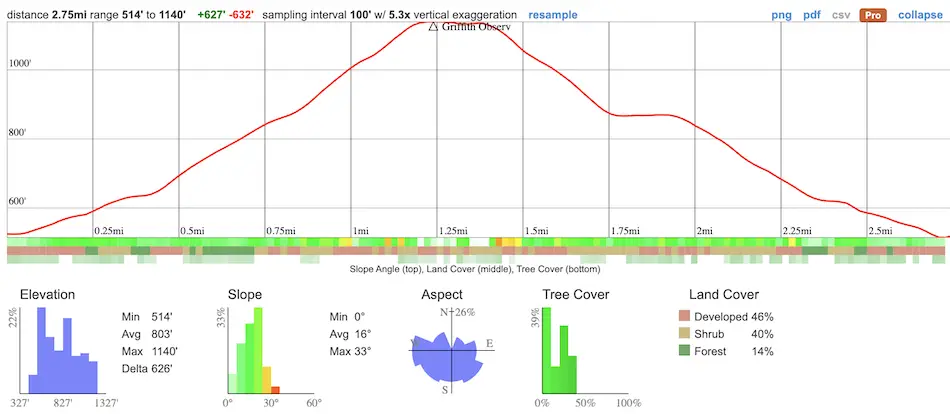
  • Elevation Gain: 632 ft
  • Max Elevation: 1140 ft
  • Type of Trail: Loop
  • Parking Lot: Street Parking
  • Dogs: Allowed On A Leash
  • Restrooms: Available At The Observatory
  • Trail Popularity: Very High
  • Pics Taken On: Jan 16, 2024

This hike combines two trails to get the best of both worlds. First is the virtually flat Ferndell Nature Trail, a tropical oasis that couldn’t be anymore different from the rest of Griffith Park. The luscious trail is shaded by dense foliage which resembles an arboretum and runs adjacent to a flowing creek. The second is the Observatory Loop, a sunny dirt road that leads up to the Griffith Observatory and is comprised of three parts; east, west, and the third which doesn’t contain a cardinal direction.

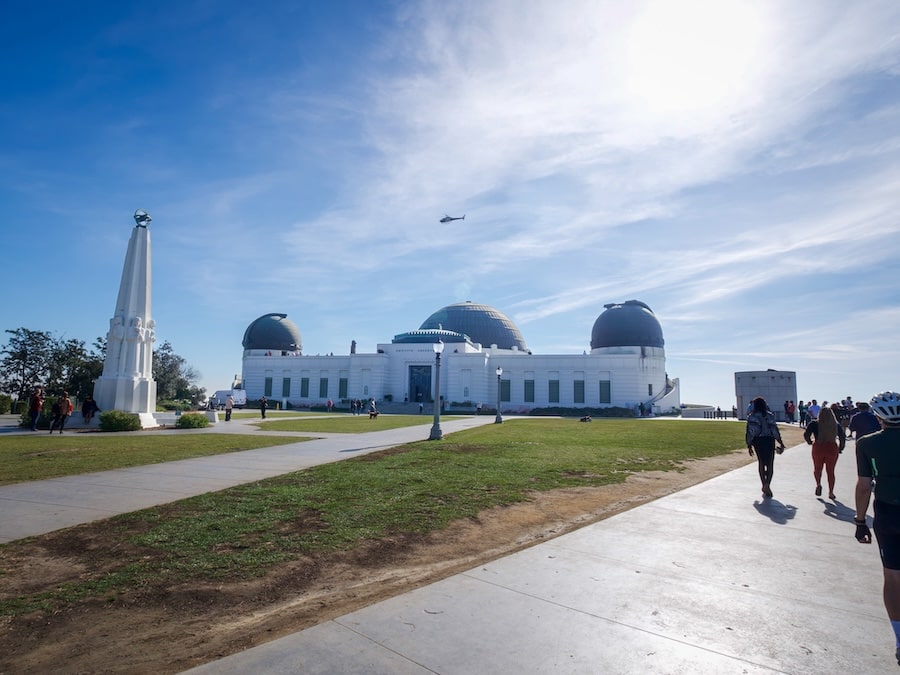
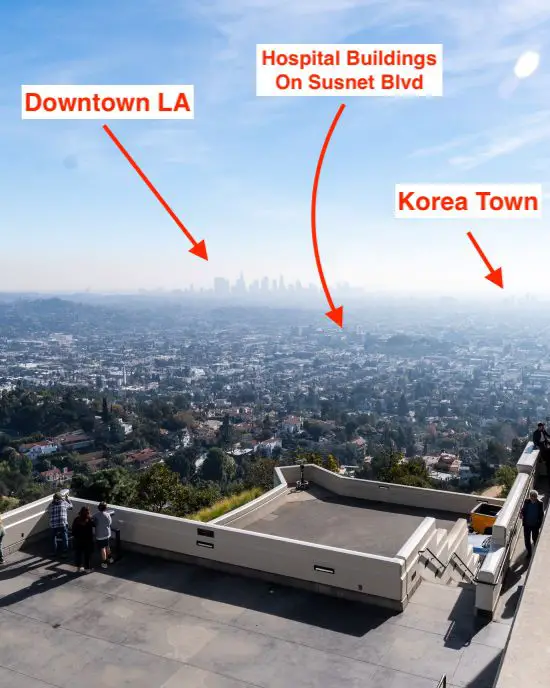
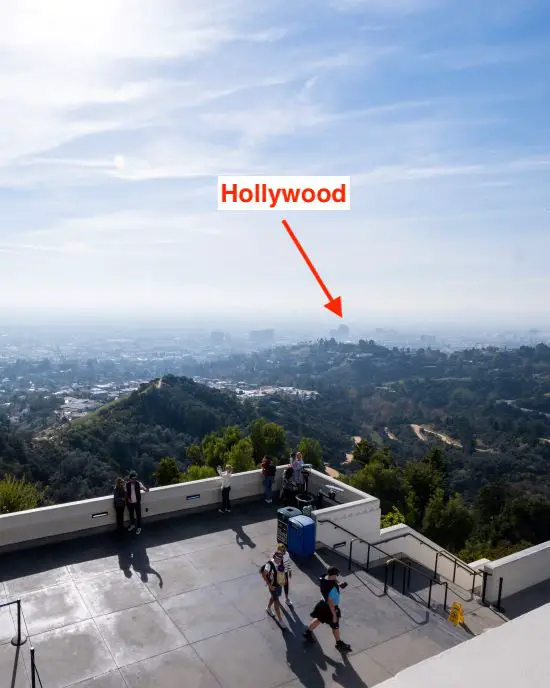
The hike ends at the world-famous Griffith Observatory, whose outside perimeters can be explored almost any day of the year. Although visibility was horrible during my visit, I was nevertheless able to spot Downtown LA, Korea Town, Hollywood, and Santa Monica to the south. To the north, the Hollywood Sign sits precipitously on dry rolling hills while the San Bernardinos flaunt their full view as far as Mt Gorgonio, assuming the smog allows it. The Pacific Ocean can also be seen on a clear day.

Want to explore century-old ruins, huge waterfalls, and abandoned places in LA County? Click the link below.

Hikes In Los Angeles County

Ferndell To Observatory Trail Map

powered by Advanced iFrame

Ferndell Trail To Griffith Observatory Loop Elevation Profile

Download Printable PDF Map

Parking & Directions

To be redirected to the Ferndell Nature Trailhead via Google Maps, click the link here.

Expect large crowds and difficulty parking every weekend.

Helpful Links

Ferndell Nature Trail Weather Forecast

Griffith Park Additional Info & Maps

Ferndell Nature Trail

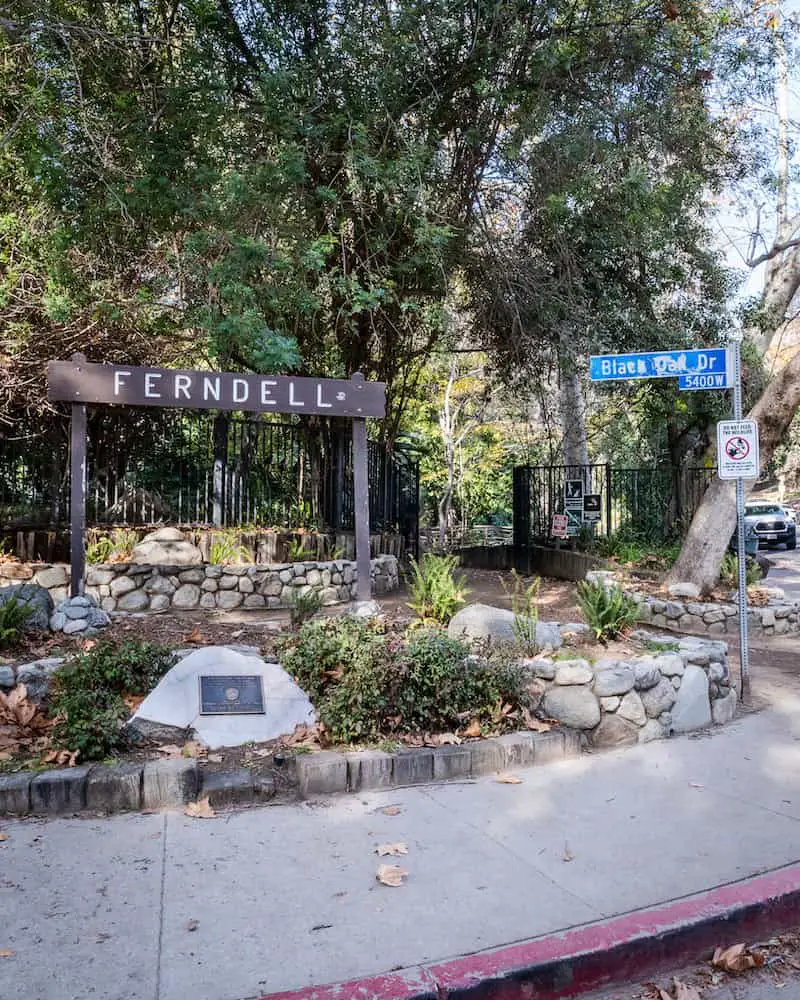
The Ferndell trailhead is located at the intersection of Ferndell Dr and Black Oak Dr. in Western Canyon.

Fun Fact: The native Tongva people called the canyon “Mokawee’nga.” They used it as a gathering spot for councils and found it so pleasing that a village was built at the canyon entrance.

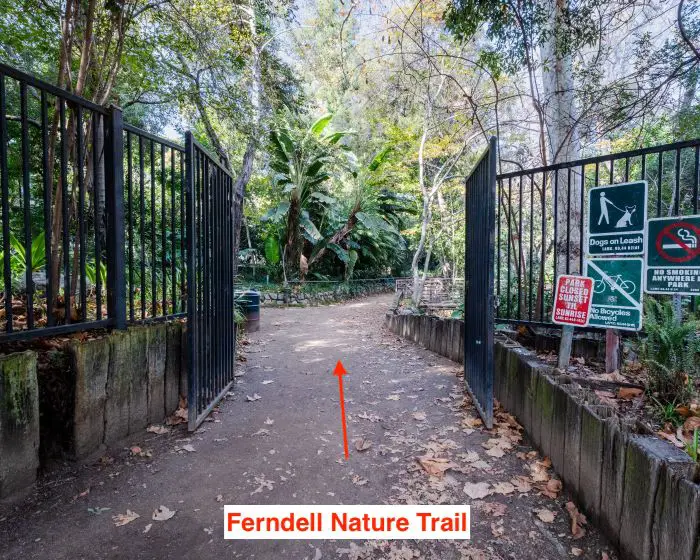
A black gate encompasses the Ferndell Nature Museum, the scenic section of the trail containing the creek and plants, some of which include ferns, orchids, and elephant ear.

Ferndell Nature Trailhead

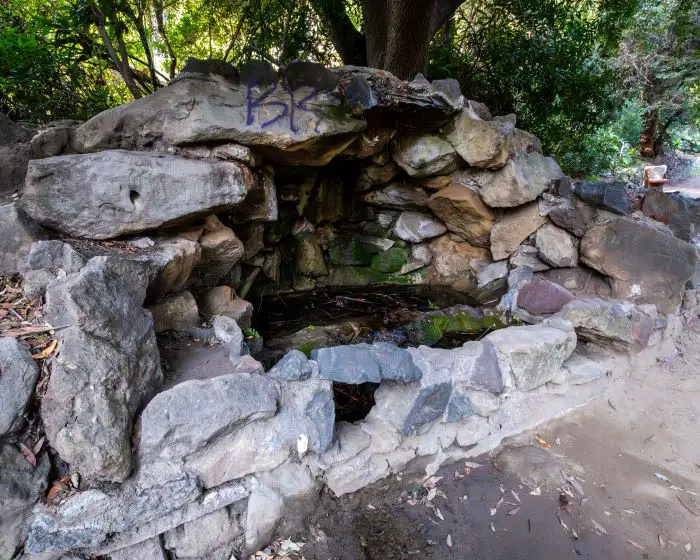
It’s no exaggeration to say the the museum resembles the gardens at the Hunting Library. The city went above and beyond by building a rocky grotto and waterfall alongside the creek.

The luscious greenery retains its vibrancy year-round thanks to the constant supply of water from a nearby natural spring formerly known as the “fountain of youth,” a name attributed by 19th century American settlers who believed that mild climate and certain springs, especially hot springs, had the power to improve one’s health.

Ironically, the water source became contaminated, and a deeper well with pipes and faucets was dug to facilitate public use.

Below is the rocky grotto. Unfortunately, the black gate is not enough to deter all vandals.

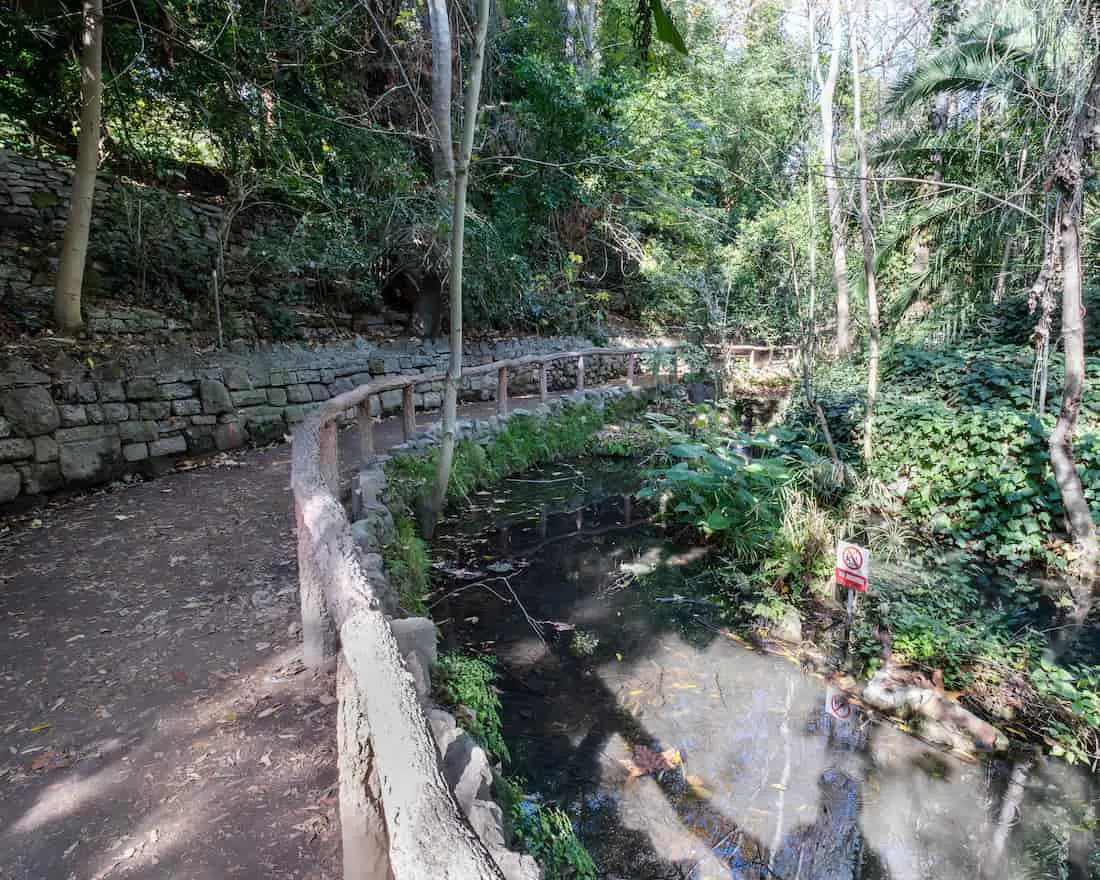
This bend is located alongside a small pond containing koi, goldfish, turtles, frogs, and crayfish. Fishing is prohibited.

Benches have been placed throughout the museum, should you want to take a peaceful break. A young man who was reading on a bench made me wish I had one of my favorite reads with me, Fingerprints Of The Gods, for a relaxing session. Maybe next time.

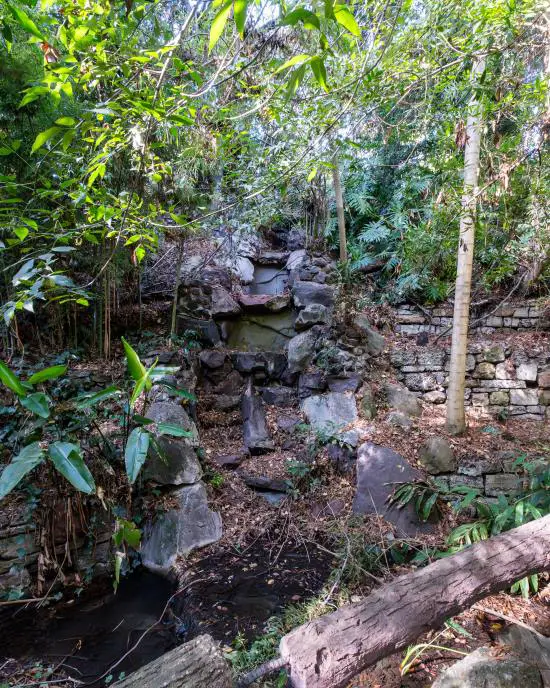
Here is the manmade waterfall.

Ferndell Dry Waterfall

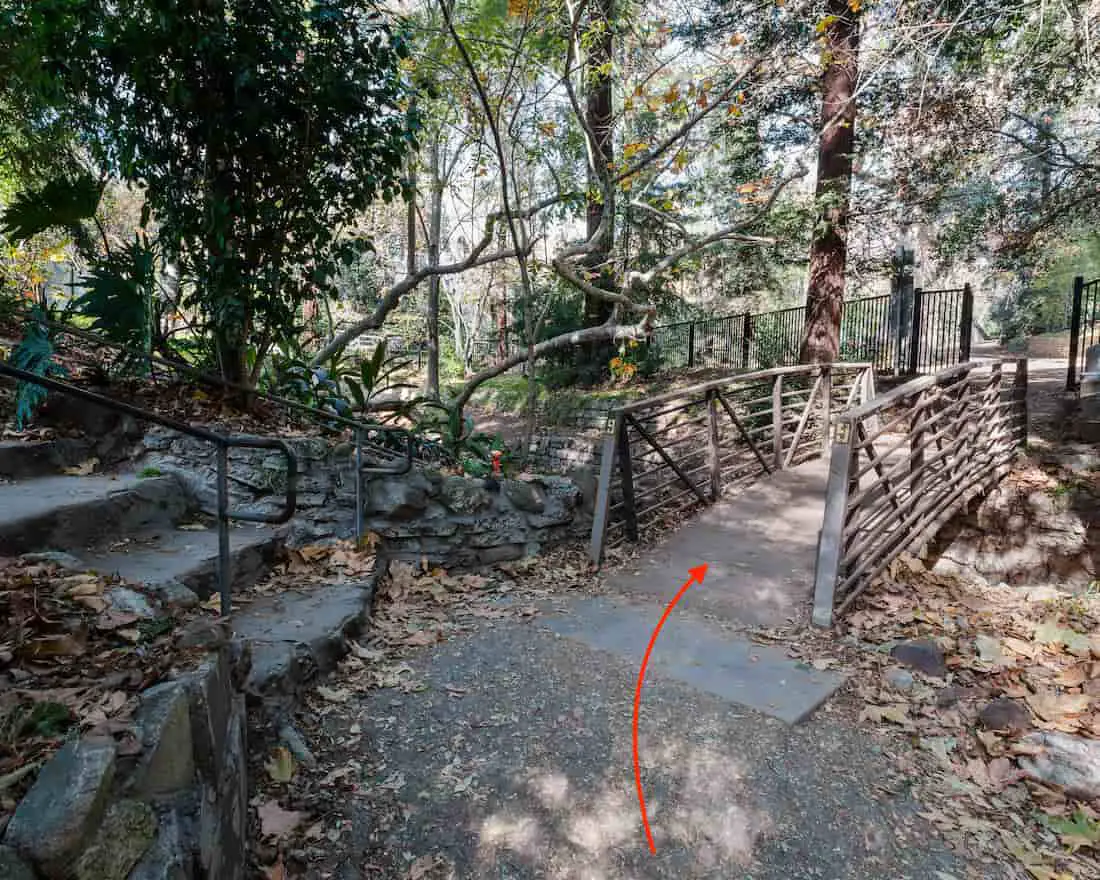
I took the path to the right at the fork to walk over the bridge and through the black gate. Thus, completing the Ferndell Trail.

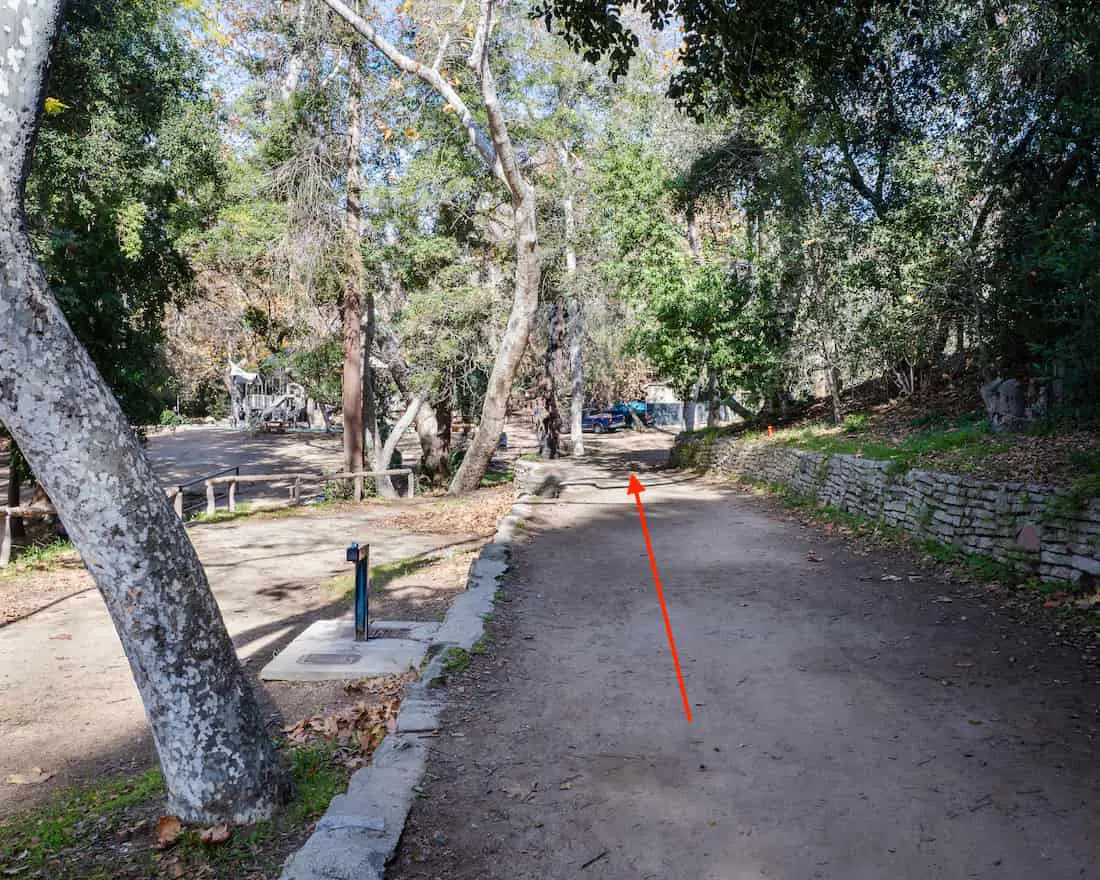
The abundant vegetation came to an abrupt end and I found myself at a picnic area that’s shaded by a grove of tall redwoods. Restrooms and a water fountain are available here.

For those who don’t mind taking a short detour to grab a meal, “The Trails Cafe” is located across the road. However, I avoided the cafe and pressed on towards my destination.

East Observatory Trail

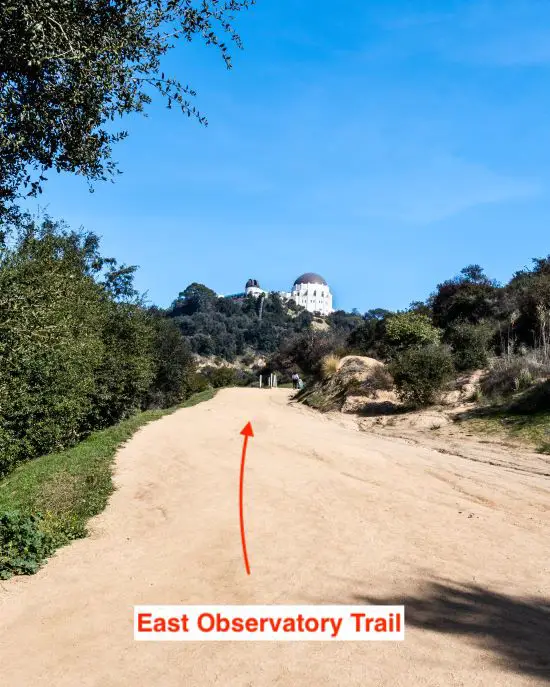
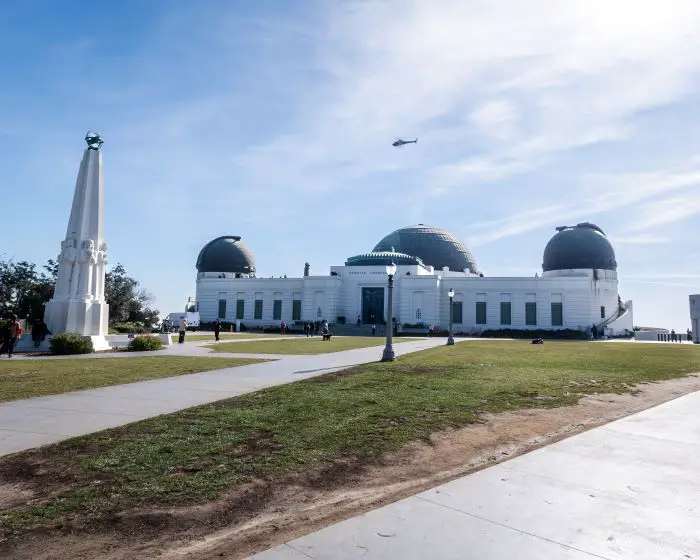
After hiking through the picnic area, I hopped onto the East Observatory Trail, a sunny dirt road with nice views of the Griffith Observatory, to begin the loop.

Technically, it is possible to begin the loop via the west trail, which offers better views of the Hollywood Sign, but is steeper than the east side.

East Observatory Trail

Observatory Trail

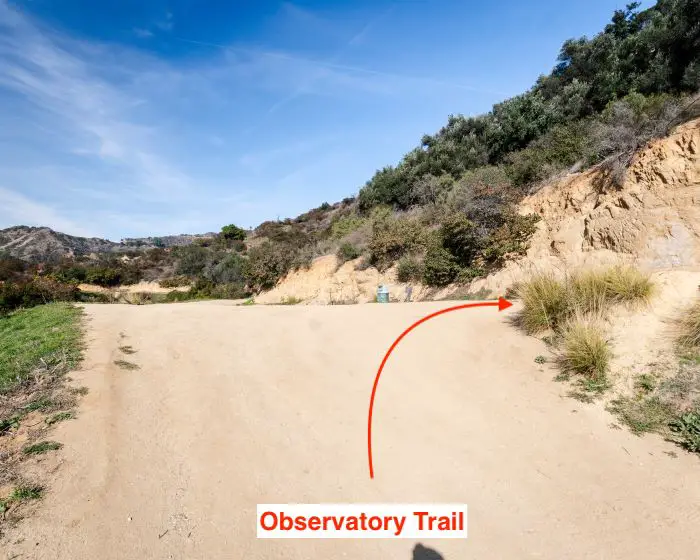
I made a right at the next fork to hop onto the Observatory Trail. This section of the trail is undoubtedly the steepest part of the hike, so take your time.

Observatory Trail

Arriving At The Griffith Observatory

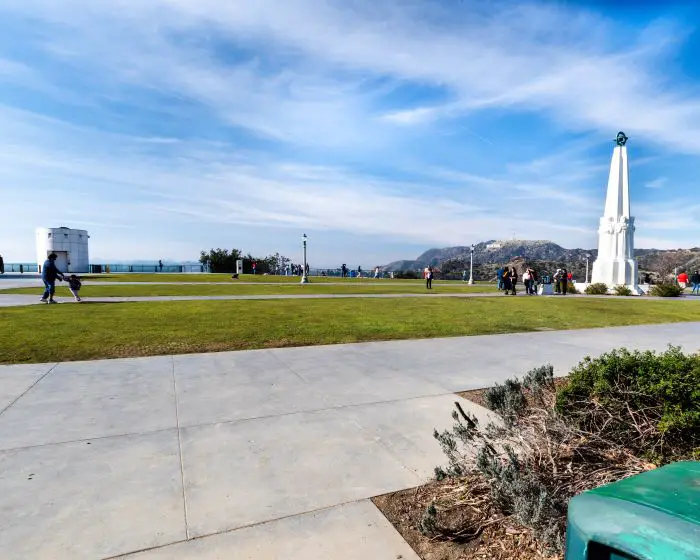
The trail ended on the east side of the lawn, and I wasted no time walking to the opposite side in order to enjoy better views.

Griffith Observatory

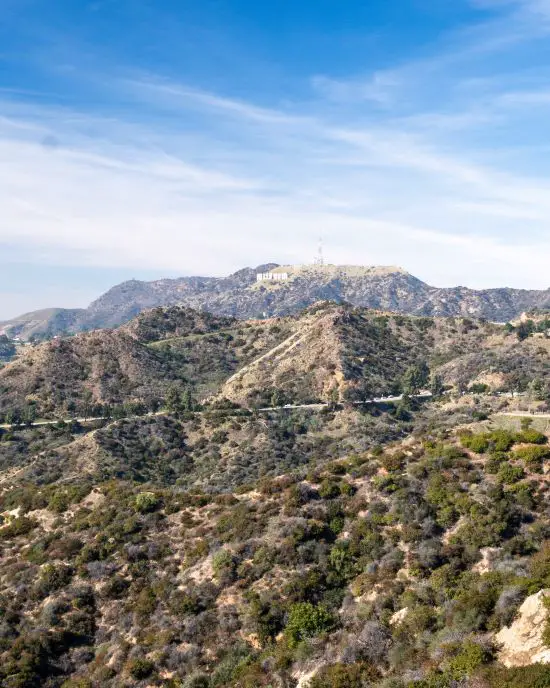
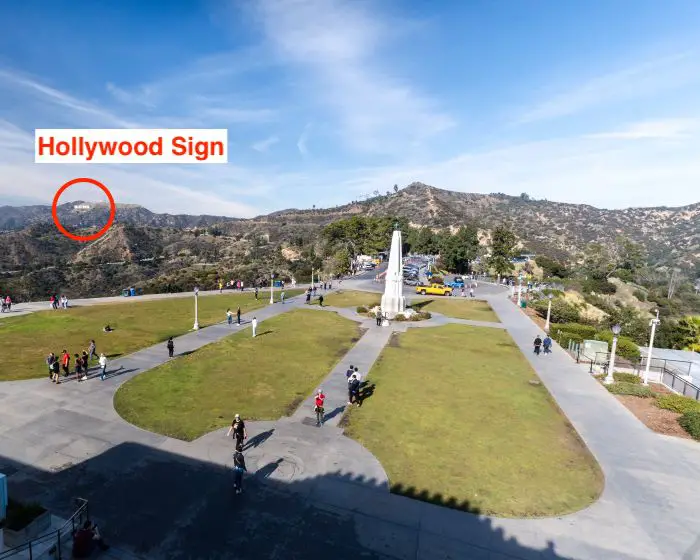
Behind me was the renowned Hollywood Sign sitting precipitously on the hillside. It may not look like it from far away, but each letter is a whopping fifty feet high.

Hollywood Sign

Afterward, I climbed the staircase on the east side of the observatory, which leads to the roof, to get the best views of the city. Unfortunately, the smog was pretty bad during my visit.

Downtown LA & Korea Town From Griffith Observatory

To the north, I had a nice view of the lawn and the chaparral-covered hills.

Griffith Observatory Lawn

The sunset strip in Hollywood and the tall buildings in Santa Monica are visible from the west side of the roof.

Hollywood

Returning Via Observatory & W. Observatory Trails

When I finished taking all my shots, I returned the same way by hiking down the Observatory Trail.

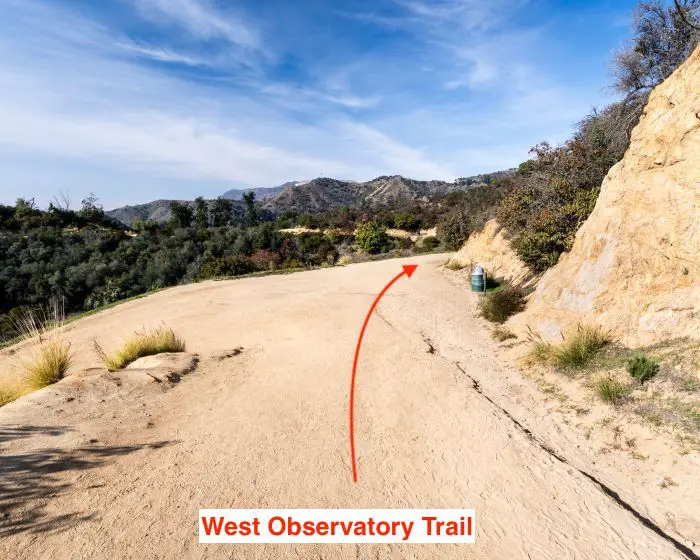
Instead of making a left at the fork to continue retracing my steps via the east side of the loop, I descended via the W. Observatory Trail to the right at the fork until its end at the previously mentioned picnic area.

West Observatory Trail

I traversed the picnic area once again.

I found myself at the museum’s black gates again, but didn’t walk through them. Instead, I took the fork’s left side.

This was the last section of the hike which consisted of a sidewalk meandering through more beautiful redwoods and eucalyptus trees.

A very rustic-looking memorial shaded by tall pine trees caught my attention. Benches can be found here, making it more than ideal for a break.

Memorial

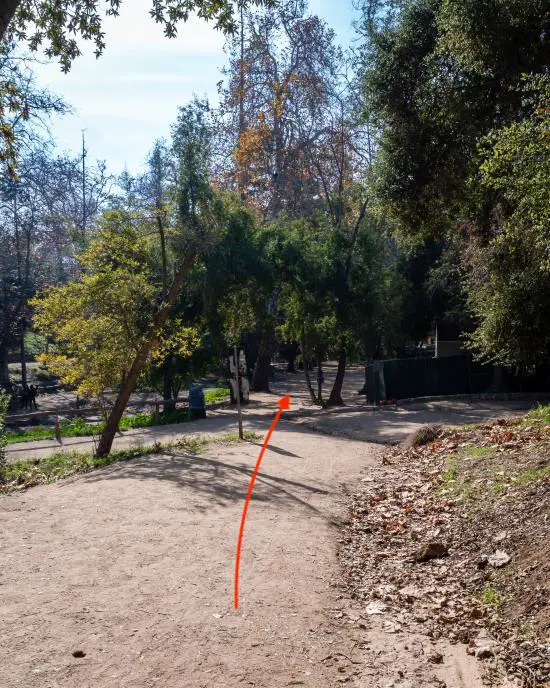
The sidewalk runs alongside Fern Dell Dr. where I happened to be parked. Hence, I concluded the hike when I arrived back at my truck.

Last Section Of The Hike

Hold on a second! This hike is very short, which is why I combine it with another hike in Griffith Park located only five minutes away. The hike ends at Vista Viewpoint and overlooks LA County.

Click the link to check it out: Riverside Trail to Vista Viewpoint.

FAQs

How Long Is Ferndell Trail?

Excluding the trails leading up to the observatory, Ferndell Nature Trail is an easy 0.5 miles.

How Long Is The Hike Up To The Observatory?

The hike up to the observatory includes both the Ferndell Trail and Observatory Loop, and is a total of 2.75 miles.

Where Can I Park To Hike Ferndell Nature Trail?

Street parking is available on Fern Dell Dr, which happens to run parallel to the trail.

Is Ferndell Trail Stroller Friendly?

The Ferndell Nature Trail is stroller friendly. Strollers are manageable for the observatory loop (second half of the hike) as the entire hike consists of a dirt road, but the steep incline may not be feasible for some people.

Does Ferndell Nature Trail Get Crowded?

This hike is extremely popular. Expect large crowds every weekend, and average foot traffic during the week.

Riverside Trail To Vista Viewpoint: Picturesque LA Views

Riverside Trail To Vista Viewpoint: Picturesque LA Views

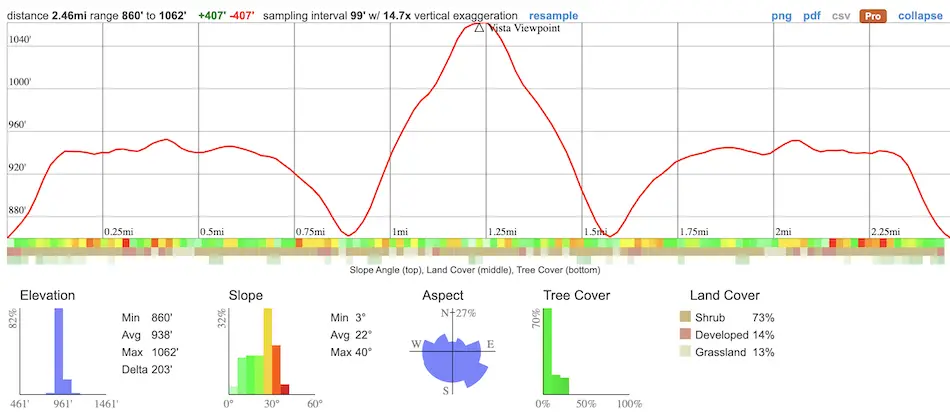
  • Total Miles: 2.46
  • Time: 1 Hrs
  • Difficulty: Easy – Moderate
  • Best Season: All Year
  • Elevation Gain: 407 ft
  • Max Elevation: 1062 ft
  • Type of Trail: Out & Back
  • Parking Lot: Fits ≈ 50 Cars
  • Dogs: Allowed On A Leash
  • Restrooms: Available At The Parking Lot
  • Trail Popularity: Moderate
  • Pics Taken On: Jan 16, 2024

Riverside Trail is a sunny dirt road nestled in the chaparral-filled hills of Griffith Park. The trail’s difficulty level has been rated as moderate to hard on All Trails, but I think it deserves more of an easy to moderate difficulty, as only the beginning and end are somewhat steep. Fortunately for beginners, the steep sections don’t last very long, as the majority of the trail boasts a mild ascent.

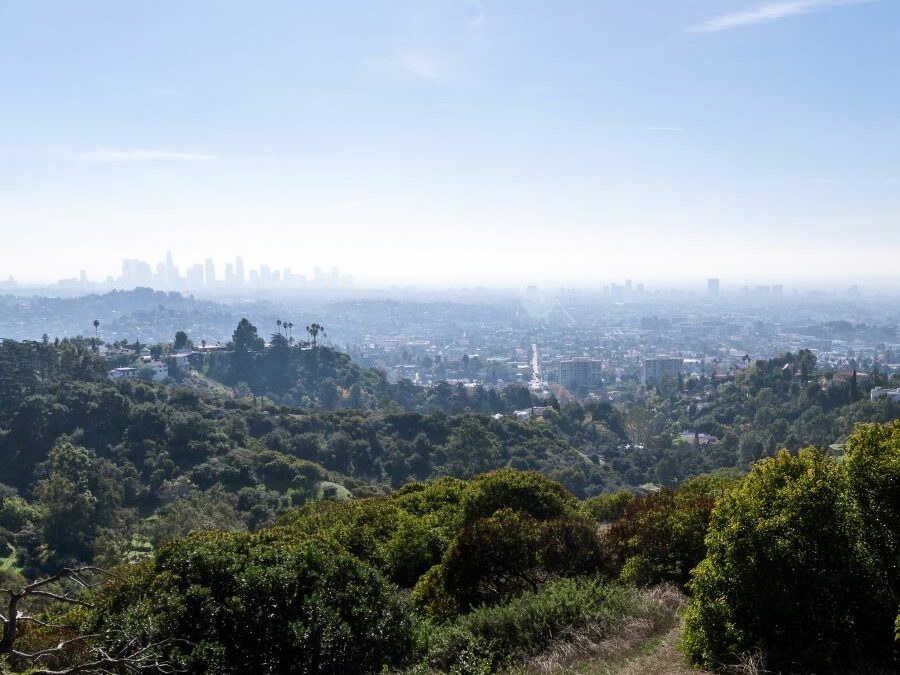
The trail ends at a turnout off of the paved road known as Vista Del Valle Dr, which translates as View Of The Valley in Spanish. From this viewpoint, one can easily see Downtown Los Angeles, Korea Town, and the Pacific Ocean if it’s a clear day. In my opinion, however, the view of the San Gabriels looming over Glendale, which can be seen from the place where Riverside, Hogback, and Vista Del Valle Dr. intersect, was more appealing and scenic. Maybe I’m just biased because I don’t like the city.

Want to explore abandoned gold mines, enormous waterfalls, and forgotten ruins in LA County? Click the link below. You won’t regret it!

Hikes In Los Angeles County

Riverside Trail To Vista Viewpoint Map

powered by Advanced iFrame

Riverside Trail To Vista Viewpoint Elevation Profile

Download Printable PDF Map

Parking & Directions

To be redirected to parking lot G, a lot belonging to the Greek Theater located directly across the street from the Riverside Trailhead, click the link here.

Note: Multiple people, myself included, have been able to park in lot G without paying a fee or getting a citation. However, I cannot guarantee this to be the case every time. If the Greek Theater is hosting an event, be especially careful, as they’re known to patrol and give out citations.

Helpful Links

Riverside Trail Weather Forecast

Griffith Park Additional Info & Maps

Hiking To Vista Viewpoint Via Riverside Trail

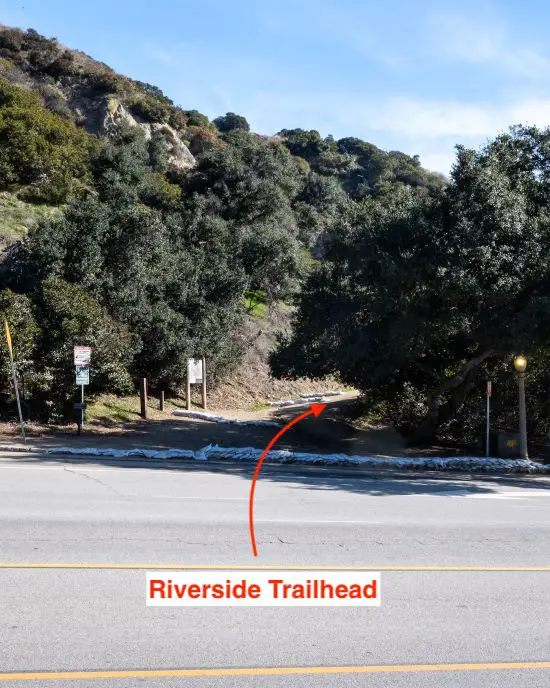
After parking in lot G, I walked across the street to begin ascending the dirt road known as Riverside Trail. Why the name Riverside? I couldn’t tell you. The canyon and surrounding hills are drier than a bag of Rapunzel fruit.

Riverside Trailhead

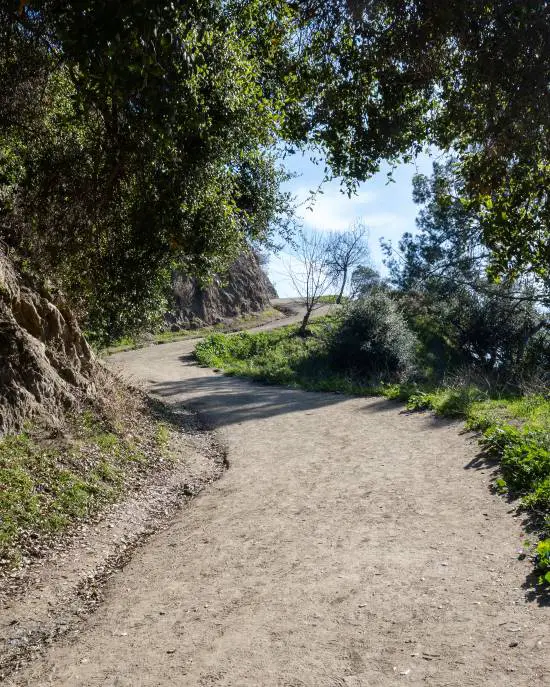
The trees at the trailhead are one of only two or three spots that provide shade on the hike. Hence, plan accordingly. The initial ascend is the steepest part of the hike, and only the very end gets close to rivaling the elevation gain.

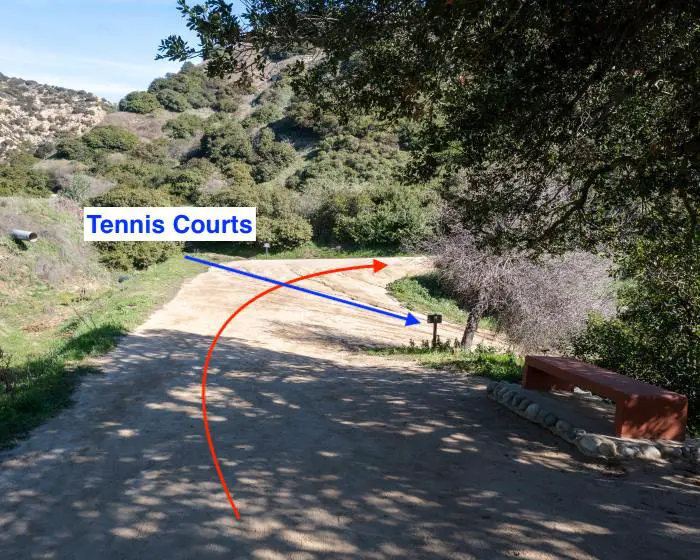
Since the tennis courts have their own designated parking lot, hiking to the courts from Riverside Trail is optional.

About halfway through the bend shown below, I noticed a dirt trail leading away from the road, but I ignored it as it ends after 650 feet.

I had no plans of playing tennis, so I continued up the same dirt road on which I started.

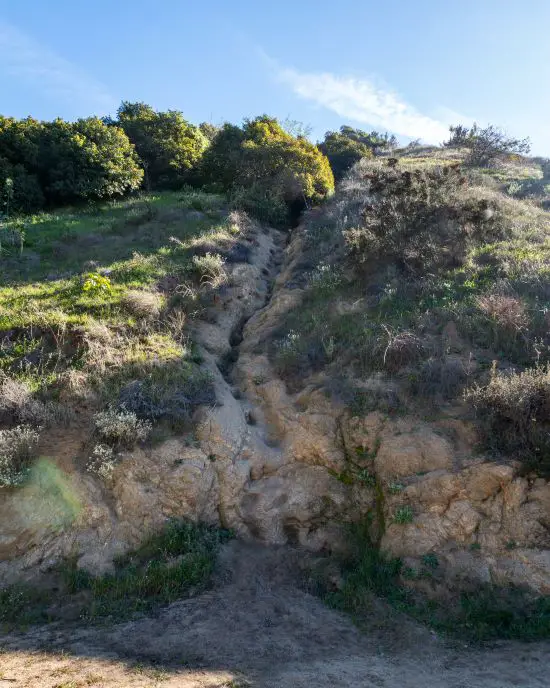
Little shortcuts and detours leading up the canyon wall are prevalent throughout the hike. The one shown below has been used so much that it morphed into a natural staircase.

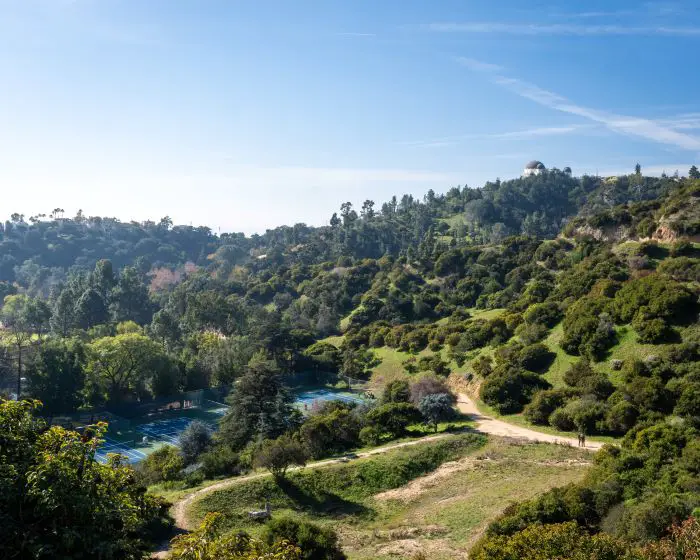
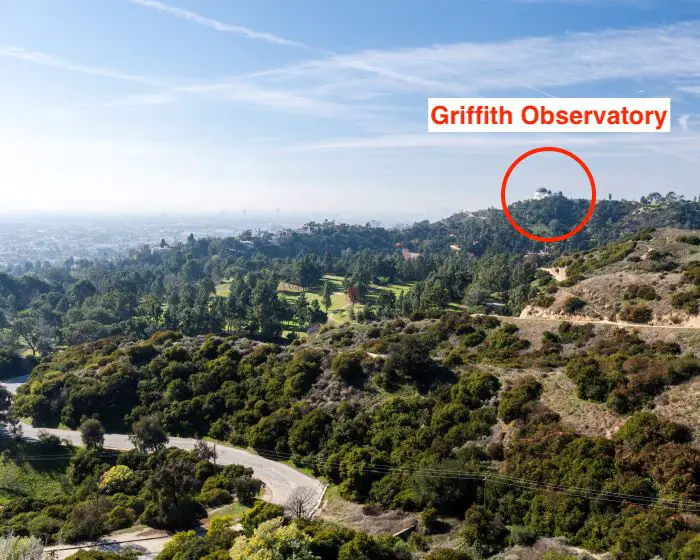
After a few minutes of hiking, I turned back out of sheer curiosity and was pleasantly surprised with the view. Griffith Observatory can be seen perched at the top of the hill, surrounded by vibrant green vegetation, and contrasted against a deep blue sky.

Tennis Courts In Griffith Park

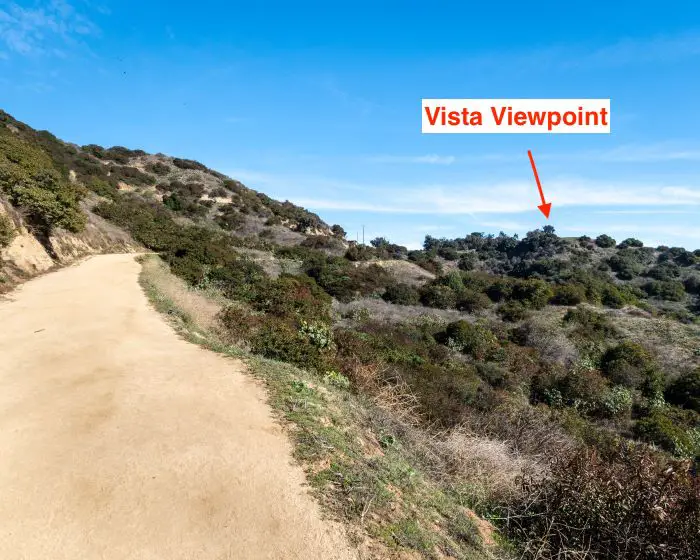
The last section of the trail increased its steepness once more, almost as if to say it’s not going down without a fight. Fortunately, the presence of Vista Viewpoint provided some moral support.

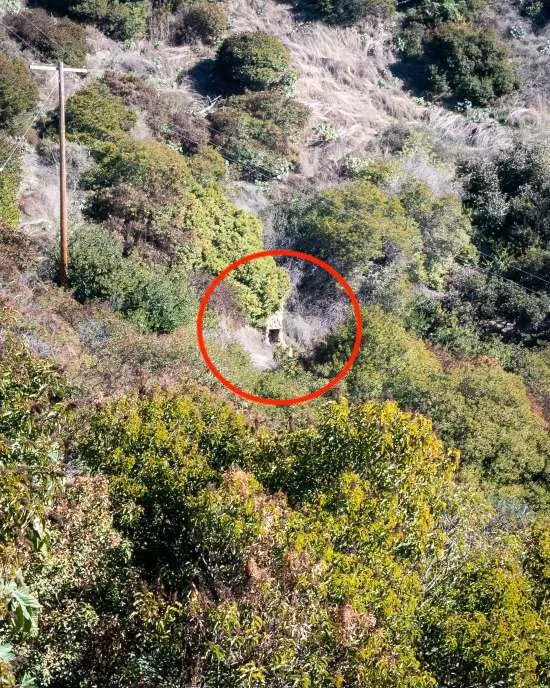
Shortly before arriving at the intersection of the three trails, I spotted stone ruins on the hillside underneath the viewpoint which resembled a chimney. Sadly, I’ve yet to find additional info.

Ruins Near Riverside Trail

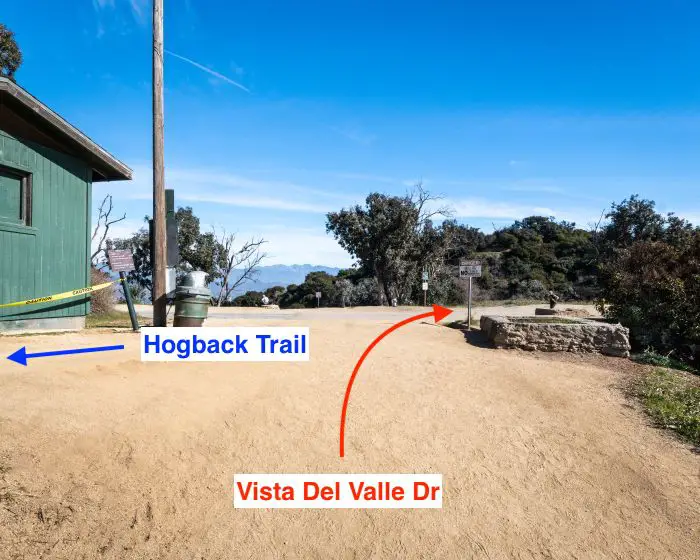
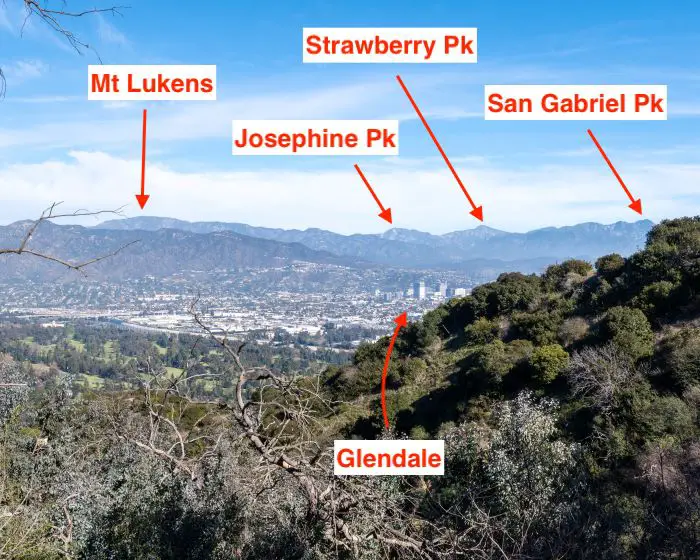
I made a right onto the paved Vistas Del Valley Dr to get to the viewpoint. However, I crossed the paved road to admire the view of the San Gabriels and Glendale before doing so.

The Hogback Trail begins at this intersection, takes hikers underneath Glendale Peak, and ends shortly after passing Dante’s View. The Riverside and Hogback Trails can be combined with other trails to form an enormous loop.

Riverside, Hogback,  & Vista Del Valle intersection

The San Gabriel Mts can be seen below. I identified some of the more popular peaks.

San Gabriel Mountains From Griffith Park

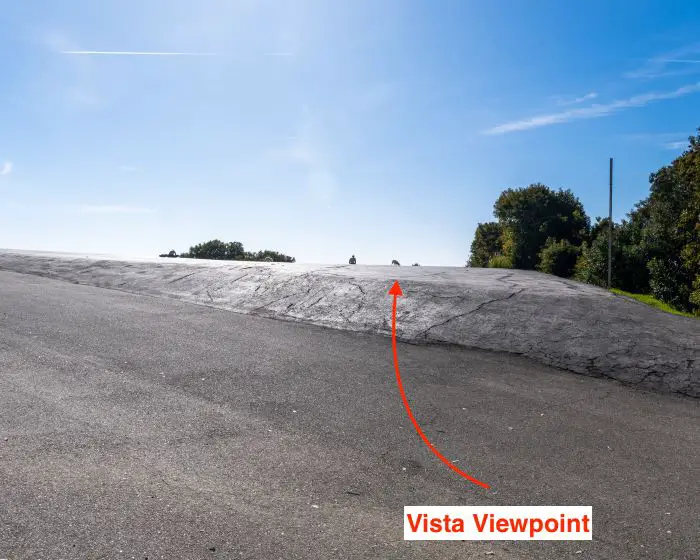
After admiring the San Gabriels, I continued eastward on Vista Del Valley Dr. You can’t miss the viewpoint. It’s only like 30 steps eastward via the paved road.

Vista Viewpoint

Even with the horrible smog that day, the view did not disappoint.

From west to east, the first notable structure was the Griffith Observatory towering above the trees and golf course.

Griffith Observatory & Tennis Courts From Vista Viewpoint

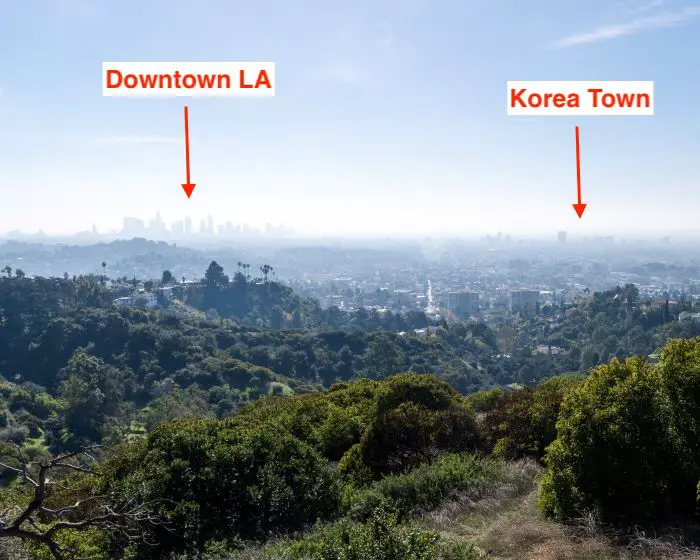
Moving eastward, Korea Town can be seen struggling to pierce above the horizon.

To the left of Korea Town, the unmistakable Downtown LA, and its lofty skyscrapers gaze down on the rest of the valley.

Downtown LA & Korea Town From Vista Viewpoint

Last but not least, the view to the east includes the valley as far as the eye can see, which, on a clear day, would probably include Mt Gorgonio and the San Jacintos.

Hold on! Don’t leave just yet. Since this hike is super short, I combined it with another short hike which is only 5 minutes away from the Riverside Trail, ends at the Griffith Observatory, and offers better views! The first part of the hike will make you feel like you’re walking through a jungle!

Click the following link to see more: Ferndell Nature Trail To Griffith Observatory Loop

Echo Mountain Hiking Guide: The 8th Wonder Of The World (Closed)

Echo Mountain Hiking Guide: The 8th Wonder Of The World (Closed)

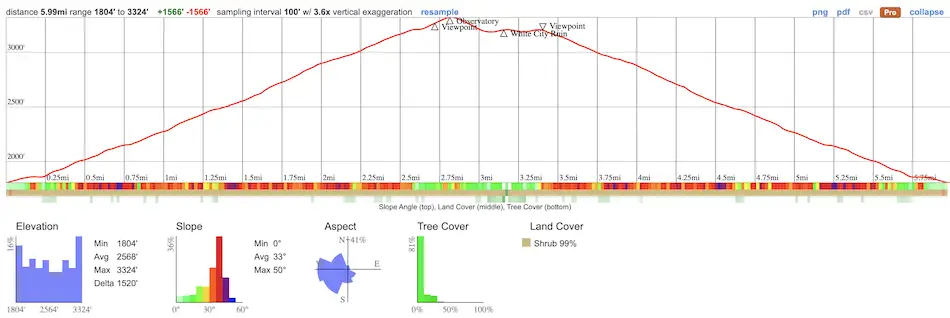
  • Total Miles: 6 (includes 0.2 mile to falls viewpoint & observatory ruins)
  • Time: 3 Hrs
  • Difficulty: Moderate – Hard
  • Best Season: All Year
  • Elevation Gain: 1566 ft
  • Max Elevation: 3324 ft
  • Type of Trail: Out & Back
  • Parking Lot: Street Parking
  • Dogs: Allowed On A Leash
  • Restrooms: Not Available
  • Trail Popularity: Very High
  • Pics Taken On: Dec 28, 2023

I love the Echo Mountain hike because of the fascinating history behind the ruins. Although the mountain park was once known as the eighth wonder of the world, Mother Nature has reduced it to a sad shadow of its former self.

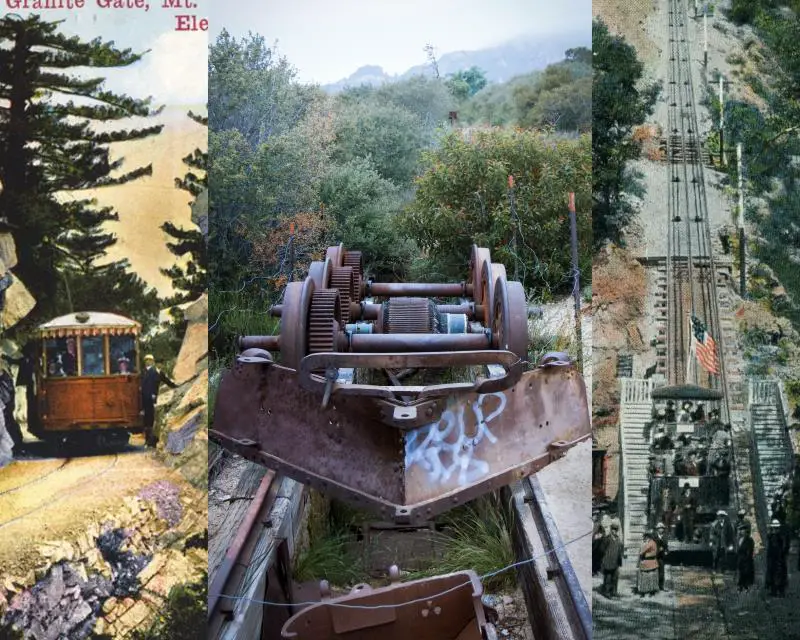
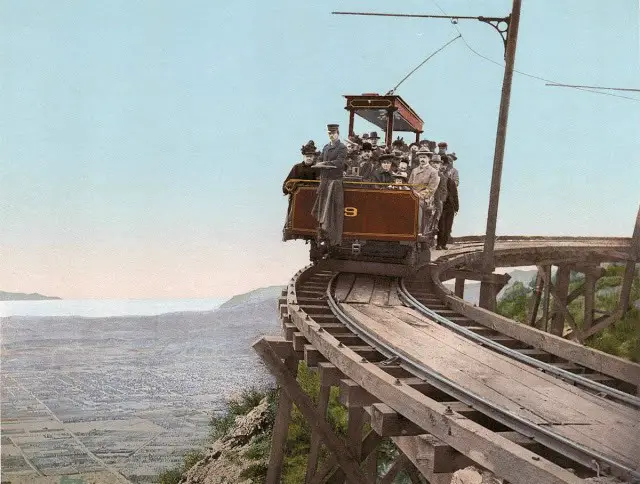
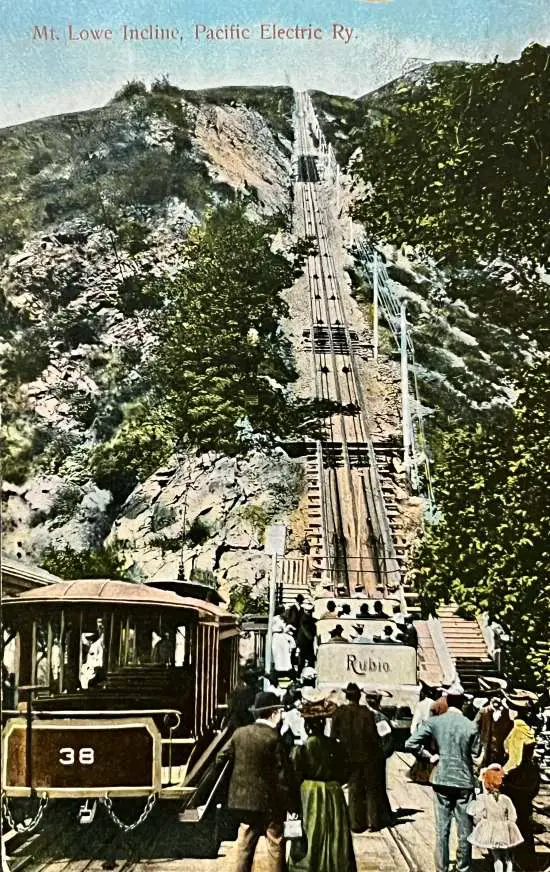
If it were possible for us to travel back in time to the turn of the 20th century, we’d find the “Railway In The Clouds,” electric trolleys that seemingly defied gravity, meandering up the mountain. Just as breathtaking was the Great Incline, a steep rail system that transported passengers 1500 feet up from Rubio Canyon to Echo Mountain, where the glamourous “White City” stood. This is the best footage I’ve found on the subject as it shows the railways, incline, and zoo.

I’ve given it my best effort to write this post not just as another hiking guide, but hopefully one that will leave you feeling more appreciation for our local history, and ultimately, mesmerized about the forgotten world that once existed in our backyard. I’ve added a bonus viewpoint to a secret waterfall that I know you’ll enjoy.

Want to explore abandoned bridges, 128 year old gold mines, and breathtaking waterfalls all within LA County? Check out the link below!

Best Hikes In Los Angeles

Echo Mountain Trail Map

powered by Advanced iFrame

Echo Mt Elevation Profile

Download Printable PDF Map

Parking & Directions

To be redirected to the trailhead via Google Maps click the link here. No parking permit or fee is required.

Helpful Links

Echo Mountain Weather Forecast

Download White City Ruins Map (identifies Echo Mt structures)

Hiking Echo Mountain

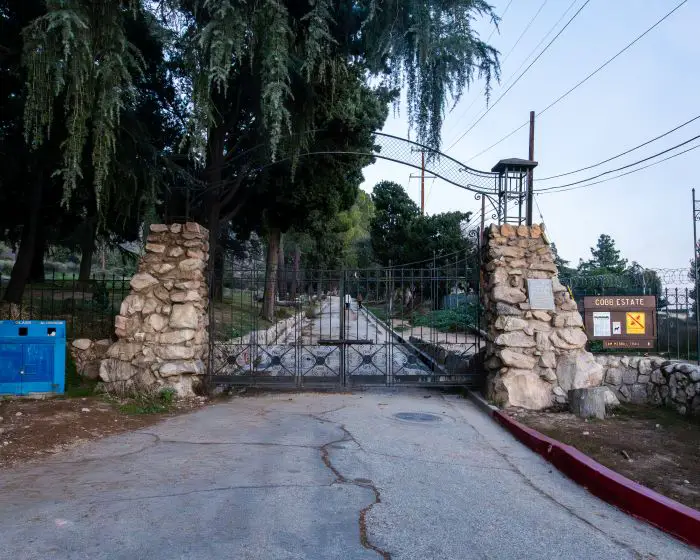
Starting the hike requires walking past the once elegant yet creepy-looking gate of the Cobb Estate. Although at least one dead body has been found in the area, the Cobb Estate was dubbed the name the Haunted Forest years before any murderous activity occurred.

I’m almost positive the gate and the ruins are the reason for its supernatural nickname, but I digress.

Echo Mountain Trailhead

I hopped onto the Lower Sam Merrill Trail which split off to the right.

Lower Sam Merrill Trail

A water fountain is located right before descending to the canyon floor. Make sure to fill up your water bottles as there is no water at the top.

Also, I stayed on the trail to the left after passing the water fountain. This trail will traverse the creek bed and immediately begin ascending the east side of Las Flores Canyon.

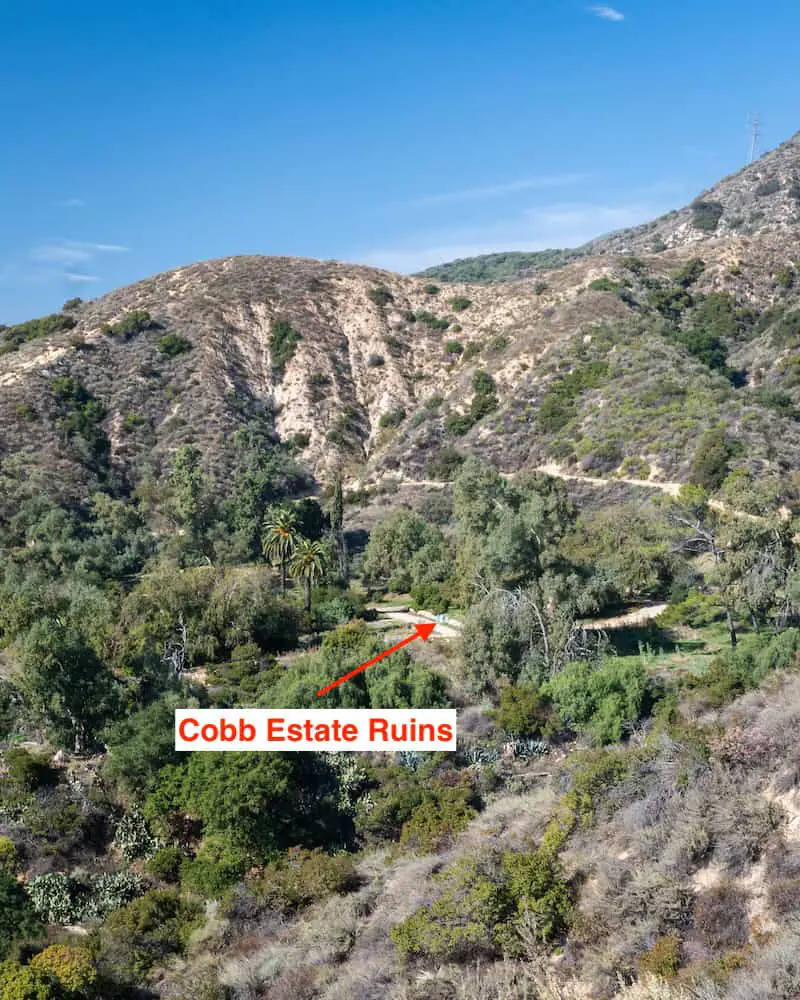
Although I wasn’t able to see the Cobb Estate ruins from the ground, the mansion’s foundation was now evidently clear. The estate was built and belonged to lumbar magnate Charles Cobb and was part of Las Flores Ranch.

Cobb Estate Ruins

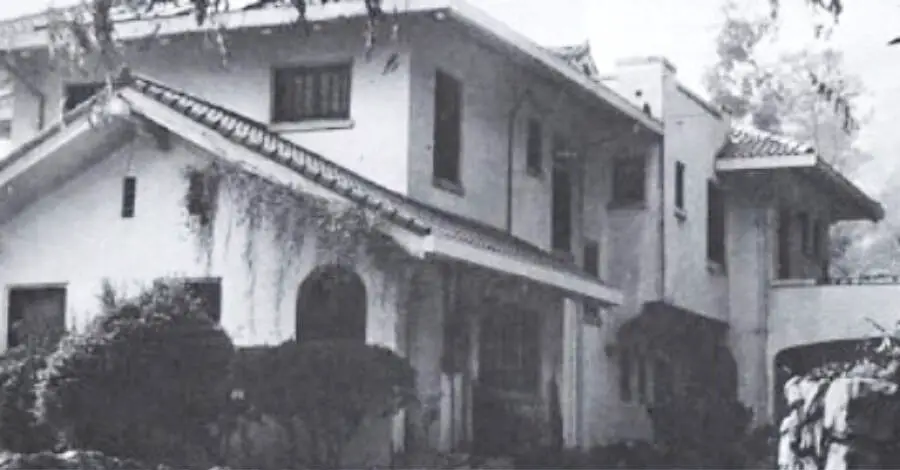
This is what the building looked like before vandalism left the Forest Reserve no choice but to tear it down.

Cobb Estate

As I made my way further up the trail I could see the reservoir below.

Las Flores Canyon Reservoir

Benches are placed along the trail for those who wish to take a break with nice views.

Bench On Lower Sam Merrill

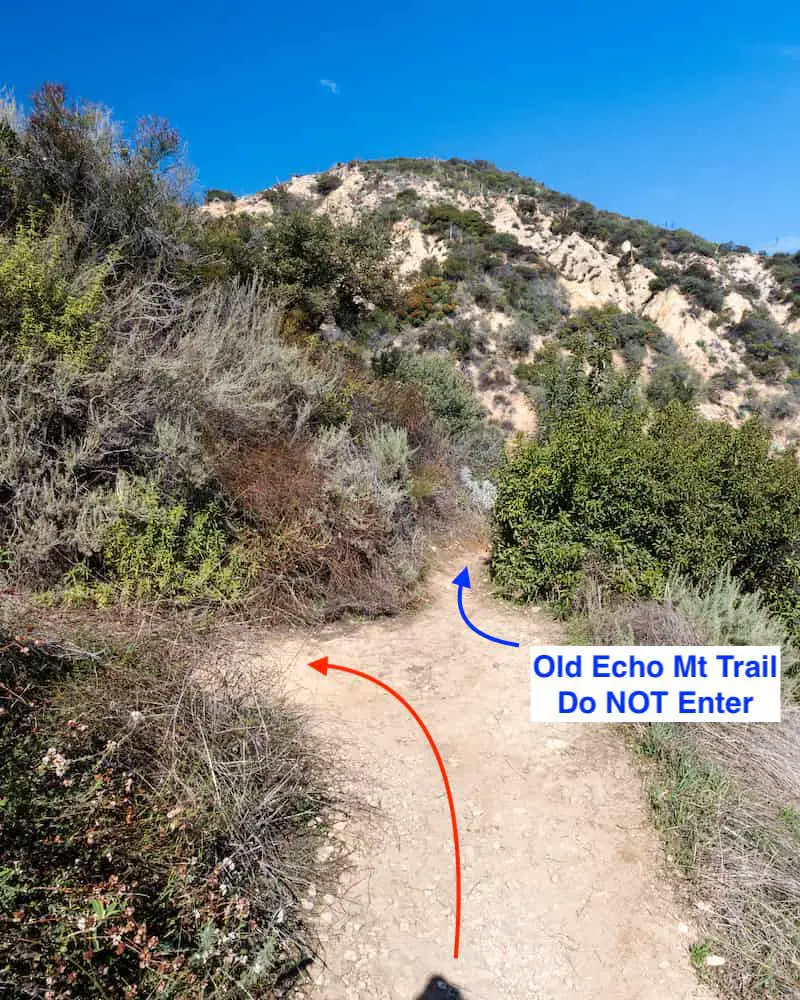
I came across a fork in the trail about halfway up the mountain. At first, I thought it was a footpath that hikers unintentionally create when they veer off the trail before realizing they’re heading in the wrong direction.

However, when I looked at my map I realized it was the Old Echo Mt Trail that leads down to Rubio Canyon and merges with the Rubio Canyon Trail. At a glance, it didn’t look too overgrown but I’m sure it got worse further down the hillside.

Old Echo Mt Trail & Lower Sam Merrill Junction

I took a break and admired the progress I had made thus far.

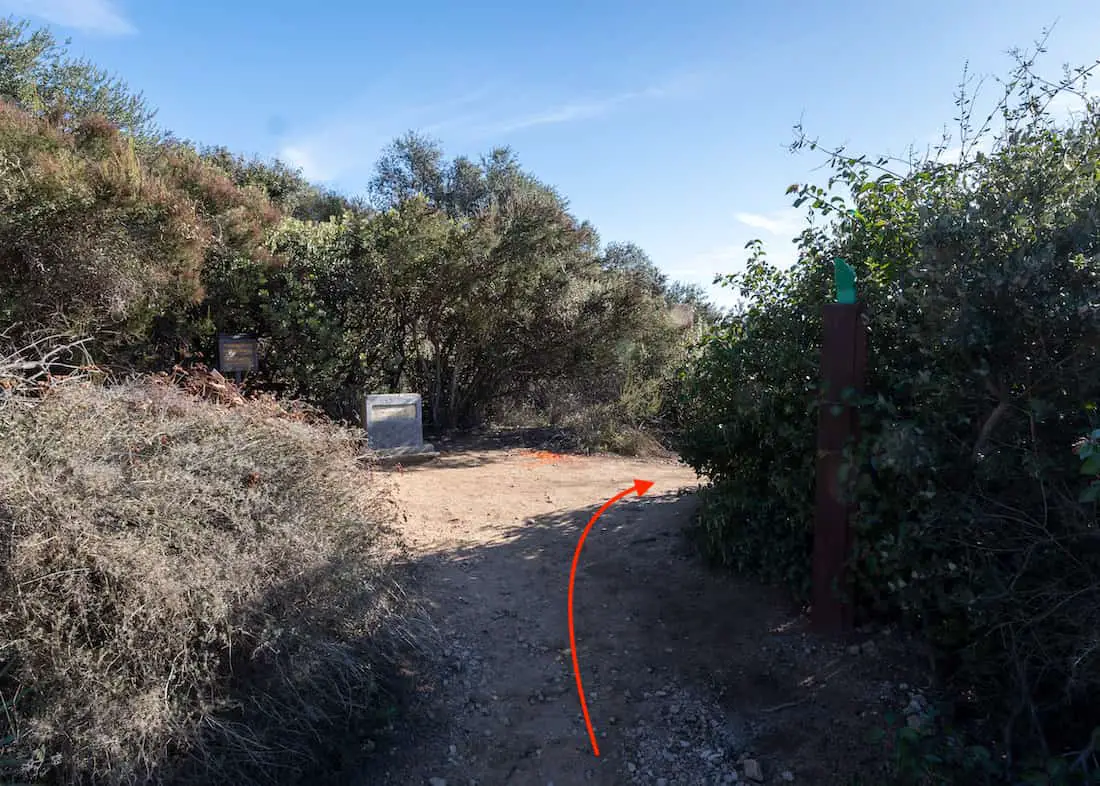
I made a right onto the Mt Lowe Railway Trail, which was the exact route used by the electric trolleys.

You know you’ve arrived at the top of the mountain when you see the tomb-looking markers scattered throughout the area. I believe those markers have been there since the founding of the railway.

Lower Sam Merrill & Mt Lowe Railway Junction

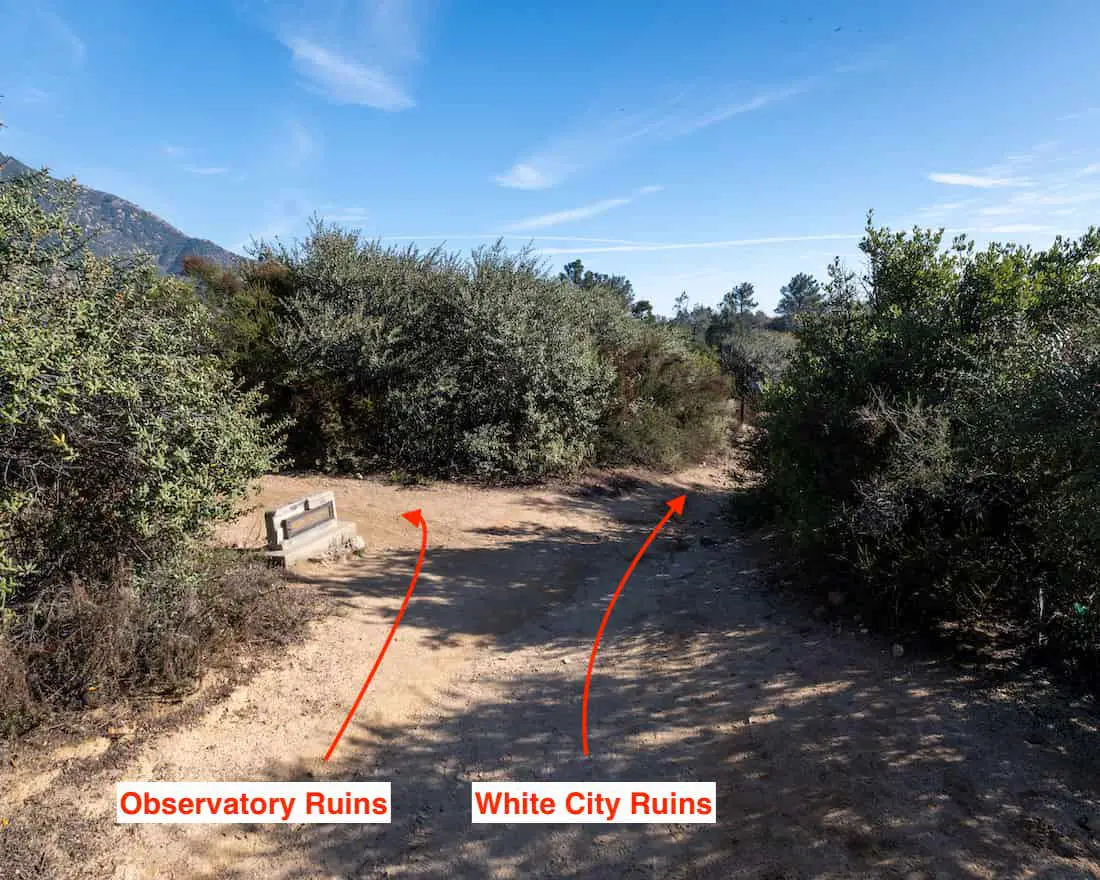
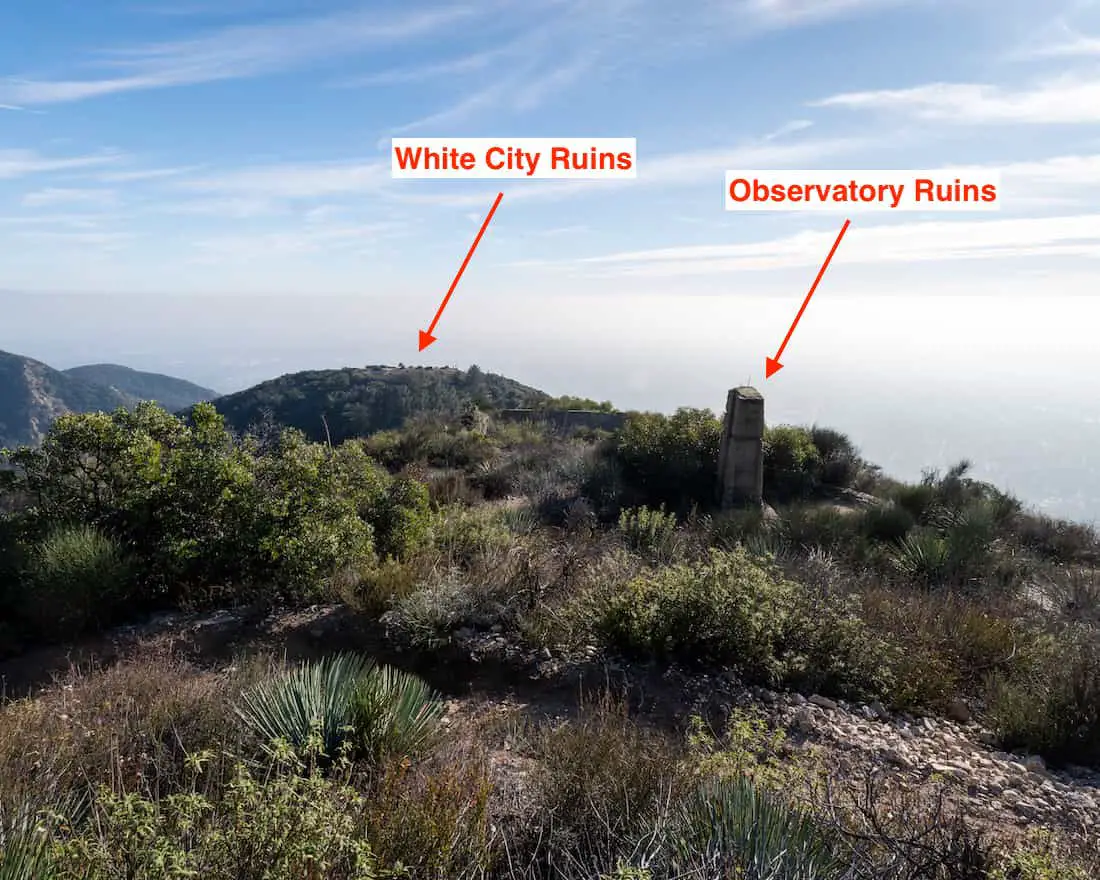
This is where the observatory detour begins. It’s only 0.2 miles roundtrip via the Middle Sam Merrill Trail and includes the seasonal waterfall and the Mt Lowe Observatory ruins. If you want to skip the detour head straight towards the White City ruins.

Lower Sam Merrill & Middle Sam Merrill Junction

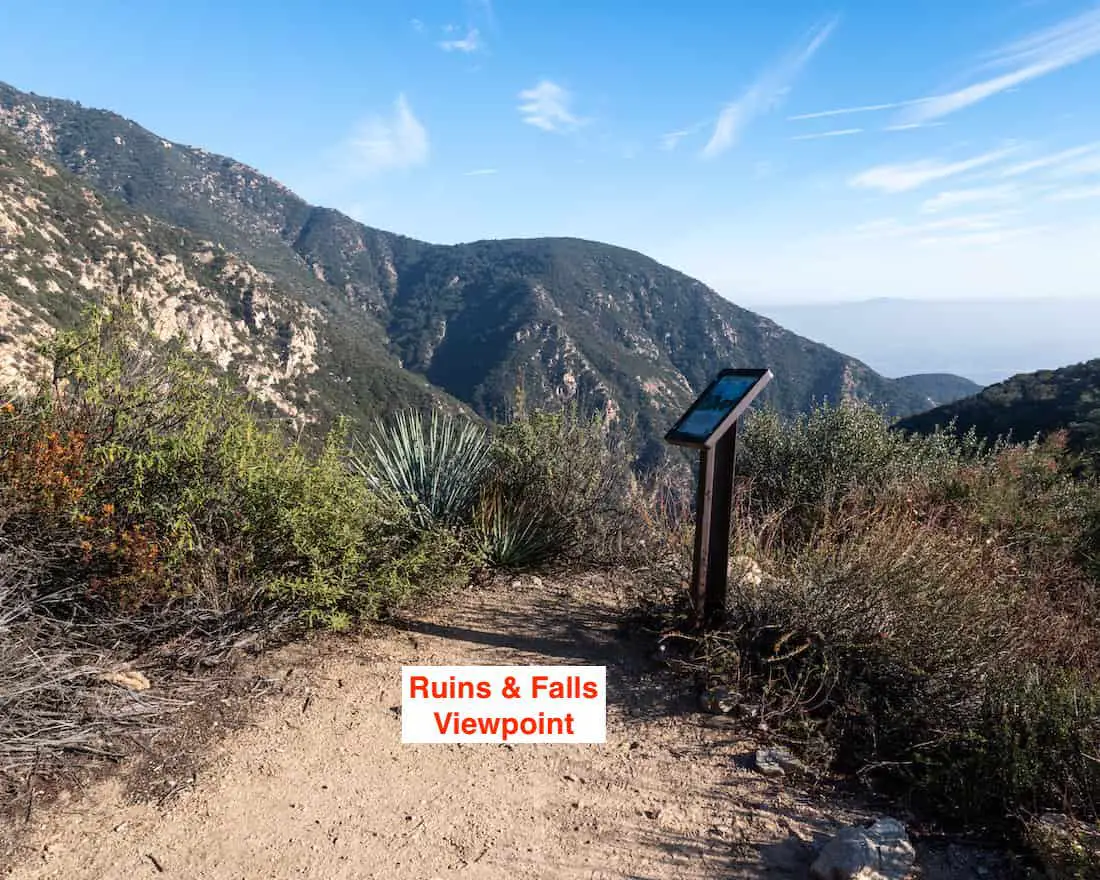
Before arriving at the observatory, I randomly stopped at the sign shown below. I had no idea that a 50-foot waterfall could be seen across Rubio Canyon. It was pure chance and luck.

Waterfall & White City Ruins Viewpoint

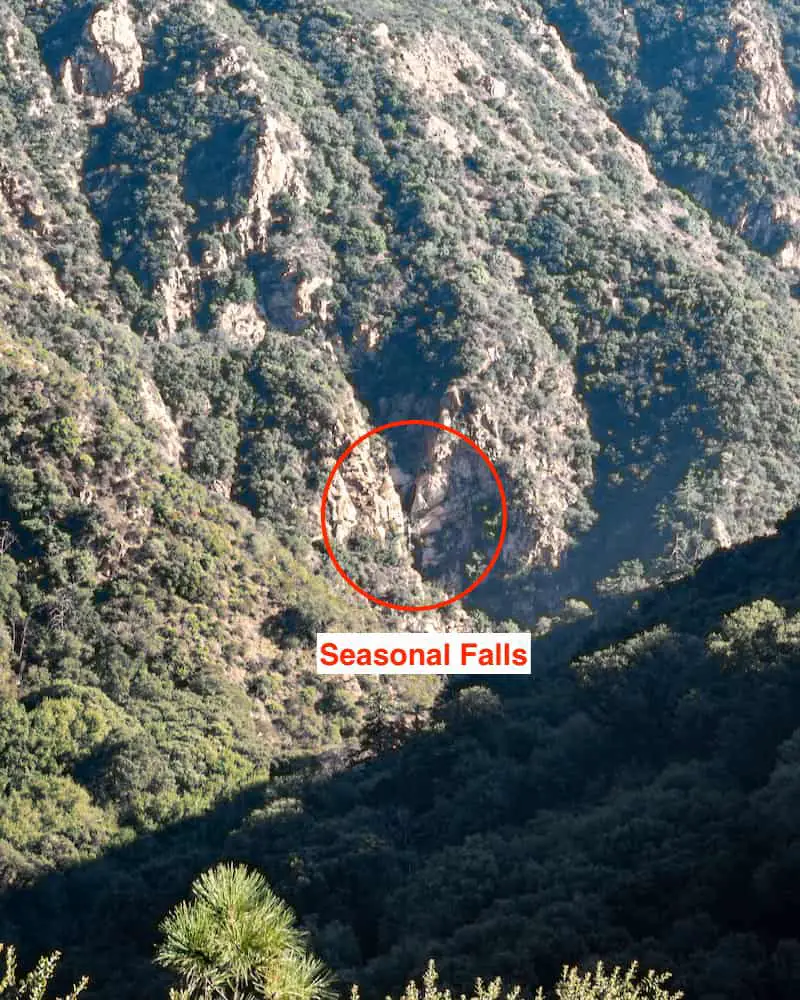
Look for a v-shaped gulch to the south of the canyon. This is where the barely visible waterfall is located. Please keep in mind the waterfall will more than likely be dry from summer to winter unless we’ve had a very wet winter as was the case for 2023.

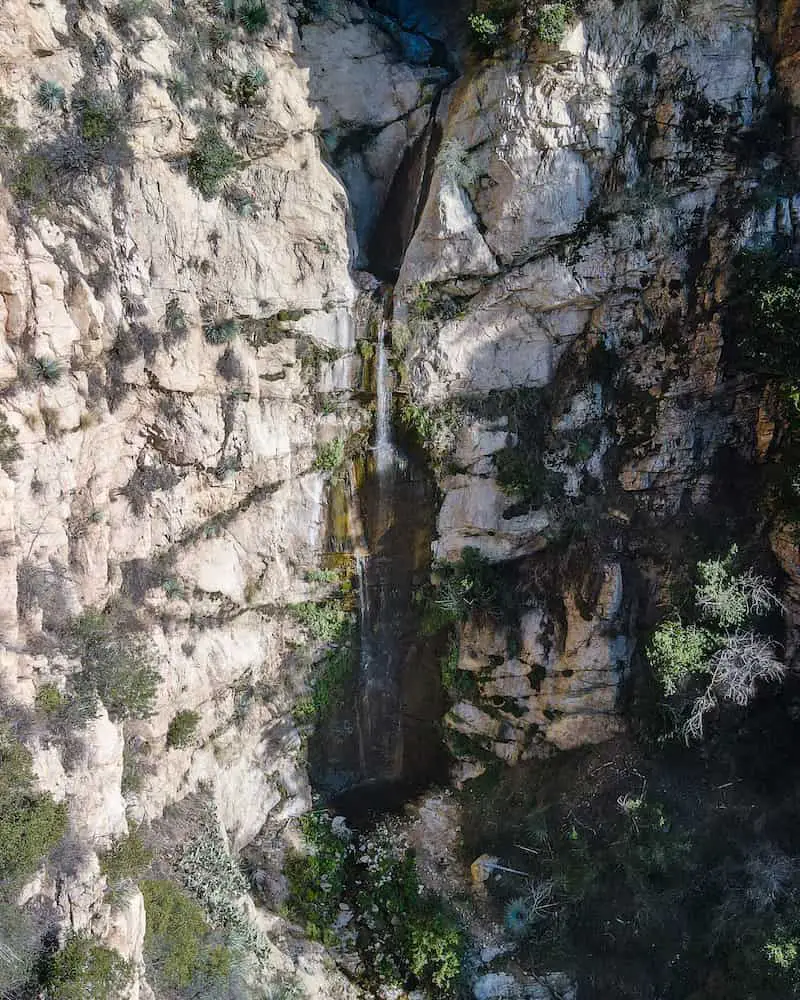
I wasted no time in flying the drone to grab a closer shot. This is the mystery falls. Notice the smaller tier at the top.

If you like waterfall hikes, check out Eaton Canyon Falls. It’s the most popular waterfall in all of Southern California, only a few minutes away from Echo Mt, and likely has more water than this seasonal falls.

Seasonal Falls

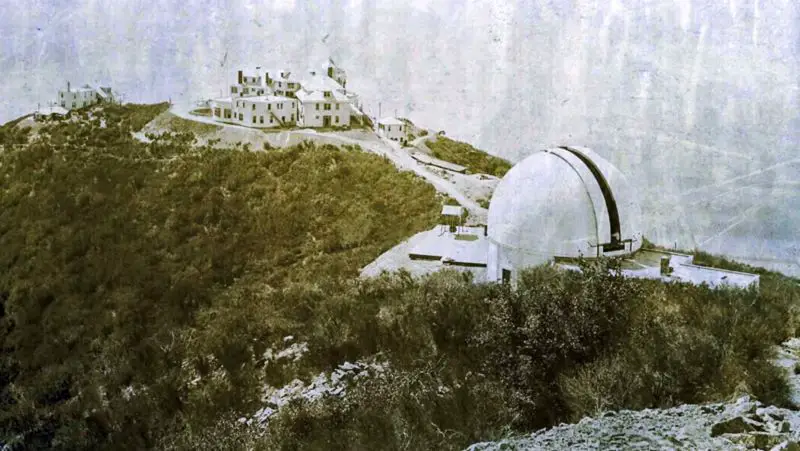
I hiked further up the trail than was necessary as I wanted to take a shot resembling the vintage photo of the Mt Lowe Observatory and White City ruins.

White City & Observatory Ruins

I retraced my steps down Middle Sam Merrill and made a left to hop on the Mt Lowe Railway Trail once again.

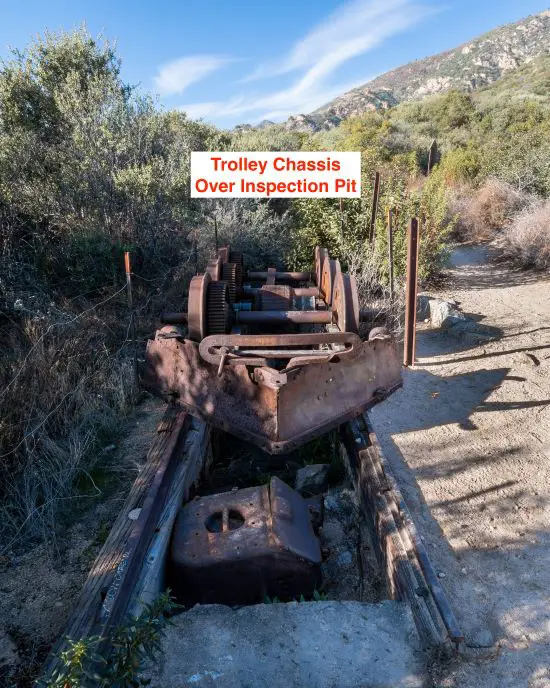
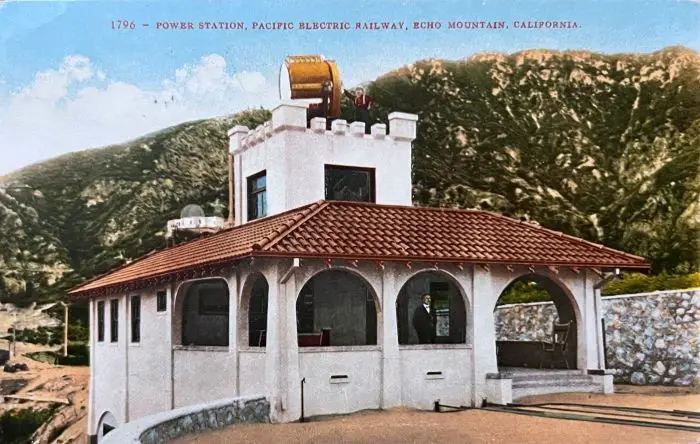
Shortly afterward I came across one of the electric trolley chassis indefinitely parked over the inspection pit, the area where I believe mechanics would service the vehicles.

Mt Lowe Railway Inspection Pit

Here is a photo of what the first trolleys looked like. Eventually, the trolleys were built with a roof that covered the entire vehicle.

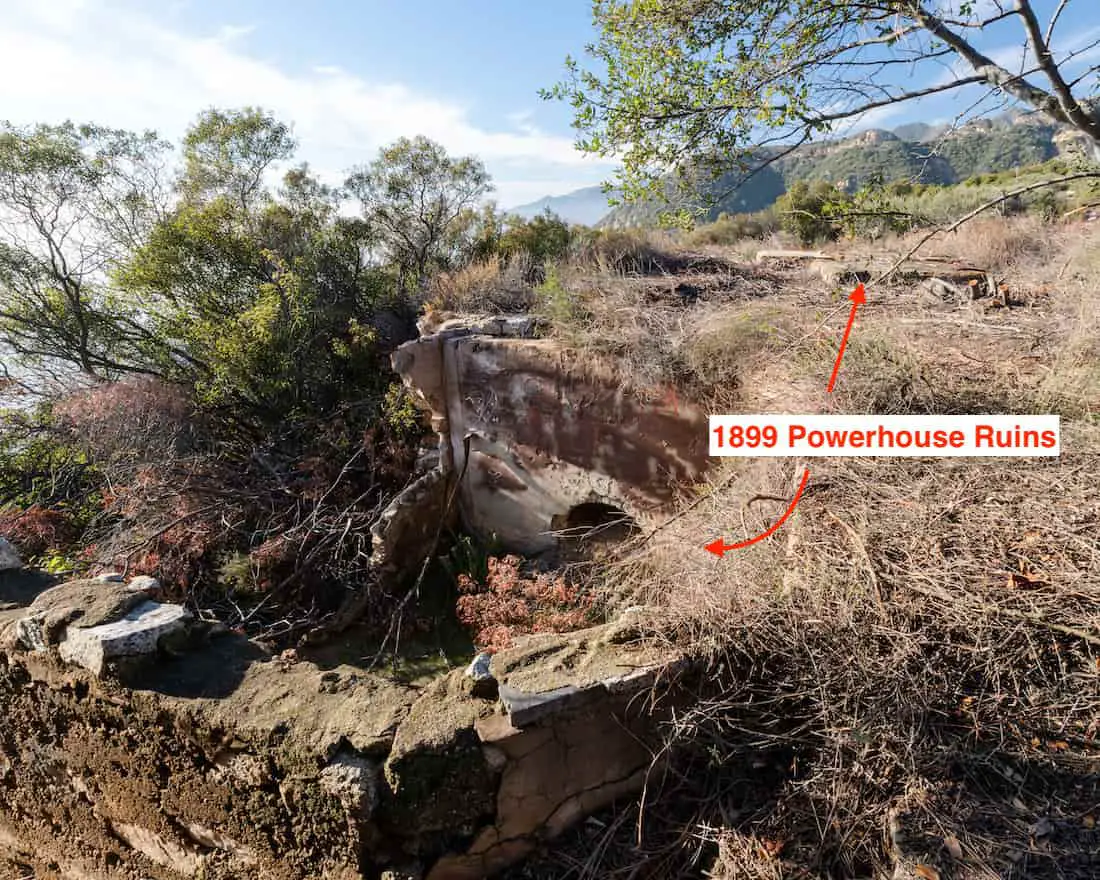
Moving forward, I arrived at the ruins of both powerhouses. The first was built in 1895 and the second, which was smaller and made of concrete, was built in 1899.

A signed marker (can’t be seen in the image below) identifies the ruins. The foundation to the left of the sign is the newer powerhouse while the older powerhouse, whose ruins can’t be seen in the image below, is located on the right.

1899 Powerhouse Ruins

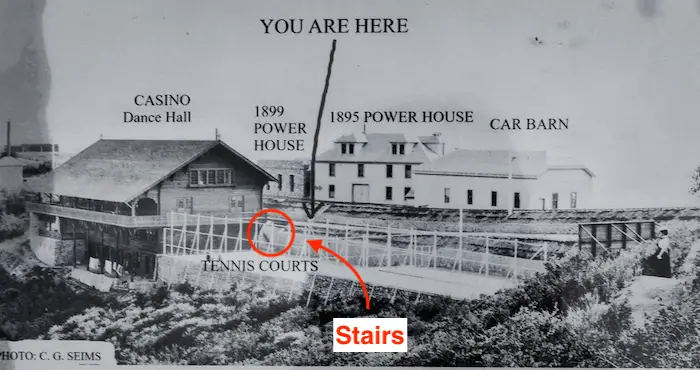
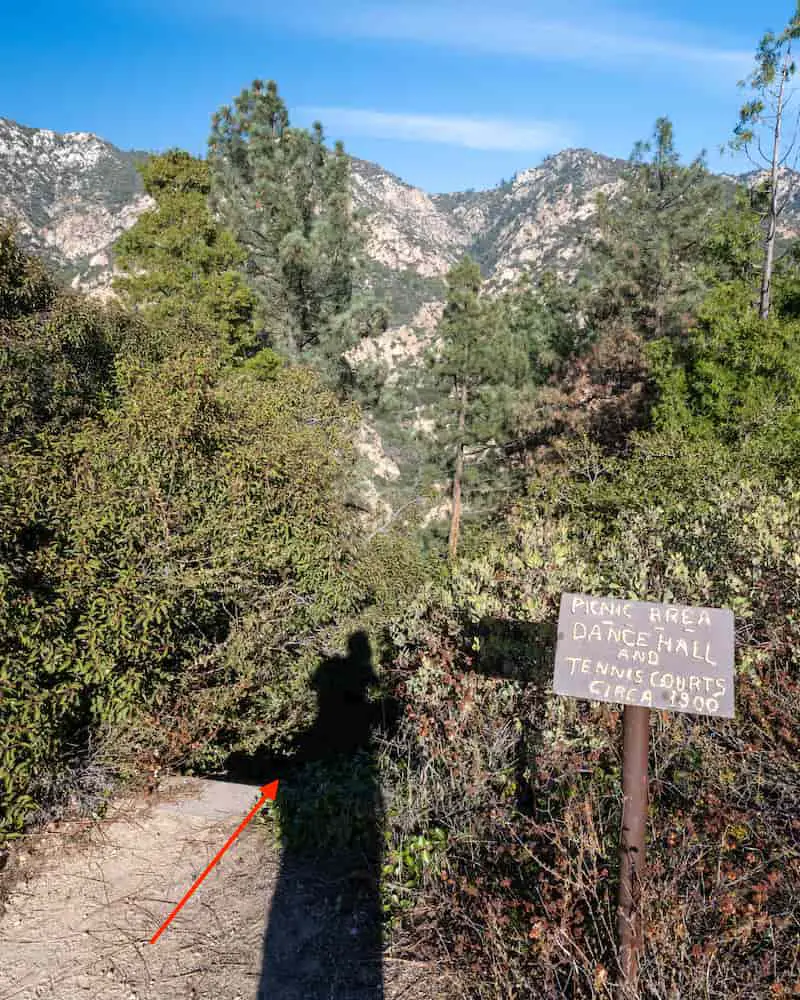
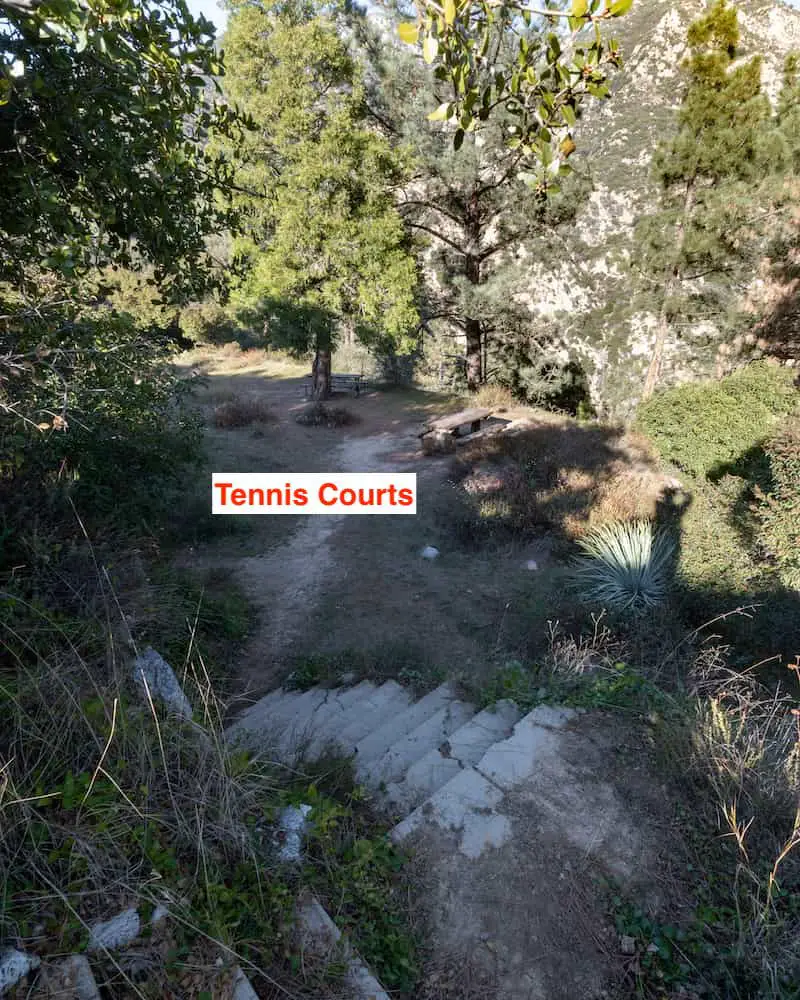
Next was the picnic area, dance hall, and tennis courts, which can be accessed by walking down the stairs to the left of the sign shown below. These same stairs are the labeled stairs in the vintage photo above.

Nothing is left of these structures. Hence, I took a picture of what used to be the tennis courts and kept it moving.

Tennis Courts Echo Mountain

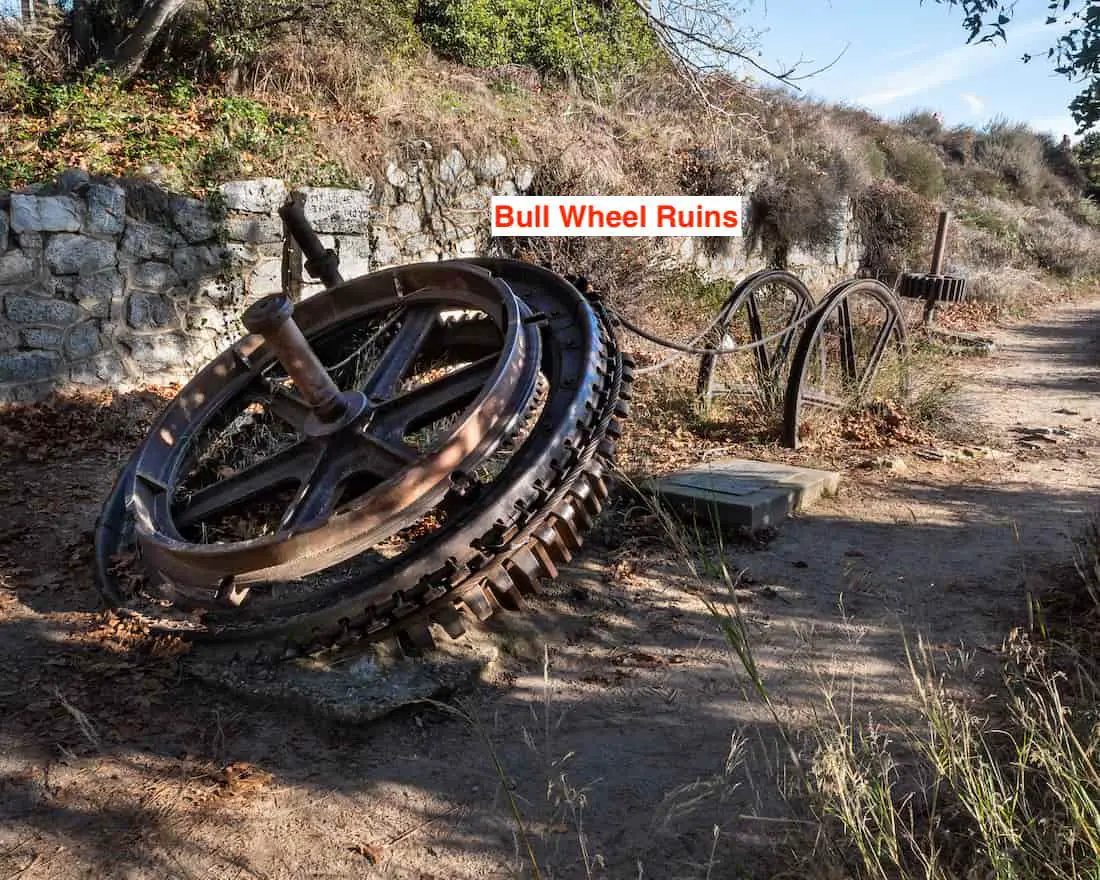
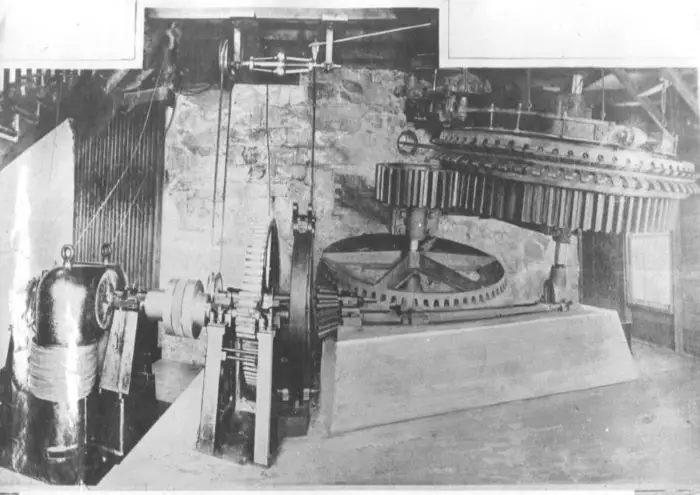
Although the bull wheel sits in the middle of the trail, it was once housed in the powerhouses and powered by a 75-horsepower electric motor.

It was used to pull opera box cars known as the White Chariots up the steep Incline, a cable funicular railway, from the bottom of Rubio Canyon.

Bull Wheel Ruins

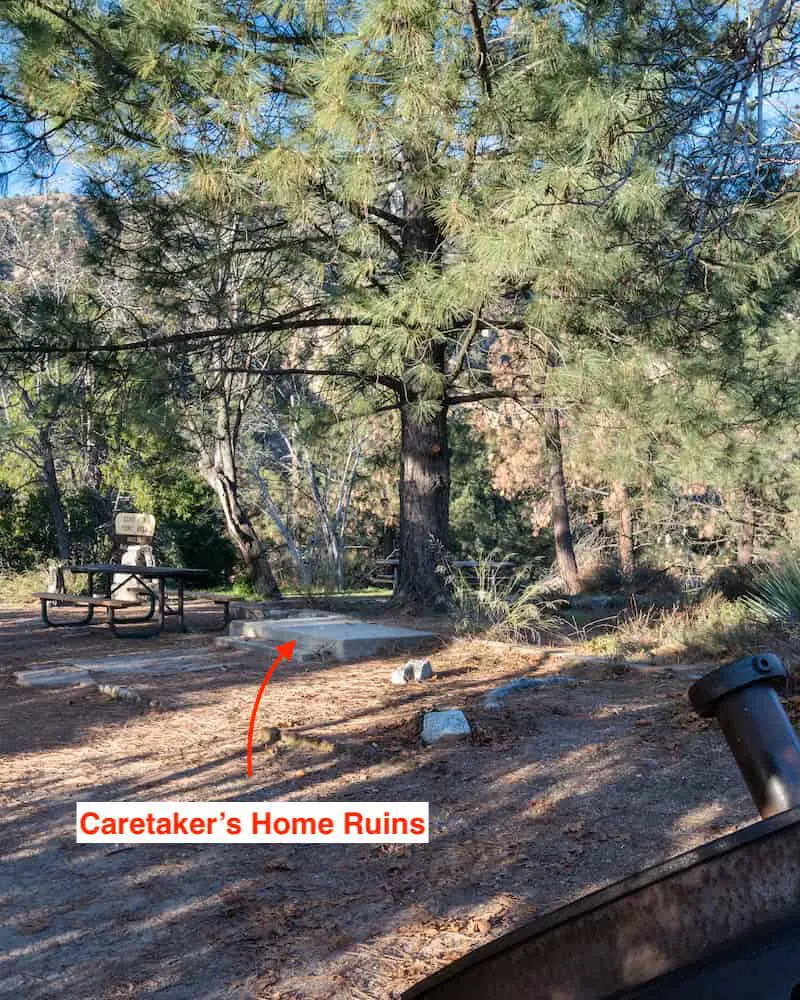
To the left of the bull wheel is the foundation of the caretaker’s home, which I imagine was the person who lived on the premises.

Caretaker's Home Ruins

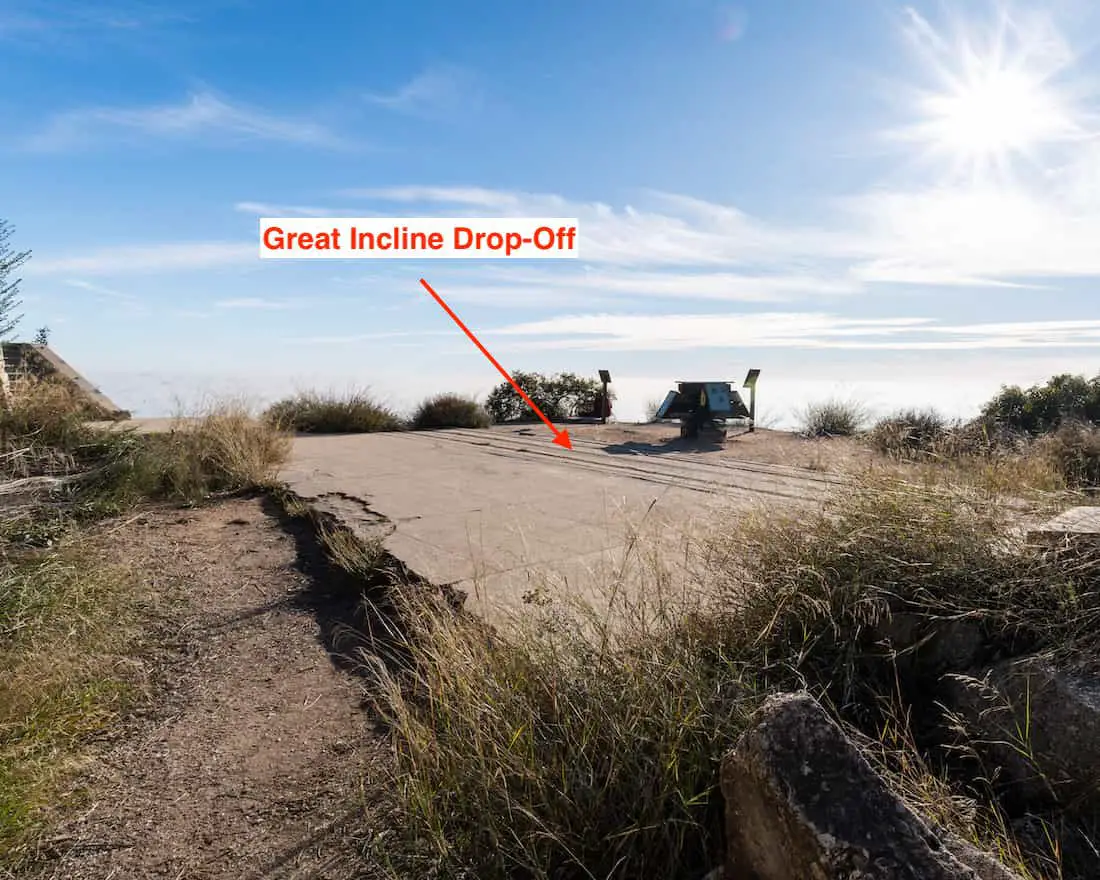
Pictured below is the area where the White Chariots would drop the passengers off after being pulled up from the Rubio Pavilion in the canyon below.

Great Incline Drop-Off

Passengers would take a train ride from nearby towns to the Rubio Pavilion in Rubio Canyon where they would transfer from the trolley to the White Chariots and head directly up to the White City.

Once on Echo Mountain, visitors would hang out at the White City or board the Mt Lowe Railway and get dropped off at Ye Alpine Tavern, the fourth and last of Professor Lowe’s hotels.

Great Incline

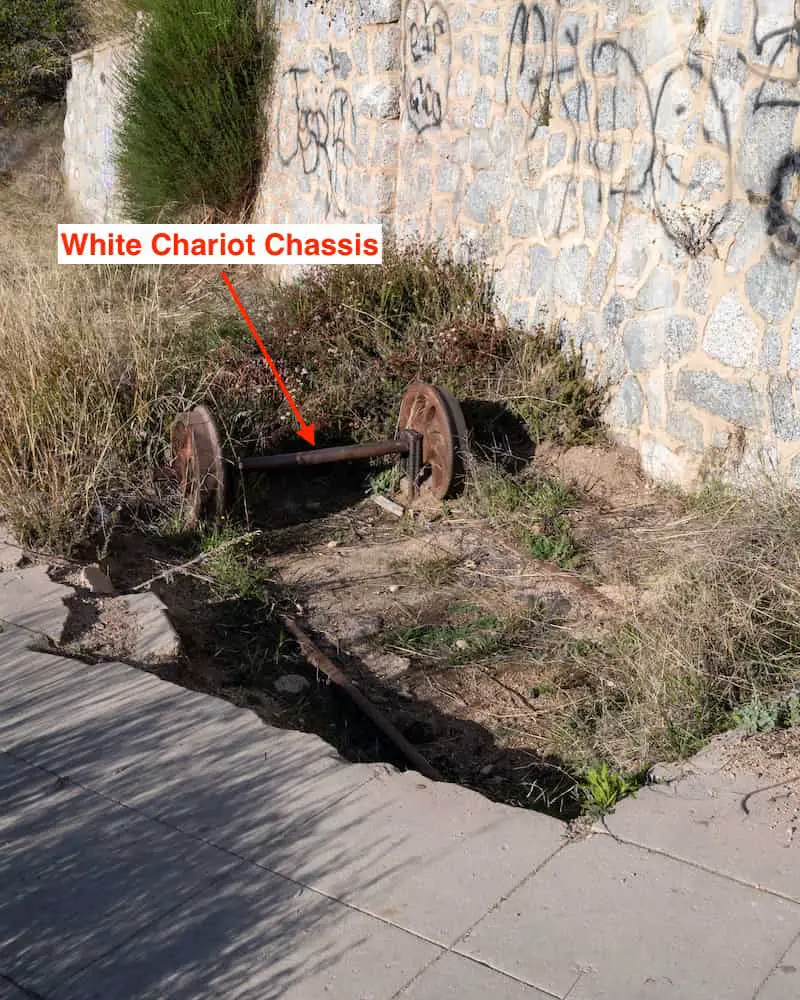
I’m almost certain the chassis below belongs to one of the White Chariots.

White Chariot Chassis

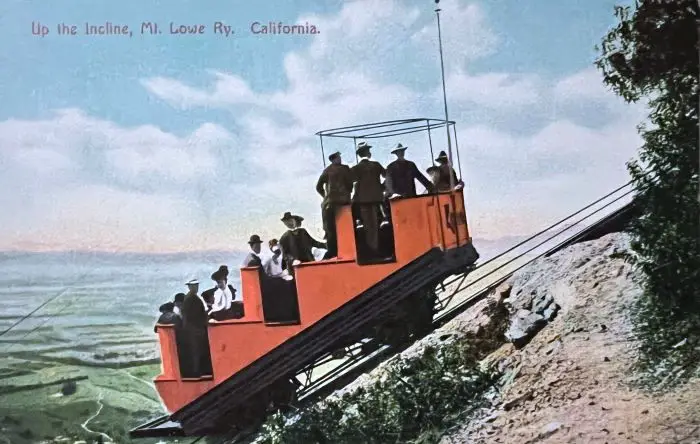
Fun Fact: The White Chariots were, as you probably already guessed, white! However, I purchased the photo below because I believe it was mistakenly colored red. Before 1939, photos were all in black and white, but they could be manually colored after printing. This is the first of multiple mistakes I’ve observed.

White Chariot

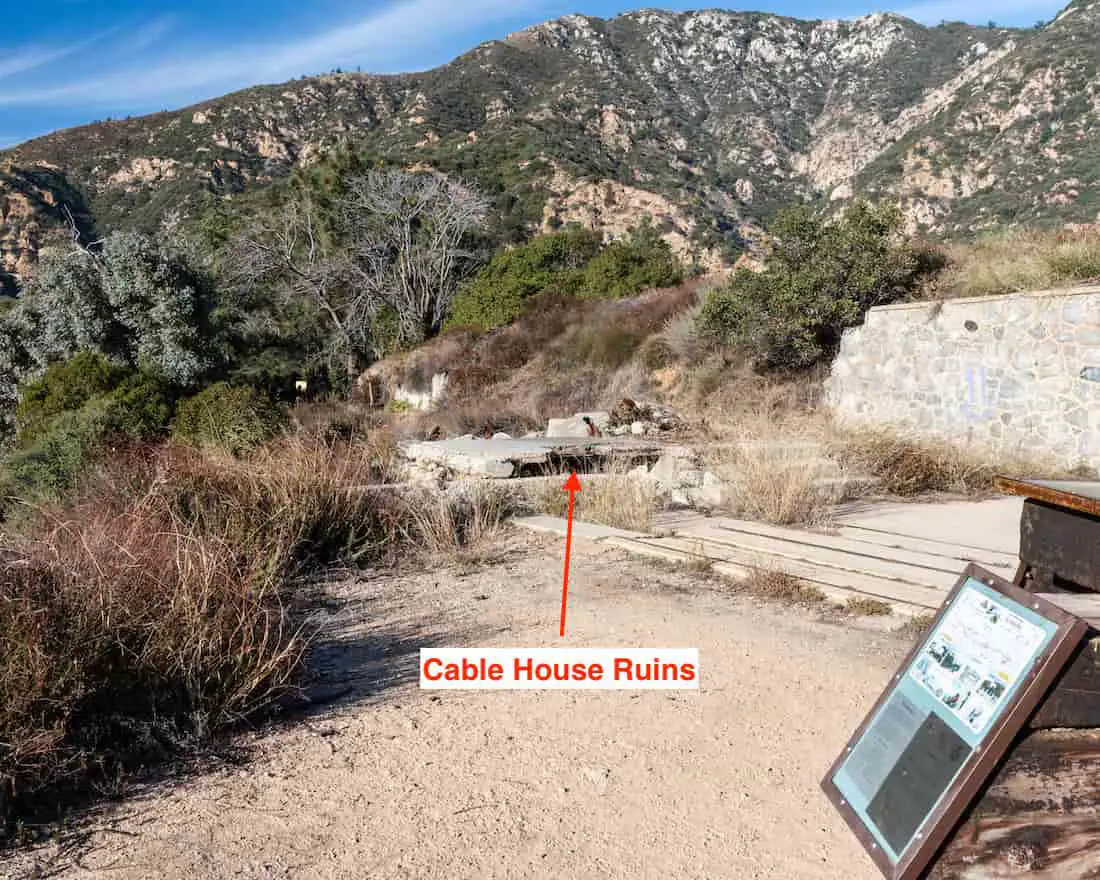
Located at the end of the Incline path is the Cable House that ran the operations for pulling the White Chariots up the mountain.

Cable House Ruins

Here is the second mistake in another one of my photos. The Cable House, shown in the image below, is incorrectly labeled the power station, but that’s not possible, as we’ve already identified the powerhouses.

Mounted on top of the Cable House was the Mt Lowe Searchlight which was visible as far away as 60 miles in Catalina Island.

Cable House

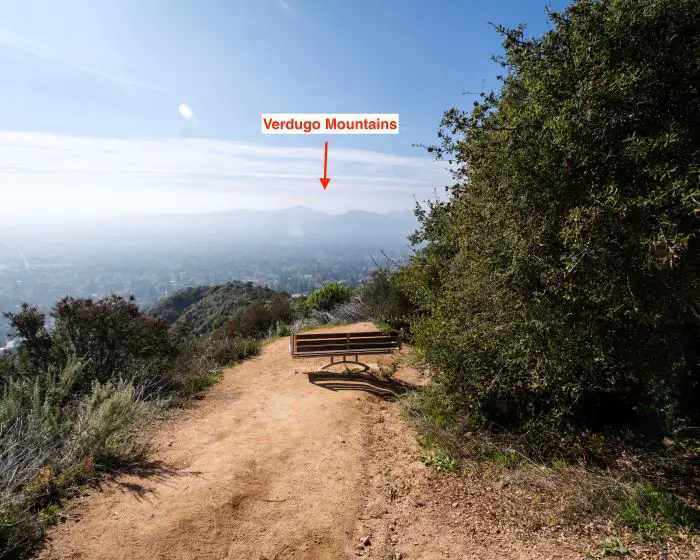
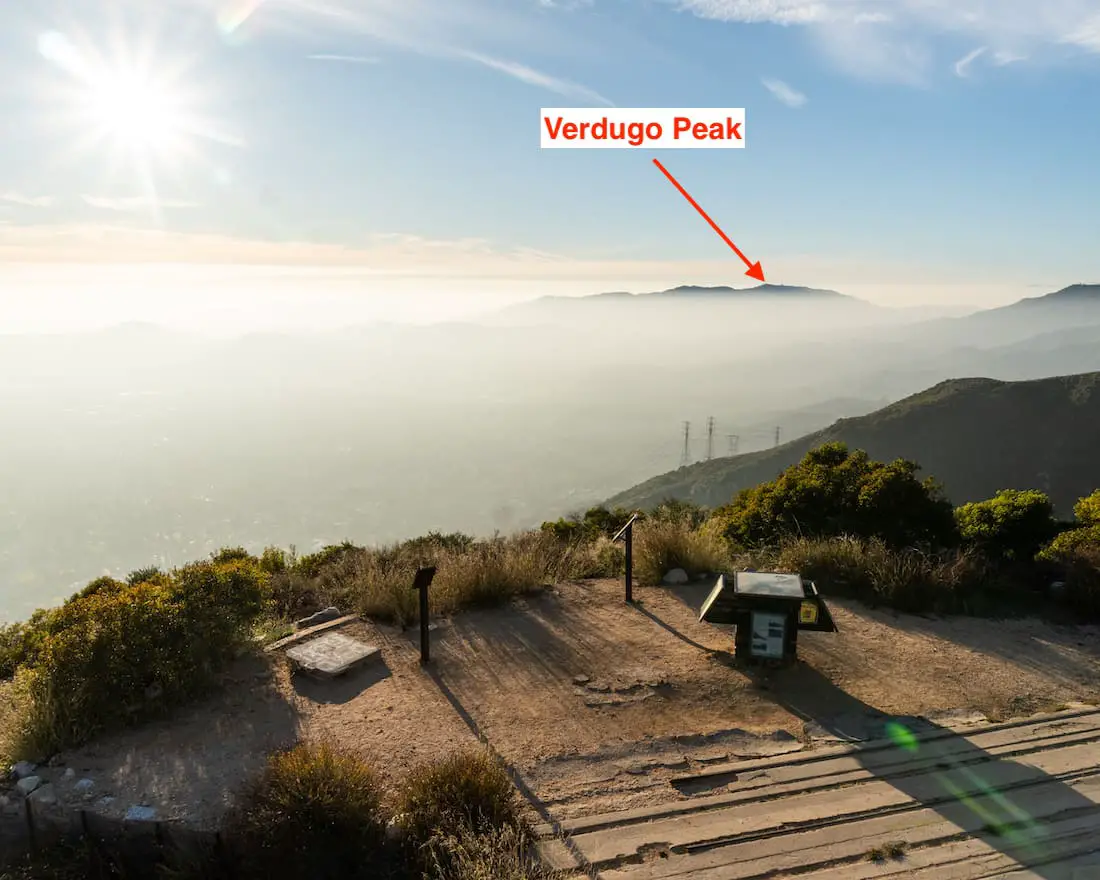
I walked up the Echo Mt House stairs to “walk inside,” but before doing so I turned around to check out the view. Unfortunately, the smog was really bad but I was still able to make out the Verdugo Mts and, on the opposite end of the valley, the Santa Ana Mts.

Verdugo Peak From Echo Mountain

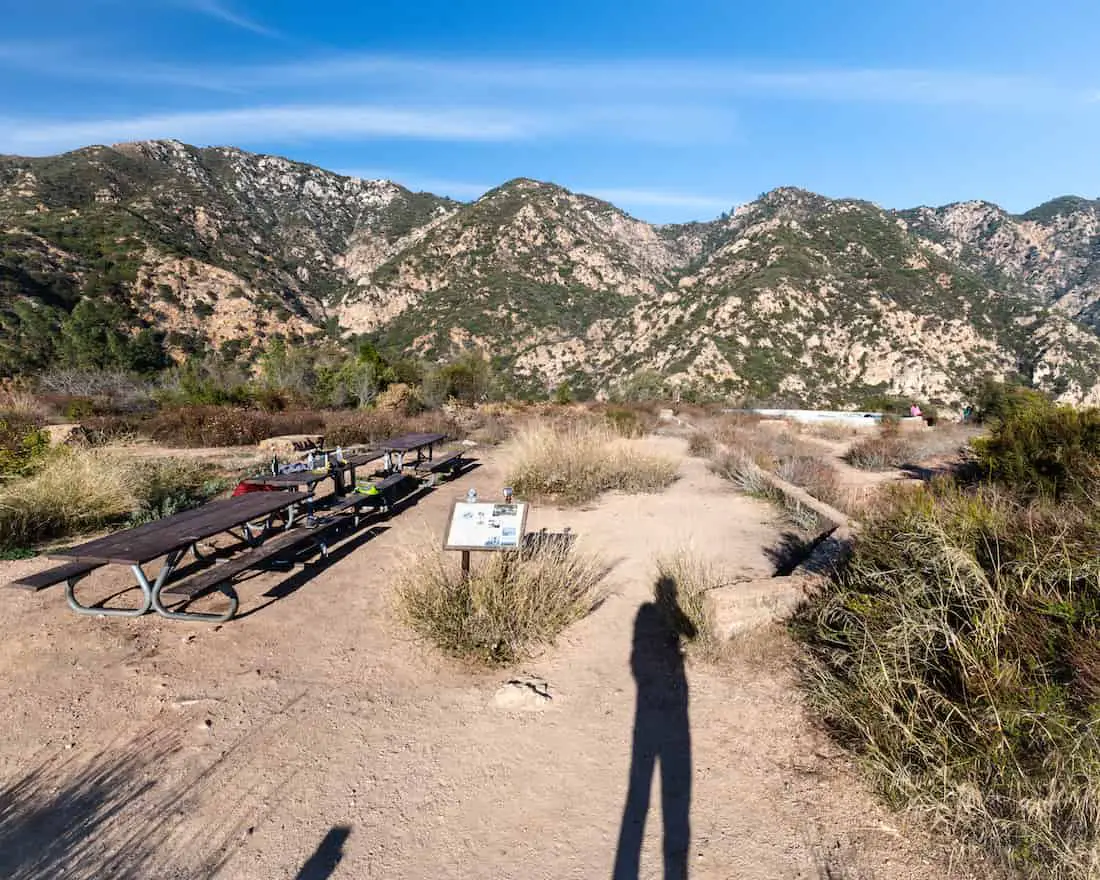
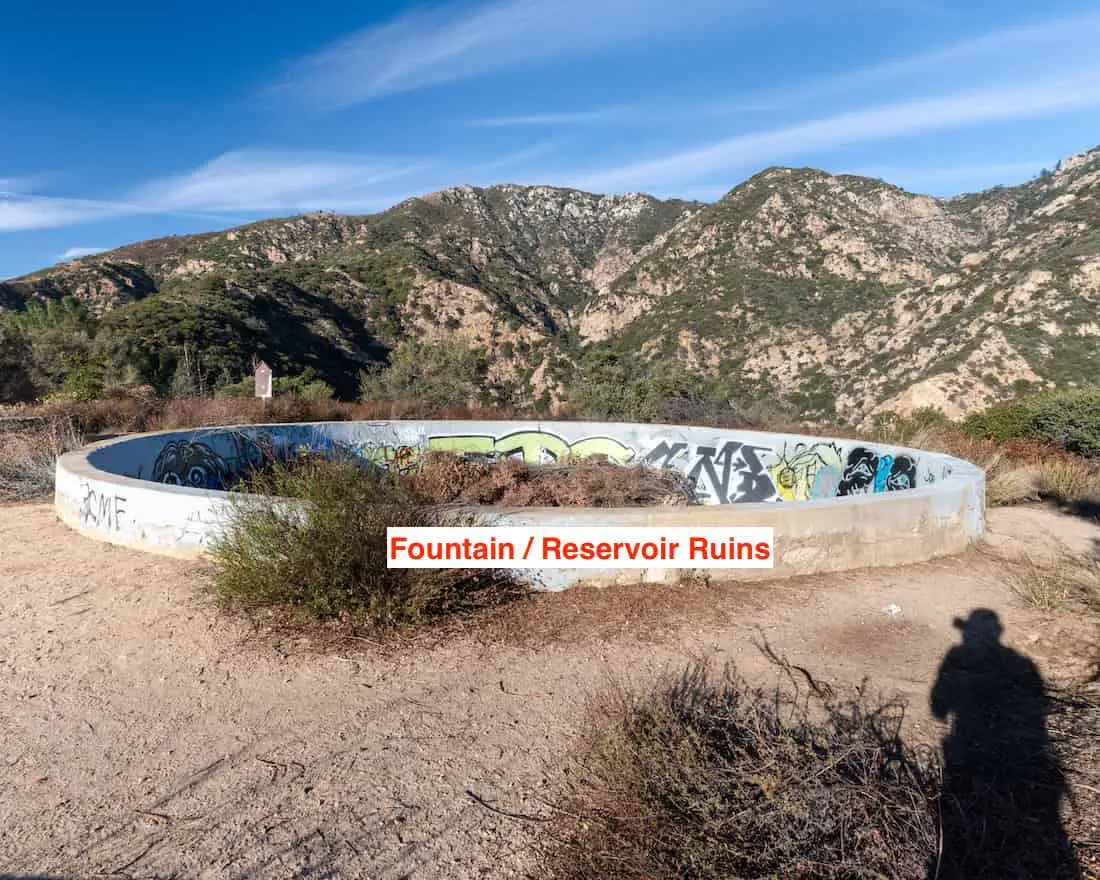
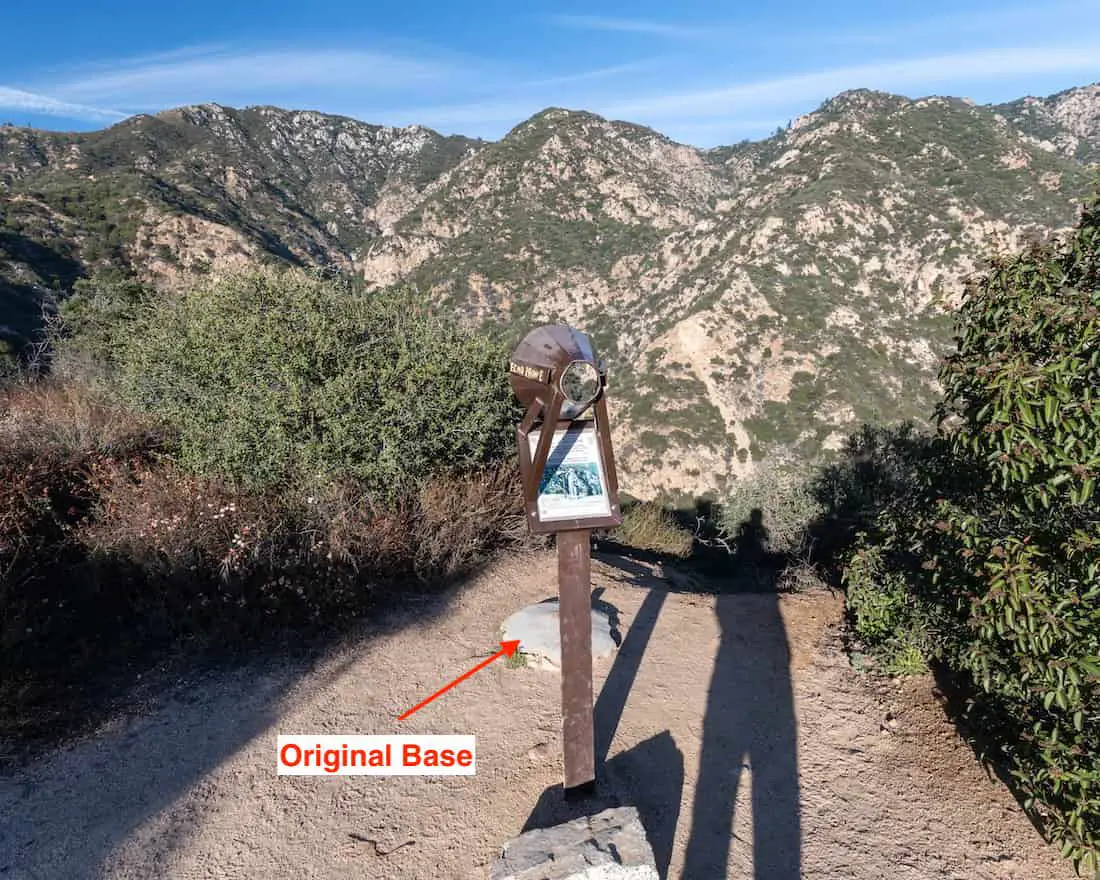
I turned my attention back to the “inside” of the Echo Mt House, also known as the Echo Mt Hotel, in search of the famous Echo Phones.

Fountain / Reservoir Ruins

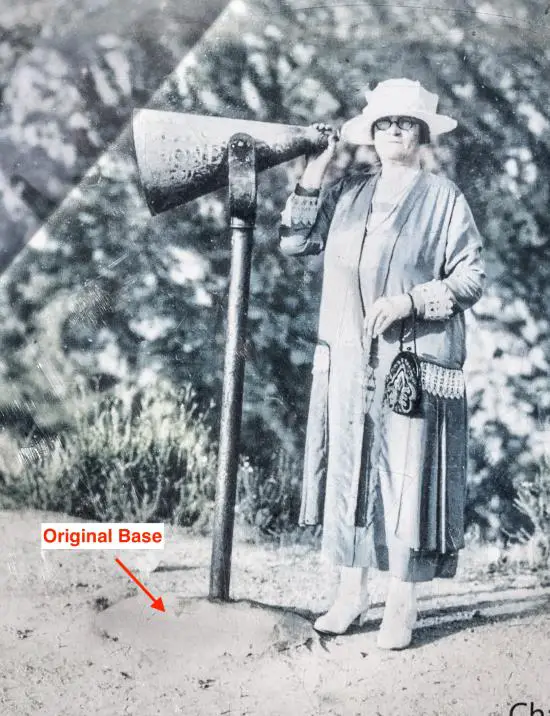
Don’t be alarmed if you hear people constantly screaming at the ruins. The Echo Phone bounces your voice back from the headwaters of Rubio Canyon hundreds of feet away. It’s quite impressive to say the least, and fun to try.

Fun Fact: The Echo Phone’s original base is located just a few feet away from the current site.

Echo Phone

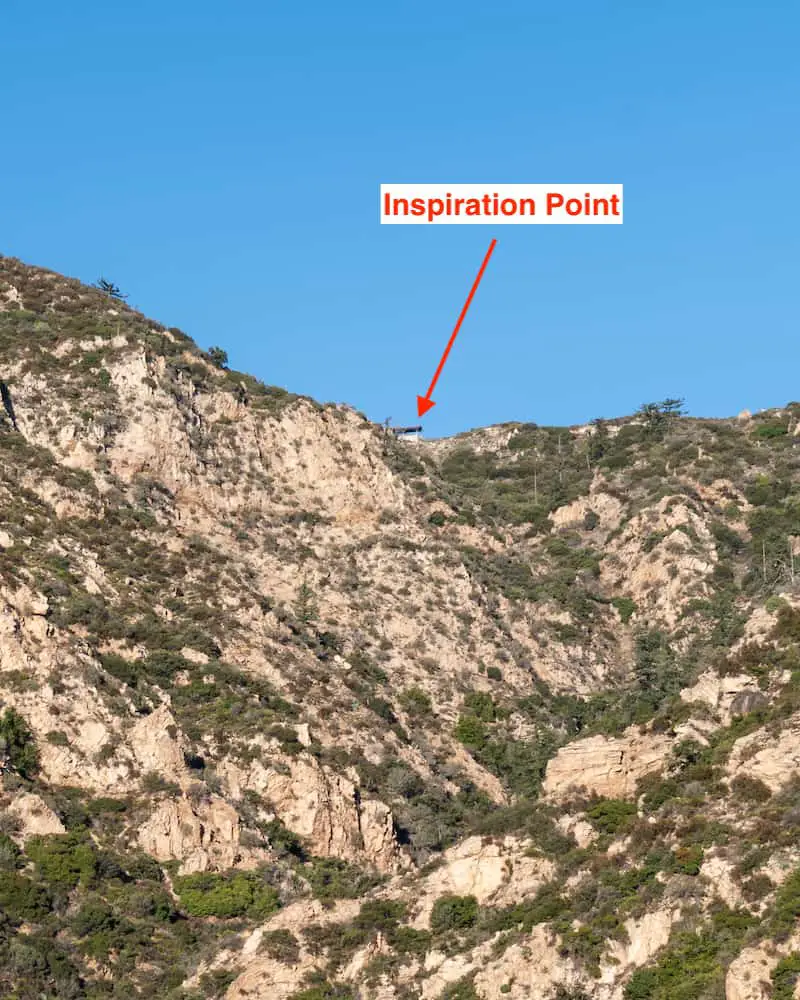
Inspiration Point, a pavilion-type shelter that offers amazing views of specific locations in the valley, can be seen perched on the ridge above.

Inspiration Point From Echo Mountain

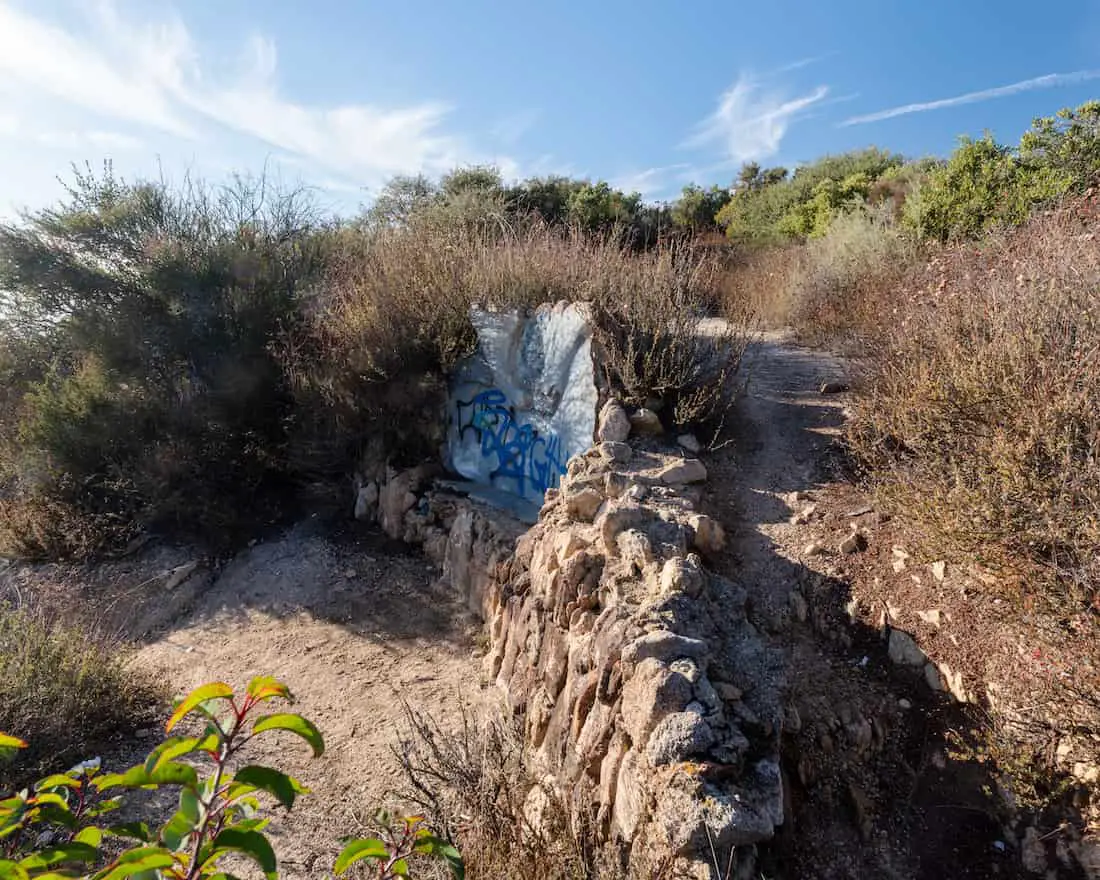
I explored the south side of the Echo Mt House where the Chalet building once stood and came across this bench. An outdoor water fountain was located here as well.

Echo Mt House Bench

The complex known as the White City is probably the largest, and surely, the most interesting of all SoCal ruins. Imagine what the shot below would look like if all the structures were still in operation. What an era to be alive.

Echo Mountain Aerial Shot

Hold on! The adventure doesn’t have to end here. Check out the largest mine in the Angeles National Forest. It’s got over 2 miles of tunnels and the structure at the mine entrance is still there. Click the link below for more info.

Big Horn Mine

FAQs

How Long Is The Echo Mountain Hike?

The Echo Mountain hike is a total of 6 miles via the Sam Merrill Trail and includes a 0.2 mile detour to the secret waterfall viewpoint and observatory.

How Hard Is It To Hike Echo Mountain?

The Echo Mt hike is rated moderate to hard, as the trail is very exposed and has an elevation gain that beginners may find challenging.

Does The Secret Waterfall Flow Year-Round?

The secret waterfall only flows after heavy rain or a really wet winter, such as the one we had in 2023.

What Happened To Echo Mountain?

Multiple brush fires between 1906 and 1936, and a flood in 1909 took a toll on the structures, forcing them to close over time. The railway’s last trip was on December 1937.

Can I Hike To Inspiration Point From Echo Mountain?

After arriving at the Echo Mt ruins, Inspiration Point can be reached via the Middle Sam Merrill or Castle Canyon Trails, or by combining both to create a loop.

Can I Hike Down To Rubio Canyon From Echo Mountain?

Rubio Canyon can be accessed from Echo Mt via the Incline Railway Trail which begins on the south side of the White City Ruins or via the Old Echo Mt Trail that branches away from Lower Sam Merrill about halfway up the mountain. Please note, both trails may be overgrown. Especially, the Incline Railway Trail.

Why Are Ruins Located At Echo Mountain?

Echo Mt is home to many ruins because Professor Thaddeus Lowe, a brilliant mind and inventor, created a ” mountain theme park” in 1893, the primary attractions of which included the Mt Lowe Railway, Great Incline, Echo Mt House, casino, tennis courts, zoo, and observatory to name a few.

Is Echo Mountain Well Shaded?

Echo Mountain is very poorly shaded. Be sure to take a hat, sunglasses, sun block, and 1.5 to 2 liters of water.

Does Echo Mountain Offer Nice Views?

Echo Mountain offers amazing views of the Verdugo Mountains, San Gabriel Valley, Rolling Hills at Palos Verdes, Pacific Ocean, and the Santa Ana Mts.

Recommended Gear

The following links are Amazon affiliated. I receive a small commission every time someone makes a purchase via these links, allowing me to continue making this kind of content. I only recommend gear I personally own and use.

TrailBuddy Trekking Poles

Merrell Men’s Moab 2 Hiking Boot

Merrell Women’s Moab 2 Hiking Boot

Polarized Sunglasses

Historical Sources

Altadena Historical Society

Mt Lowe Preservation Society

Mt Lowe Historical Committee

El Moro Canyon Loop Trail: Beautiful Ocean Views

El Moro Canyon Loop Trail: Beautiful Ocean Views

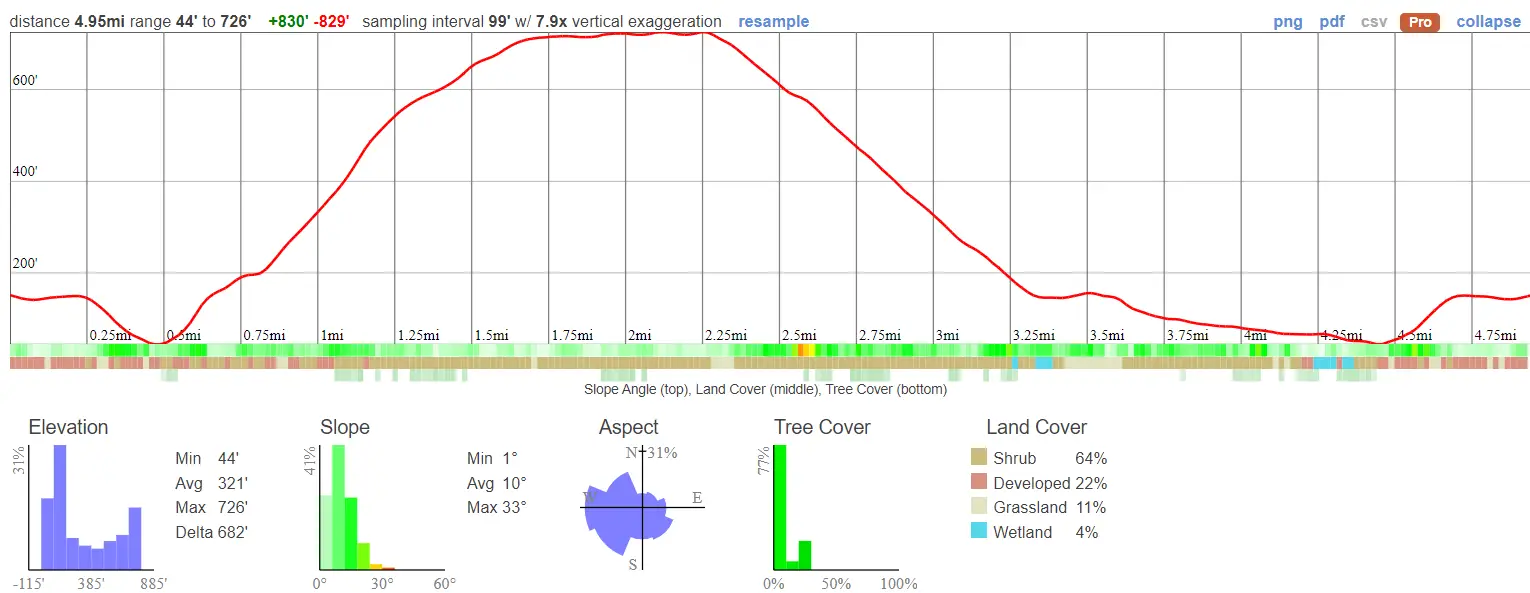
  • Total Miles: 4.95
  • Time: 2-2.5 Hrs
  • Difficulty: Moderate – Hard
  • Best Season: All Year
  • Elevation Gain: 829 ft
  • Max Elevation: 726 ft
  • Type of Trail: Loop
  • Parking Lot: Fits ≈ 50 Cars ($15 Fee To Park)
  • Dogs: Not Allowed
  • Restrooms: Available At The Parking Lot
  • Trail Popularity: Very High
  • Pics Taken On: Dec 24, 2023

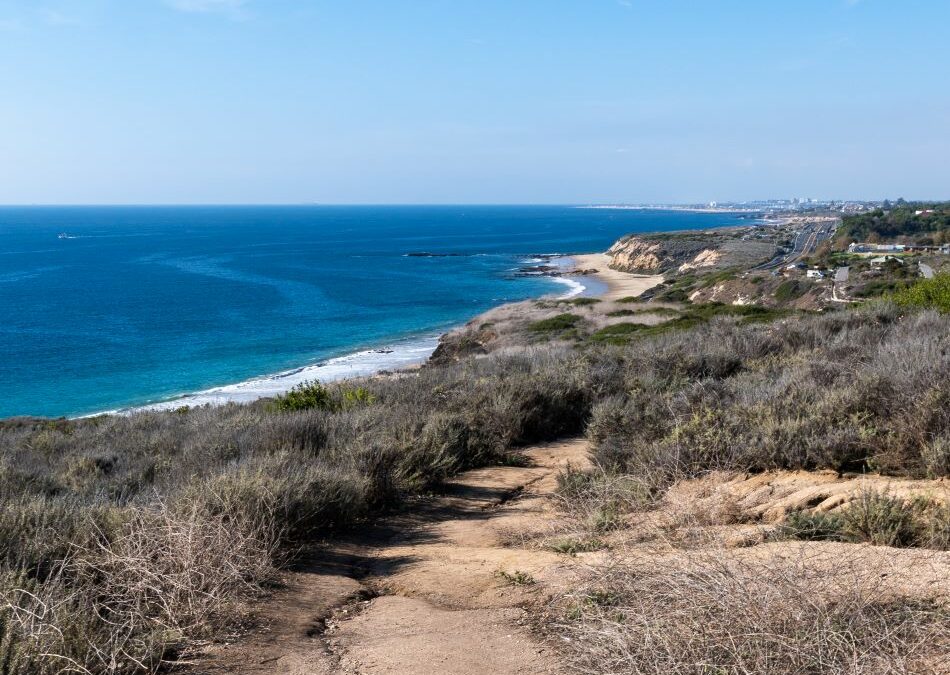
Located in Crystal Cove State Park, El Moro Canyon Loop Trail is a sunny and popular hike with a temperate climate, at least when compared to the mountains. The trail begins at the parking lot near the visitor center and loops up the south side of the canyon through an abundant and native coastal sagebrush. The Santa Ana Mountains are visible from the ridge. Lastly, I dropped back down to the canyon floor to complete the last stretch of the loop.

Would you like to explore 1940’s car ruins, a cave used by bandits in the 1800s, and beautiful waterfalls in Orange County? Check out the list below!

Orange County Hikes

El Moro Canyon Loop Trail Map

powered by Advanced iFrame

El Moro Canyon Loop Elevation Profile

Download Printable  PDF Map

Parking & Directions

A parking fee of $15 required, and can be paid for at the nature center (located at the parking lot) 

To be redirected to El Moro Canyon Loop Trailhead via Google Maps click the link here.

Helpful Links / Info

El Moro Canyon Weather Forecast

Crystal Cove Website 

Crystal Cove Activity Adventures E-Book (highly recommend for kids)

Hours: 6:00 am To Sunset

Trails in Crystal Cove are subject to temporarily close if rain creates muddy conditions. You can check the trail’s status by calling the number below.

Phone Number: (949) 494-3539

Hiking El Moro Canyon Loop

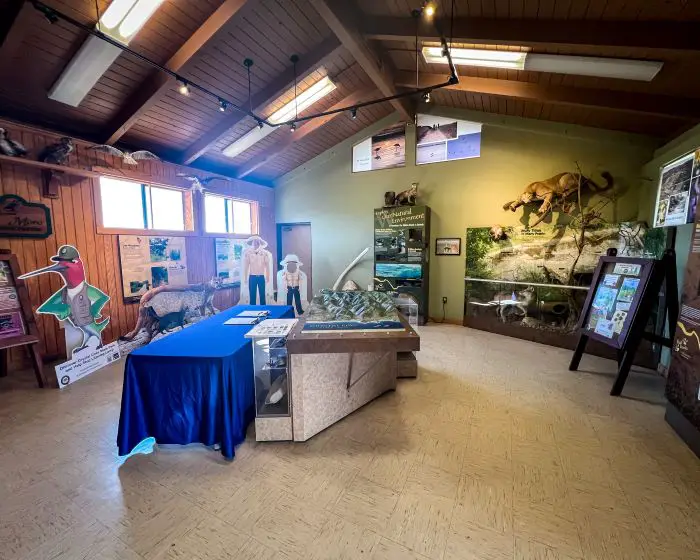
I passed by the visitor center before hopping on the trailhead, as curiosity had gotten the best of me. I highly recommend you do so as well. They have neat-looking replicas of the surrounding area and a lot of helpful info regarding Crystal Cove’s plants and wildlife.

El Moro Canyon Visitor Center

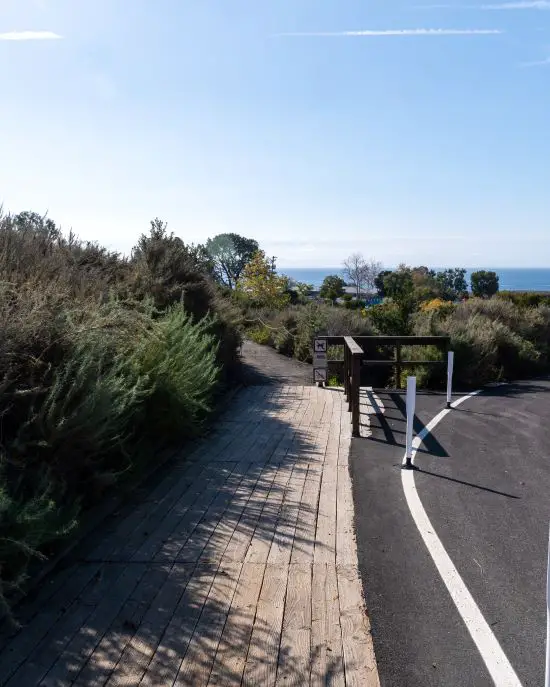
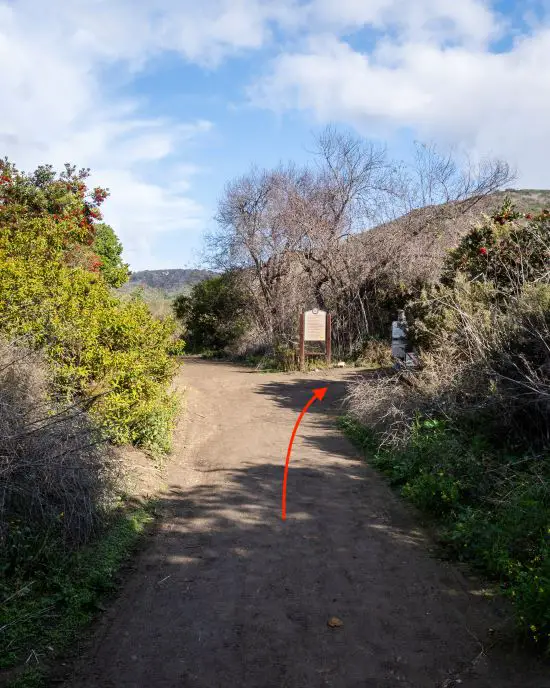
The trailhead is located on the south side of the parking lot. If you’re having trouble finding it, simply look for and follow the wooden sidewalk towards the ocean and you’ll eventually get to it.

The first trail is called Moro Canyon Trail. Most of the trails in the loop have very similar names. Be extra careful not to confuse them and end up in the wrong place.

El Moro Canyon Loop Trailhead

The first part of the trail ran adjacent to the RV campgrounds via a dirt path. Remember to stay on the trail if you want to avoid ticks, rattlesnakes, poison oak, and cactuses.

Although e-bikes aren’t allowed in the park, regular bikes are, so be on the lookout for speedy cyclists, especially if you’re hiking uphill and they’re riding down.

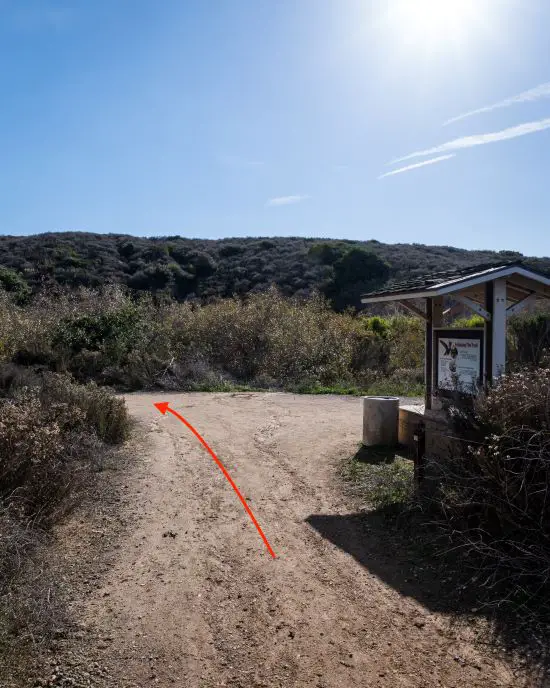
A sign reminding hikers to stay safe in the backcountry was located at the second fork. Remember that mountain lions are native predators in Crystal Cove, and although they’re highly unlikely to attack, you should know exactly what to do just in case the situation arises.

Make yourself look bigger by waving your arms up in the air, screaming at the lion while facing its direction, and, if you have kids, put them on your shoulders to make yourself look even larger. NEVER run away. Their instinct is to chase anything that runs.

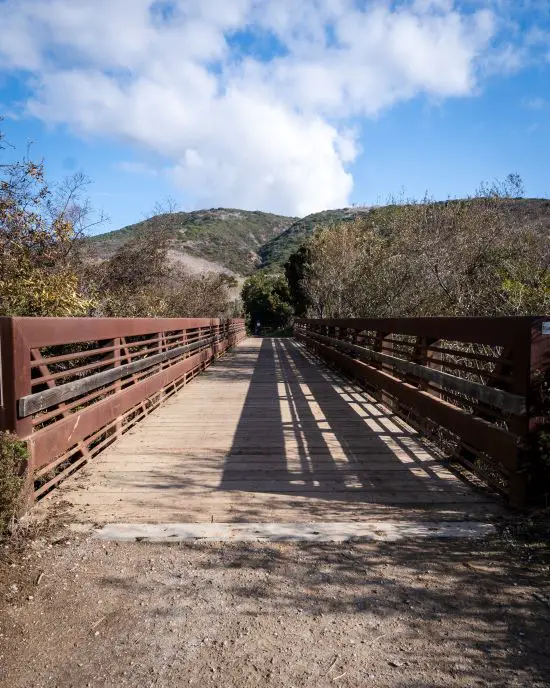
Immediately after making a left at the fork in the image above, I crossed the large bridge located over Moro Canyon Creek.

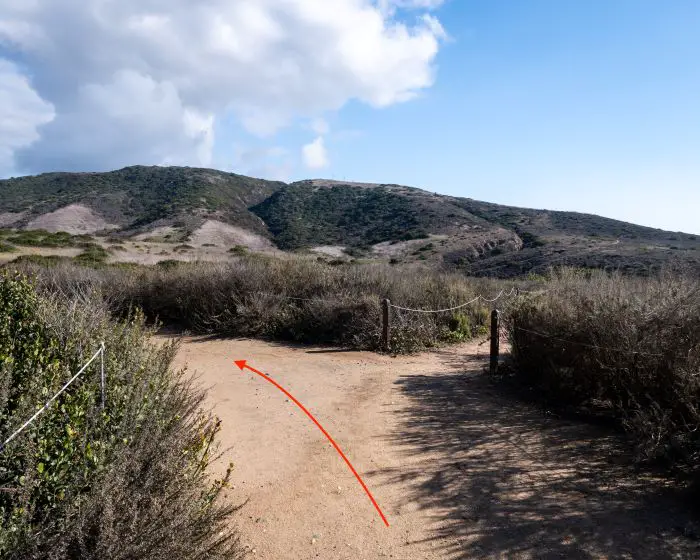
The next fork (shown below) will determine the direction of your loop. I chose the trail to the right known as B.F.I. to enjoy the ocean views sooner and hike counterclockwise.

Hiking the loop in a clockwise direction results in a steeper climb, but if you’re all for it don’t let me stop you.

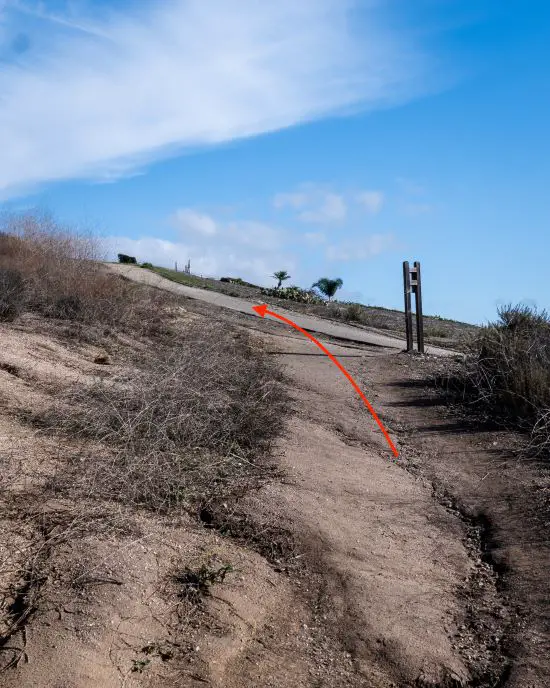
The B.F.I. trail is short, sunny, and the beginning of the climb. It ends rather quickly at the intersection with Moro Ridge Rd (called the Moro Ridge Spur on All Trails and Topo Maps), the route on which I continued my ascend.

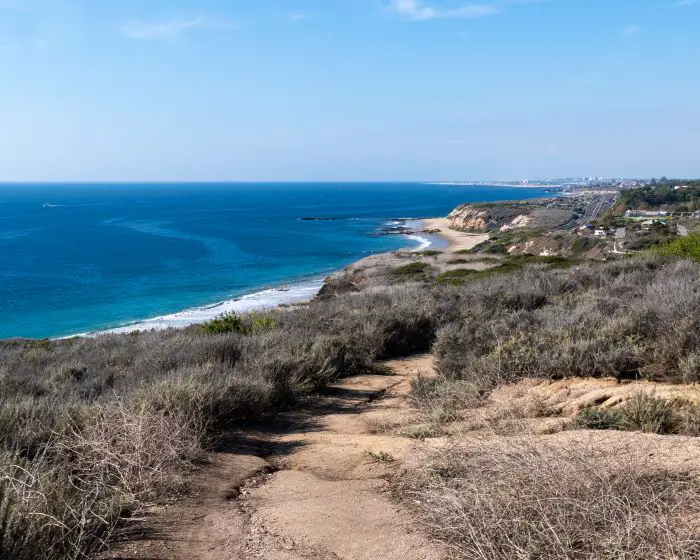
However, I looked behind me right before hopping onto the Moro Ridge Rd and enjoyed some of the loop’s best views.

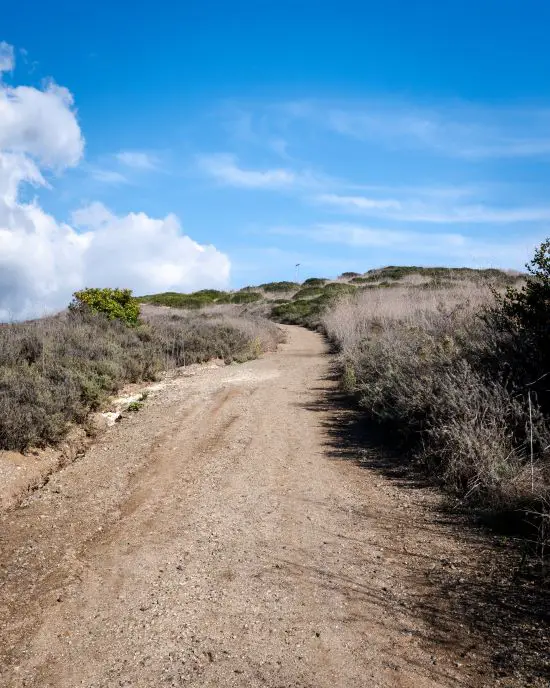
The first part of the Moro Ridge Rd is the steepest section of the hike, but it is still doable for the average person.

Nothing lasts forever, and all ascends must come to an end. You’ll know you’re at the ridge when you get to the fork shown below.

Unfortunately, the Cleveland National Forest was partly obscured by the clouds, but had they been visible, I could’ve identified Old Saddleback, the two largest peaks in the Santa Ana Mts.

Santa Ana Mountains From El Moro Canyon

I made a left at the next fork to transition from Moro Ridge Rd to, and I swear I’m not making this name up, I Think I Can, also known as East Cut Across.

The steep descent had me feeling grateful for heading up the south side of the loop and not up I Think I Can.

I made it down to the canyon floor after roughly 25 minutes, traversed the dry creek bed, and made a left at the fork to finish the loop via Moro Canyon Trail.

Due to water and abundant vegetation, the canyon floor is typically the most scenic part of the trail. Moro Canyon is no exception.

Sycamore trees lined the sides of the creek and boasted their vibrant orange leaves, contrasting with and giving life to the much-needed dry chaparral.

Since I visited a couple of days after the area received a bit of rain, large puddles consumed much of the road. Luckily, I was able to walk around them. The largest of all puddles can be seen below.

I continued on Moro Canyon Trail until reaching the fork where B.F.I. began, then retraced my steps back over the bridge and to the parking lot. Thus, completing the entire loop.

Wait, don’t go! Check out this very similar hike in Laguna Beach. It’s one of the most popular trails in the county and offers better ocean views than El Moro Canyon Loop. It’s called Top Of The World.

Bonelli Park Loop: Safe Stroll, Lake Views, & Playgrounds

Bonelli Park Loop: Safe Stroll, Lake Views, & Playgrounds

  • Total Miles: 1.8
  • Time: 45 min
  • Difficulty: Easy
  • Best Season: All Year
  • Elevation Gain: 107 ft
  • Max Elevation: 1023 ft
  • Type of Trail: Loop
  • Parking Lot: Fits 30+ Cars
  • Dogs: Allowed On A Leash
  • Restrooms: Available Throughout Loop
  • Trail Popularity: High
  • Pics Taken On: Nov 10, 2023

Talk a peaceful stroll via the Frank G Bonelli Park Loop (not to be confused with Bonelli Park Trail) in San Dimas to enjoy amazing views of the stunning Puddingstone Lake and San Gabriel Mountains looming in the background.

The short loop is safe and easy for the entire family. Multiple unique playgrounds are located throughout the hike and make great pitstops for kids to enjoy while adults take a relaxing break in the fresh outdoor breeze. The last portion of the trail runs parallel with the lake where two piers make for amazing photos.

Bonelli Park Loop Map

powered by Advanced iFrame

Bonelli Park Elevation Profile

Download Printable PDF Map

Parking & Directions

Park in the lot for the West Picnic Valley. For directions via Google Maps, click here.

Entrance fee is $12 except weekdays during winter months.

Helpful Info

Bonelli Park Weather Forecast

Frank G Bonelli Regional Park

Wheel Fun Rentals

County Map

Phone: (909) 599-8411

Park Hours

Mar 1 – Oct 31

5:00am to 8:00pm (Mon – Sun)

Nov 1 – Feb 28th

6:00am to 7:00pm (Mon – Sun)

Bonelli Park Loop

I began my stroll from the West Picnic Valley, the largest field on the loop, and headed south via a concrete sidewalk.

Beautiful tall pine trees and sycamores shade portions of the trail, but a hat and sunscreen are still recommended.

Bonelli Park Loop

Multiple restrooms are located throughout the loop.

If I’m not mistaken, the loop features four playgrounds. The most unique is Stone Henge Playground shown below.

Stone Henge Playground

I continued straight forward at the first intersection.

Shortly afterward, I passed the three-story Laker Playground the largest of them all.

Laker Playground

I continued straight forward again at the next intersection.

The trail began to loop towards the lake and I could see the peaks coming into view.

I veered off the concrete path to explore Puddingstone Lake for a bit. The views to the north are stunning. I could see everything from Rankin Peak to Mt Baldy.

By the way, another parking lot is located on the south side of the lake where the piers are located. You can technically drive up to and park in this section of the loop.

Just a little further up the lakeshore was the first pier. Unfortunately, it was closed to the public but I managed to grab this shot.

The second pier, which was open to the public and can be seen in the image below, is known as Too Tall Pier. Wheel Fun Rentals is located on the east side of the pier.

Just like Santa Fe Recreation Dam Recreation Area, Bonelli Park has a designated swim beach for the public, but only during the summer.

Bonelli Park Swim Beach

I flew the drone to get some aerial shots, knowing I wouldn’t be disappointed. The biggest peak is Mt Baldy.

Puddingstone Lake & San Gabriel Mts

Below is Cucamonga and Ontario Peak from Bonelli Park.

After exploring the lake, I hopped back on the loop and continued past Olene’s Cove Day Area, a small picnic area tucked up against the hill.

You’re supposed to walk over the bridge, but the vibrant orange and yellow leaves underneath were too enticing to not take a shot. Unfortunately, the picture does not do justice.

Once over the bridge, I arrived back at the West Picnic Valley.

And that marks the end of the loop.

I highly recommend Bonelli Park, especially if you’re thinking about taking your kids. The park felt safe, and I didn’t see any homeless people. Everyone visiting seemed to be family-oriented. Enjoy!

FAQs

Can You Go In The Water At Bonelli Park? 

People are allowed to go in the water but only in the designated swim beach. 

Is Bonelli Park Swim Beach Open?

Bonelli Park swim beach is only open during the summers.

How Long Is The Bonelli Park Loop?

The Bonelli Park Loop is a total of 1.8 easy miles. 

Can You Paddle Board At Bonelli Park? 

Paddleboarding and additional water vessels are allowed at Bonelli Park.

Can You Fish At Bonelli Park? 

Fishing at allowed around the lake except for sand beaches, boat docks, and 100 feet from launch ramps. 

Does Bonelli Park Have Fire Pits?

Yes, Bonelli Park has fire pits. 

Can Dogs Swim At Bonelli Park?

No animals are allowed to swim in the lake including sand beaches.